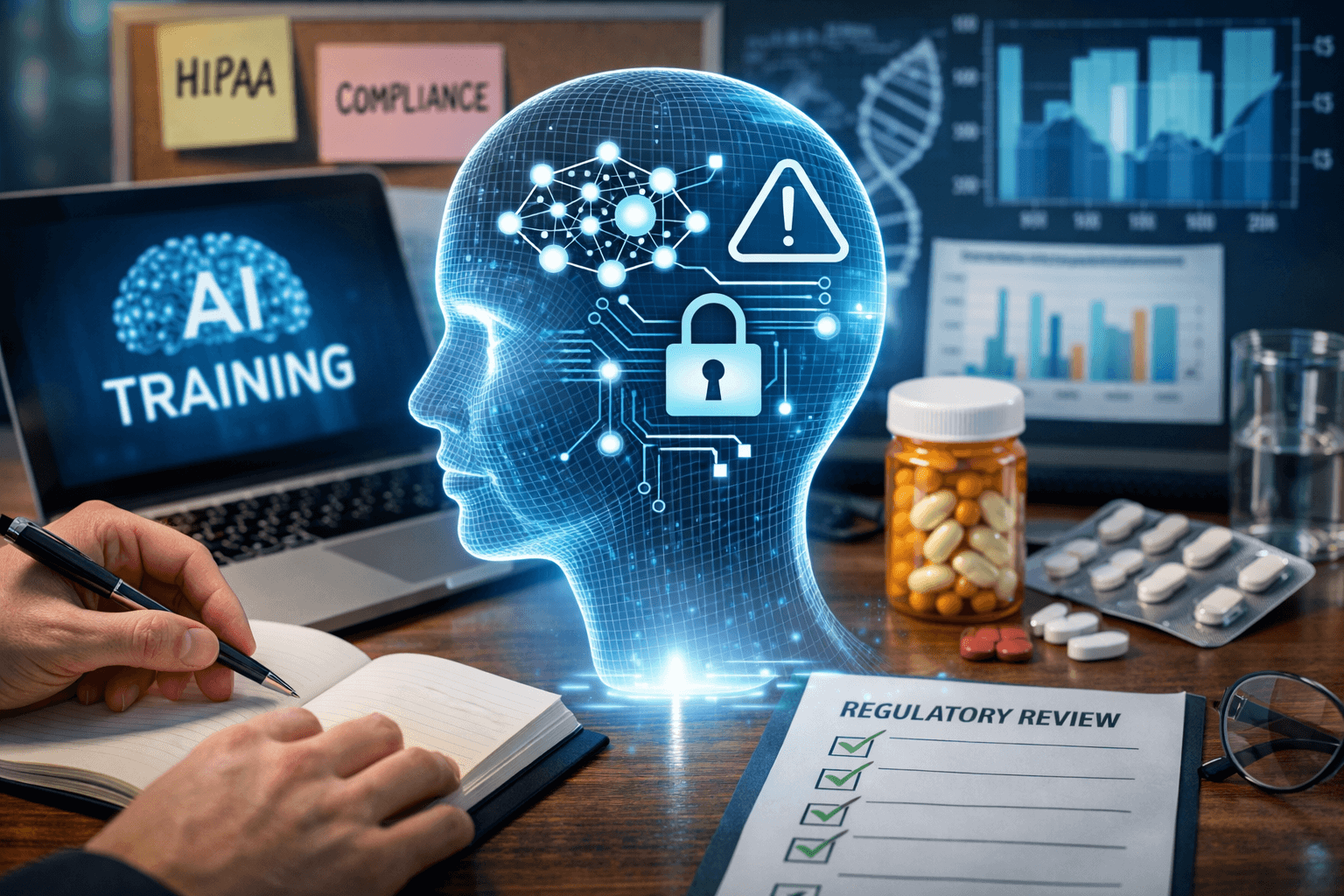
AI training for pharma marketers is quickly becoming a critical capability rather than a nice-to-have. As artificial intelligence becomes embedded in everyday platforms—from email builders to media planning tools—every pharma marketer now plays a role in managing potential risks. Without proper training, teams may unknowingly expose brands to regulatory, reputational, or compliance issues. This article outlines a practical AI training approach to help marketers understand how these tools work, recognize red flags, and know when to pause and escalate.
Table of Contents
- Why Pharma Marketers Need AI Training
- What Core Competencies to Teach
- Structuring an Effective AI Training Program
- Ongoing Risk Awareness and Governance
- Conclusion
- Frequently Asked Questions
Why Pharma Marketers Need AI Training
AI tools now play a key role in pharma marketing workflows. From predictive analytics platforms to generative content assistants, these technologies promise efficiency and insight. However, without structured AI training for pharma marketers, teams risk misusing tools or placing too much trust in outputs.
AI-generated content can easily introduce factual errors, overlook legal nuances, or bypass compliance protocols. In regulated industries like pharma, this can lead to major consequences—from FDA warnings to brand credibility loss. That’s why marketers must understand how AI works, where it can go wrong, and how to use it responsibly.
Beyond compliance, AI fluency empowers marketers to work more effectively with cross-functional teams like data science and legal. It helps ensure innovation happens within a safe, ethical framework.
What Core Competencies to Teach
Effective AI training for pharma marketers should focus on three core areas: foundational literacy, ethical awareness, and practical risk recognition.
1. Foundational AI Literacy
Marketers should learn basic AI concepts, such as what machine learning is, how generative models work, and the limitations of large language models. They need to know that AI tools don’t “understand” content—they generate statistically likely outputs based on patterns.
2. Ethical and Regulatory Awareness
Since pharma operates under strict regulations like HIPAA, marketers must understand how AI tools handle sensitive data, manage privacy, and avoid unapproved claims. Training should include legal guardrails, regulatory dos and don’ts, and real-world examples of AI-related pitfalls in healthcare marketing.
3. Task-Specific Risk Recognition
Marketers should be taught to spot when AI outputs might contain hallucinations, biased language, or off-label implications. Each workflow—from copywriting to media buying—has its own risk points, which should be covered in task-specific sessions.
Structuring an Effective AI Training Program
Creating an effective program requires more than a one-time training deck. Here’s how to build a living, scalable AI literacy initiative:
Assess Your Team’s Current Knowledge
Start with a baseline survey to understand where your marketers are starting from. Identify gaps in both understanding and confidence.
Modular Training Design
Break the training into focused modules such as “AI Fundamentals,” “AI and Pharma Compliance,” and “Red Flags to Watch.” Use interactive formats, videos, and live workshops for engagement.
Hands-On Scenarios
Include real-use case exercises, like using an AI tool to draft content and then flagging issues. This practical experience builds intuition and retention.
Cross-Functional Involvement
Invite compliance, legal, and IT stakeholders to contribute. This ensures the training is aligned with internal protocols and risk standards.
Support Tools
Provide reference sheets, red-flag guides, and escalation checklists marketers can use day to day. These assets reinforce learning and provide safety nets.
Ongoing Evaluation
Revisit the training quarterly or when new tools are rolled out. Keep materials up to date with evolving AI capabilities and regulatory updates.
Ongoing Risk Awareness and Governance
AI literacy is a living skillset. As tools evolve, so do risks. That’s why AI training must be embedded within a broader culture of governance and continuous learning.
Pharma organizations should set up an AI oversight group with representation from marketing, compliance, data science, and legal. This group can review new AI tools, create usage policies, and share emerging best practices across teams.
Clear escalation protocols should also be documented. Marketers must know when an AI output requires a second opinion or legal review before going live. Some companies even add a compliance checkpoint for all AI-assisted materials.
Regular updates, alerts, and internal case studies help keep awareness high. By making AI literacy part of the organization’s operating rhythm, pharma teams stay ahead of risk—and continue to innovate safely.
Conclusion
AI training for pharma marketers is no longer a nice-to-have—it’s a core competency. As AI integrates into every aspect of marketing, from content to analytics, pharma teams need clear understanding, risk awareness, and escalation strategies. By investing in ongoing education, pharma organizations empower their marketers to use AI safely, effectively, and ethically.
Frequently Asked Questions
What is AI training for pharma marketers?
It’s structured education that teaches pharma marketers how to use AI tools safely, understand their limitations, and manage regulatory risks.
Why is AI literacy important in pharma marketing?
Because AI can introduce compliance and accuracy risks in a highly regulated industry. Training ensures responsible, effective use.
Who should lead or participate in AI training?
Marketing, compliance, legal, and data science teams should collaborate to develop and participate in the training.
How often should training be updated?
At least quarterly, or whenever new AI tools are introduced or regulatory standards shift.
Can AI tools replace compliance review?
No. While helpful, AI outputs must always be reviewed by qualified humans, especially in pharma settings.
This content is not medical advice. For any health issues, always consult a healthcare professional. In an emergency, call 911 or your local emergency services.