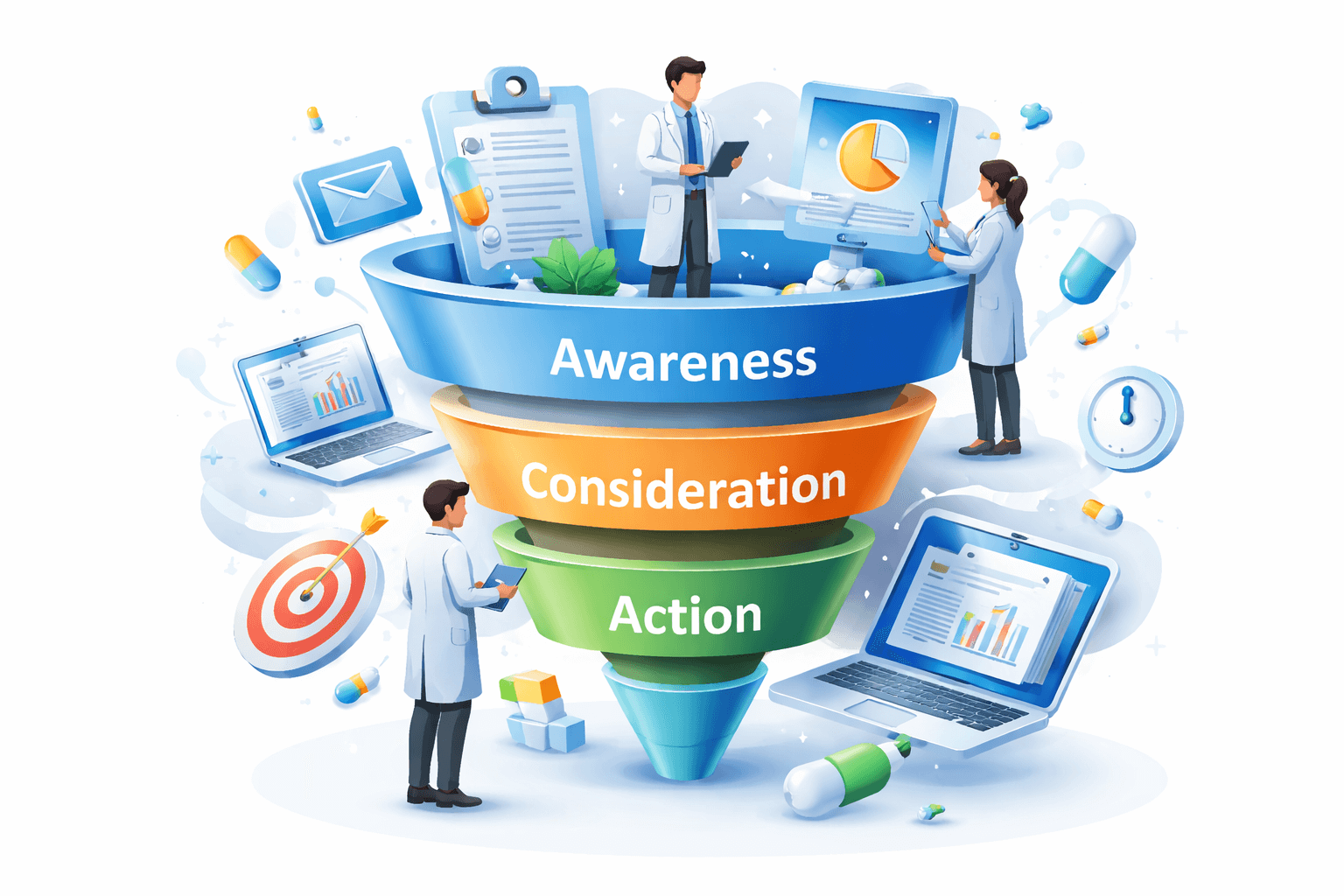
Imagine pouring resources into awareness campaigns and investing heavily in final conversions—only to lose potential prescribers and patients somewhere in between. That’s exactly what happens when the mid-funnel is ignored. Often overshadowed by flashier top- and bottom-funnel tactics, this crucial middle phase is where education deepens, trust is built, and intent is shaped. Yet in pharma marketing, it’s still treated as an afterthought.
Why is the middle so often neglected, and how can pharma marketers turn it into a competitive advantage? This article explores how to close the gap by building smart, compliant mid-funnel strategies that support both healthcare professionals (HCPs) and patients at their moment of consideration.
Table of Contents
- What Is the Mid‑Funnel in Pharma Marketing?
- Why the Middle of the Funnel Matters More Than You Think
- Core Strategies for Effective Engagement
- Balancing HCP and Patient‑Focused Tactics
- Key Metrics to Track Mid‑Funnel Success
- Conclusion
- Frequently Asked Questions
What Is the Mid‑Funnel in Pharma Marketing?
This stage of the pharma marketing funnel—often called the mid-funnel—sits between early awareness and the final conversion point. In this phase, audiences are no longer strangers; instead, they know about your drug, device, or therapy and are seeking deeper education to inform decisions. For HCPs, this could mean detailed clinical data, peer insights, or interactive tools that aid in evidence evaluation. For patients, it’s about understanding how a treatment works, what to expect, and how it fits into their lives.
At its best, this part of the funnel bridges curiosity and confidence—making it a vital step in the pharma decision journey. While top‑funnel work may answer “Have you heard of this?” and bottom‑funnel content asks “Ready to prescribe or request?”, the middle responds to the question “What does this mean for me?”
Why the Middle of the Funnel Matters More Than You Think
Pharma campaigns traditionally focus on awareness and conversion. However, ignoring the mid‑funnel can fragment the customer journey. For HCPs, insufficient education and trust‑building may lead them to default back to familiar therapies. For patients, a lack of supportive content can contribute to confusion, non‑adherence, or choosing competitive alternatives.
In regulated industries like pharma, the middle funnel also serves a vital role in supporting compliance through educational content. This stage allows brands to convey important context and balanced information about risks, benefits, and clinical evidence, without leaning on promotional messaging. Done right, it builds credibility and trust over time, which can drive both engagement and long‑term loyalty.
Core Strategies for Effective Engagement
There’s no one-size-fits-all approach to effective middle-of-funnel marketing. Instead, a mix of educational, empathetic, and interactive approaches tends to perform best. Here are strategic pillars that modern pharma marketers should consider:
1. Educational Content That Answers Real Questions
Effective mid‑funnel content goes beyond surface‑level awareness. It anticipates audience questions and delivers insights that genuinely inform decision‑making. Case studies, mechanism‑of‑action videos, white papers, and clinical summaries help HCPs explore depth. For patients, FAQs, side‑effect expectations, and treatment‑journey guides offer clarity and reassurance.
By aligning content with search intent and real concerns, pharma brands not only increase engagement but also support ethical information dissemination.
2. Interactive Tools and Personalized Experiences
Static content has its place, but interactive tools empower users to explore and personalize insights. These can include dosing calculators, risk‑benefit comparison charts, or decision trees tailored to a person’s clinical context. Interactive experiences keep users engaged longer, provide a sense of control, and help audiences see how a product fits their needs.
3. Retargeting with Respect for Compliance
Mid‑funnel retargeting isn’t about pushing promotions; it’s about reminding audiences of the education they were exploring. For example, HCPs who viewed clinical data might be retargeted with deeper dives into outcomes. Patients who accessed symptom checkers might receive compliance‑focused content about managing expectations during treatment.
This strategy requires careful segmentation and compliant messaging, but it ensures that your brand stays relevant without overstepping regulatory boundaries.
Balancing HCP and Patient‑Focused Tactics
While the goal of mid‑funnel engagement is consistent—turning interest into informed intent—the content and channels differ for HCPs and patients.
HCP Mid‑Funnel Tactics
Healthcare professionals need evidence, efficiency, and context. Tools and content that resonate include:
- Clinical data summaries and infographics that simplify complex studies
- Peer‑to‑peer insights via webinars or expert panels
- Interactive treatment algorithms and guideline comparisons
- Detailing tools integrated with CRM systems
These formats align with HCP workflows, respect their time, and deepen scientific trust.
Patient Mid‑Funnel Tactics
Patients seek empathy, clarity, and relevance. Tactics that work well include:
- Simple video explainers about treatment expectations
- Patient journey stories that reflect real experiences
- Symptom guides and role‑play scenarios for office conversations
- Patient decision aids that compare therapeutic paths
These content forms reduce confusion, enhance self‑efficacy, and prepare patients for meaningful conversations with their care teams.
Key Metrics to Track Mid‑Funnel Success
Tracking mid‑funnel effectiveness requires a balance of engagement and action metrics. Unlike top‑funnel brand awareness metrics (e.g., impressions) or bottom‑funnel conversions (e.g., prescription requests), mid‑funnel success is measured by depth and quality of engagement. Important KPIs include:
- Time on page and session depth for educational content
- Downloads of clinical summaries, white papers, or decision aids
- Completion rates of interactive tools or quizzes
- Engagement with personalized or segmented retargeting messaging
- Progression rates from mid‑funnel content to bottom‑funnel conversion pathways
By tracking these signals, marketers can optimize content flows and refine messaging to better support decision journeys without compromising regulatory compliance.
Conclusion
This often-overlooked stage in pharma marketing helps bridge the gap between awareness and action. It’s where education becomes understanding, and intrigue becomes confidence. To strengthen the mid-funnel, pharma marketers should emphasize meaningful content, tailored experiences, and strategies that resonate with both HCPs and patients.
By addressing this “lost middle,” brands not only improve campaign performance but also build meaningful trust and long‑term value in a crowded, competitive landscape.
Frequently Asked Questions
What is the mid‑funnel in pharma marketing?
It refers to the stage between awareness and conversion, where audiences seek deeper information and engagement to make informed decisions.
Why is this phase important?
This part of the funnel builds trust, educates audiences, and supports decision‑making, which can improve conversion rates and long‑term brand preference while maintaining compliance.
How is it different for HCPs and patients?
HCP tactics focus on clinical evidence and efficiency, while patient strategies prioritize clarity, empathy, and support through the decision journey.
What metrics indicate success?
Key metrics include time spent with content, downloads, tool usage, and movement toward decision‑making or prescribing behavior.
Can this stage support compliance efforts?
Yes. A well‑executed mid‑funnel strategy uses educational, balanced content that aligns with regulatory requirements while informing audiences.
This content is not medical advice. For any health issues, always consult a healthcare professional. In an emergency, call 911 or your local emergency services.