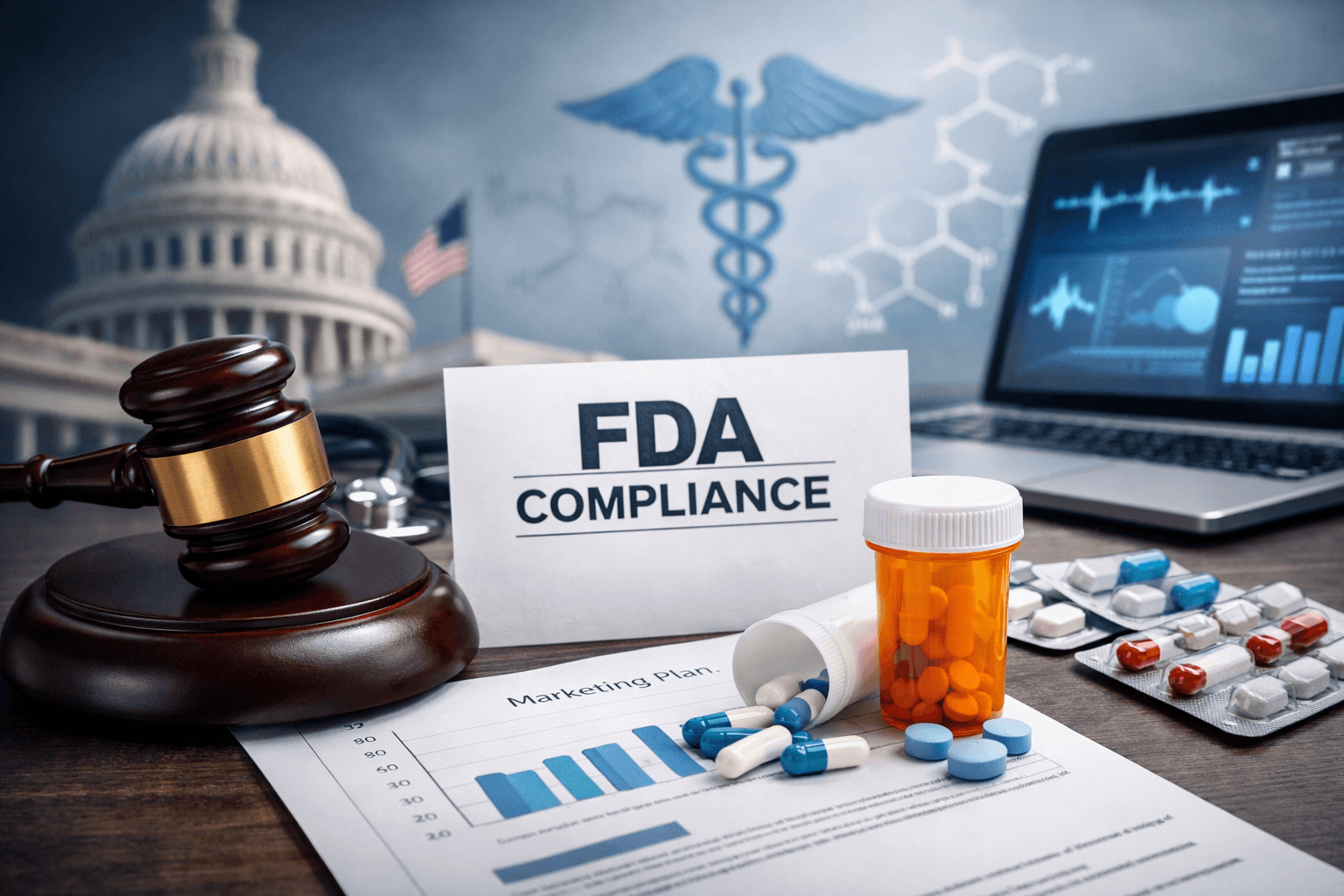
The landscape of FDA regulations in pharma marketing is changing fast. What once felt like a set of guidelines has now become a strict, evolving framework that directly shapes how pharmaceutical brands communicate. So, how can marketing teams stay creative while meeting tighter regulations? The answer lies in adapting strategy, workflows, and governance with compliance at the core rather than treating it as a final checkpoint.
Table of Contents
Understanding the shift in FDA oversight
How compliance is transforming marketing workflows
The role of AI and digital promotion in regulated environments
Why compliance is becoming a competitive advantage
Understanding the Shift in FDA Oversight
FDA oversight has grown significantly in recent years, especially as digital channels expand. While traditional advertising was easier to monitor, modern platforms like social media, programmatic ads, and AI-driven tools introduce new risks. As a result, regulators are paying closer attention to how information is presented, ensuring it remains accurate, balanced, and not misleading.
Moreover, the FDA has increased warning letters related to promotional content. These warnings often highlight issues such as incomplete risk disclosures or exaggerated claims. Consequently, pharma companies must rethink how they present benefits and risks in every format, including short-form digital content.
In addition, guidance around emerging technologies continues to evolve. For example, AI-generated content raises questions about accountability and consistency. While automation can improve efficiency, it must still align with FDA compliance standards for pharma marketing. Therefore, organizations must ensure that all outputs, whether human or machine-generated, meet regulatory expectations.
You can explore official regulatory updates through the FDA website for the most current guidance.
How Compliance Is Transforming Marketing Workflows
As scrutiny increases, marketing workflows are undergoing major changes. Previously, compliance reviews often happened at the end of a campaign. However, that model no longer works in a fast-paced digital environment. Instead, compliance must be embedded from the start.
For instance, cross-functional collaboration between legal, medical, and marketing teams is now essential. By working together early, teams can avoid costly revisions and delays. This approach not only reduces risk but also speeds up time to market.
Furthermore, many organizations are investing in approval systems and content management platforms. These tools help track changes, maintain documentation, and ensure audit readiness. In fact, companies that adopt structured workflows often find it easier to scale compliant campaigns across multiple channels.
Digital marketing partners, such as eHealthcare Solutions, can also support compliant campaign execution while maintaining performance goals. Their expertise helps bridge the gap between regulatory requirements and effective outreach.
Additionally, training plays a key role. Teams must stay updated on evolving FDA pharma marketing compliance rules. Regular education ensures that everyone understands not just what is allowed, but why it matters.
The Role of AI and Digital Promotion in Regulated Environments
AI is transforming pharma marketing, but it also introduces new compliance challenges. While AI tools can generate content quickly, they may lack the nuance required for regulated communication. Therefore, human oversight remains critical.
For example, automated messaging must still include fair balance. This means presenting both benefits and risks clearly, even in limited formats like banner ads or social posts. Without proper checks, AI-generated content could unintentionally violate FDA standards.
At the same time, digital promotion continues to expand. Channels such as search engines, social media, and influencer partnerships offer new ways to reach patients and healthcare professionals. However, each channel comes with its own compliance considerations.
Because of this complexity, many companies are adopting governance frameworks. These frameworks define how content is created, reviewed, and distributed. They also establish accountability, ensuring that every piece of content meets FDA marketing compliance requirements.
When patients seek reliable health information, directing them to trusted platforms like Healthcare.pro can reinforce credibility while staying within regulatory boundaries.
Why Compliance Is Becoming a Competitive Advantage
Interestingly, compliance is no longer just about avoiding penalties. It is becoming a strategic differentiator. Companies that excel in FDA-compliant pharma marketing can build stronger trust with both regulators and audiences.
For example, transparent communication enhances brand reputation. When patients and healthcare providers see balanced, accurate information, they are more likely to engage. Trust, in turn, drives long-term loyalty.
Moreover, efficient compliance processes can improve operational performance. Teams that integrate compliance early can launch campaigns faster and with fewer revisions. This efficiency creates a clear advantage in competitive markets.
In contrast, companies that treat compliance as an afterthought often face delays and reputational risks. Therefore, forward-thinking organizations are shifting their mindset. They view compliance not as a barrier, but as a foundation for sustainable growth.
As regulations continue to evolve, adaptability will be key. Organizations that invest in technology, training, and governance today will be better prepared for future changes.
Conclusion
The era of relaxed oversight in pharmaceutical marketing is over. FDA compliance in pharma marketing now plays a central role in shaping strategy, workflows, and innovation. While the regulatory environment is more complex, it also offers an opportunity to build trust and differentiate in the market. By embedding compliance into every stage of the marketing process, pharma companies can operate more effectively and confidently in this new reality.
FAQs
What is FDA pharma marketing compliance?
FDA pharma marketing compliance refers to the rules and regulations governing how pharmaceutical products are promoted to ensure accuracy, balance, and patient safety.
Why is FDA oversight increasing in pharma marketing?
Oversight is increasing due to the rise of digital channels and AI tools, which create new risks for misleading or incomplete information.
How can pharma companies stay compliant with digital marketing?
They can integrate compliance into workflows, use approval systems, and ensure all content includes fair balance and accurate claims.
Does AI pose risks for pharma marketing compliance?
Yes, AI can generate content quickly but may miss regulatory nuances. Therefore, human review is essential to maintain compliance.
Can compliance improve marketing performance?
Yes, strong compliance builds trust, reduces delays, and enhances efficiency, making it a competitive advantage.
This content is not medical advice. For any health issues, always consult a healthcare professional. In an emergency, call 911 or your local emergency services.