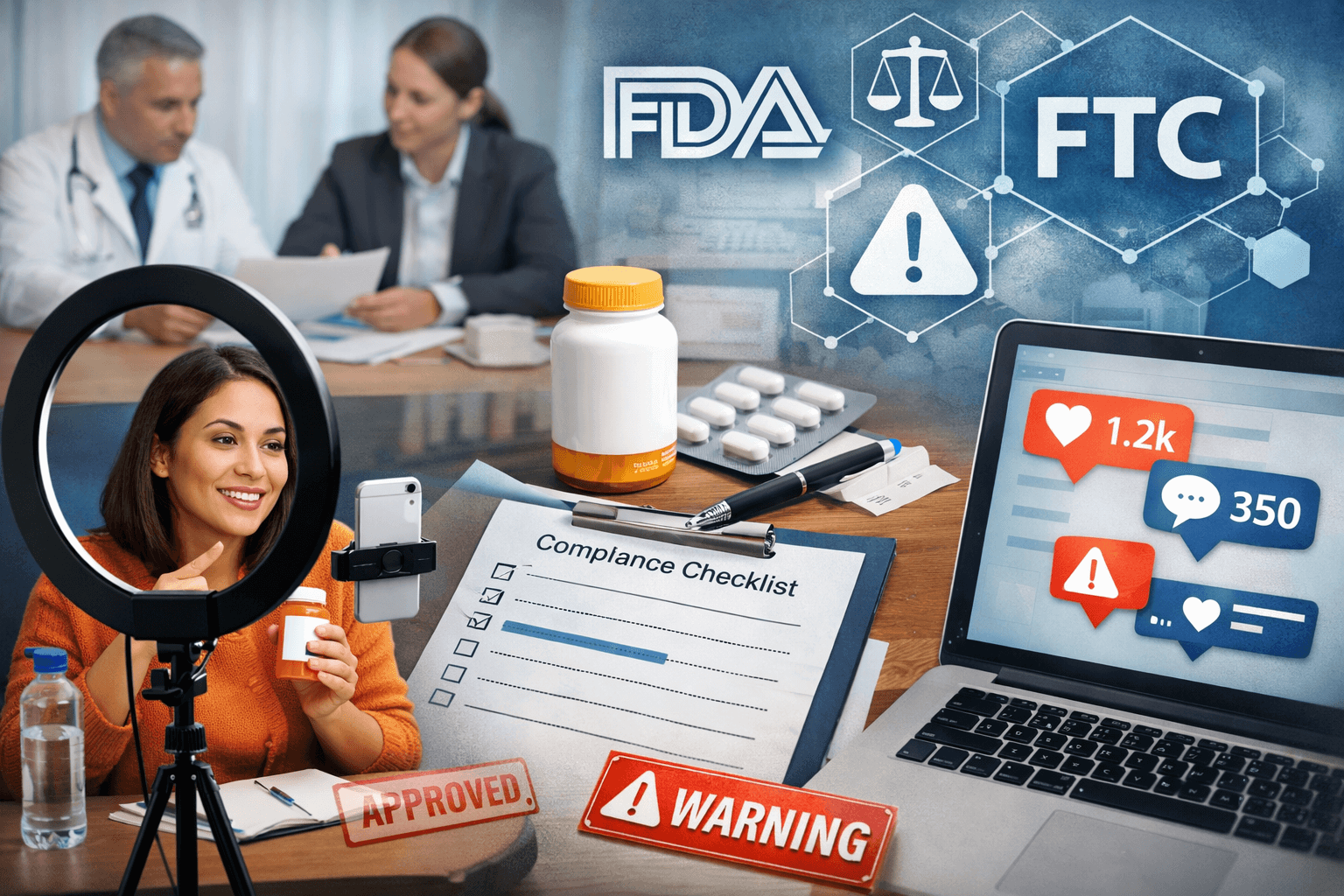
As patient influencers face closer FDA and FTC scrutiny, pharma brands must evolve from one-off sponsored posts to safety-first, protocol-driven partnerships. This article explores how to implement compliance strategies that keep content authentic while staying fully aligned with regulatory standards.
Table of Contents
- What Is Patient Influencer Compliance?
- Why Compliance Matters More in Today’s Regulatory Environment
- Designing Safety-First Influencer Protocols
- Training, Escalation, and Governance Best Practices
- Monitoring and Measuring Compliance Success
- Conclusion
- FAQs
What Is Patient Influencer Compliance?
In the age of digital engagement, patient influencer compliance refers to the frameworks pharmaceutical companies must implement to ensure collaborations with patient influencers meet legal and regulatory standards. This includes disclosures, content reviews, adverse event reporting, and adherence to FDA and FTC guidelines.
Unlike traditional influencer marketing, pharma partnerships must balance authenticity with accuracy, ensuring patients share their experiences responsibly while staying compliant with industry standards. From risk disclosures to avoiding unapproved claims, the rules are evolving quickly — and brands must catch up.
Why Compliance Matters More in Today’s Regulatory Environment
The FDA and FTC have intensified their scrutiny of influencer marketing in healthcare. Disclosures, claims about drug effectiveness, and risk communication are under the microscope. Brands that fail to comply risk warning letters, fines, or reputational damage.
Today, even unpaid testimonials may require review if they involve a product mention. The pressure is on pharma marketers to proactively build patient influencer compliance structures that align with government expectations and protect all parties involved.
Designing Safety-First Influencer Protocols
Creating compliant campaigns begins with clear, documented protocols. These frameworks should define what influencers can say, how they disclose partnerships, and who they contact when unsure about regulatory boundaries.
Key elements include:
- Roles and responsibilities: Align legal, medical, and marketing teams early.
- Content guardrails: Provide language templates and disclosure guidelines.
- Contracts: Include clauses for content review, reporting, and safety requirements.
- Escalation paths: Give influencers a direct contact for urgent questions.
These proactive measures help ensure compliance while allowing authentic patient stories to shine through.
Training, Escalation, and Governance Best Practices
Successful influencer programs require more than just checklists. Pharma brands must invest in education and governance to build a culture of accountability.
Best practices include:
- Training influencers: Cover adverse event reporting, off-label risks, and proper disclosures.
- Governance frameworks: Set up approval workflows and internal review boards.
- Monitoring and feedback loops: Track content for violations and adjust strategy as needed.
Influencers must feel empowered but supported. With proper training, they can navigate compliance challenges while still delivering meaningful content to their communities.
Monitoring and Measuring Compliance Success
Compliance isn’t a set-it-and-forget-it effort. Brands need systems that track and improve program effectiveness over time. Monitoring tools, content audits, and influencer scorecards help teams detect early risks and adjust guardrails when needed.
Key metrics might include:
- Percentage of reviewed posts
- Time to resolve escalations
- Incidents of non-compliance
- Influencer satisfaction and understanding
Integrated tracking systems improve transparency and readiness in case of audits or investigations. The more seamless the process, the more scalable your influencer program becomes.
Conclusion
Pharma brands that prioritize patient influencer compliance aren’t just avoiding fines — they’re building trusted relationships and resilient campaigns. By moving from casual partnerships to protocol-driven programs, organizations can amplify real patient voices while staying aligned with FDA and FTC expectations.
The future of pharma influencer marketing is not only authentic — it’s accountable.
FAQs
What is patient influencer compliance?
It refers to the rules and frameworks ensuring that pharma influencer content aligns with FDA and FTC regulations, including fair balance and sponsorship disclosure.
Why is compliance important in patient advocacy campaigns?
Because health content impacts real decisions. Regulatory compliance ensures content is accurate, safe, and legally sound — protecting both the patient and the brand.
Can influencers share personal experiences about medications?
Yes, but they must avoid exaggerating benefits, mention risks if discussing a product, and disclose all partnerships.
What are the FTC requirements for healthcare influencers?
The FTC requires clear and conspicuous disclosure of material relationships — such as “#ad” — even in short-form content.
How can pharma brands ensure influencers follow protocols?
Through contracts, structured onboarding, regular training, and using monitoring tools that flag compliance risks in real time.
This content is not medical advice. For any health issues, always consult a healthcare professional. In an emergency, call 911 or your local emergency services.