Pharma marketers are moving faster than ever. Telehealth campaigns launch in days, AI tools generate promotional copy in minutes, and healthcare partnerships now span dozens of digital platforms at once. Yet many compliance systems still rely on manual reviews and quarterly audits. That gap is becoming impossible to ignore.
Modern pharmaceutical telehealth marketing now depends on speed, personalization, and real-time engagement. However, traditional compliance oversight was never designed for content ecosystems powered by AI, omnichannel publishing, and virtual care platforms. As a result, pharmaceutical companies are beginning to embrace a new operational model known as “compliance-as-code.”
Instead of reviewing risks after publication, brands are embedding compliance rules directly into publishing workflows and partner systems. This approach allows organizations to flag off-label claims, missing disclosures, and risky language before content reaches the public. More importantly, it creates a scalable framework for the future of digital healthcare marketing.
Table of Contents
- Why traditional pharma audits are failing
- What compliance-as-code means in pharma marketing
- How telehealth platforms are driving automation
- The future of AI-powered compliance oversight
- Frequently asked questions
Why Traditional Pharma Audits Are Falling Behind
Pharmaceutical marketing once moved at a predictable pace. Campaigns were reviewed over weeks, approvals happened in stages, and compliance teams had enough time to inspect materials manually. Today, the environment looks very different.
Pharma telehealth campaigns often involve digital symptom checkers, patient onboarding flows, AI chat systems, influencer partnerships, paid media campaigns, and real-time educational content. Consequently, the number of content variations has exploded.
Quarterly audits cannot keep up with this level of complexity. In many organizations, compliance teams still review samples of content after publication. By the time issues are identified, thousands of patients may have already seen problematic messaging.
The rise of AI-assisted promotion adds another layer of concern. Generative AI tools can rapidly create ad copy, patient emails, physician outreach messages, and social media posts. While these systems improve efficiency, they also increase the risk of inconsistent language or accidental regulatory violations.
For example, AI-generated content may unintentionally imply unapproved treatment outcomes or omit mandatory safety information. Even subtle wording changes can create compliance exposure in highly regulated healthcare environments.
Because of these risks, pharma companies are investing in automated safeguards instead of relying solely on human review. According to the U.S. Food and Drug Administration, pharmaceutical promotion must remain truthful, balanced, and properly disclosed across all channels. FDA promotional guidance continues to shape how digital healthcare campaigns are evaluated.
What Compliance-as-Code Means in Pharma Marketing
Compliance-as-code borrows principles from cybersecurity and software engineering. Instead of treating compliance as a separate approval stage, organizations build rules directly into operational systems.
In practice, this means publishing tools, telehealth platforms, CRM systems, and AI content engines can automatically scan content before it goes live. The system checks for predefined risks and blocks noncompliant messaging in real time.
For telehealth-focused pharmaceutical marketing teams, this approach offers several advantages.
First, it reduces delays. Marketing teams no longer wait days for manual reviews of every small content update. Instead, automated systems validate approved language instantly.
Second, it improves consistency across channels. Whether a message appears in a patient portal, paid advertisement, chatbot, or physician email, the same compliance rules apply.
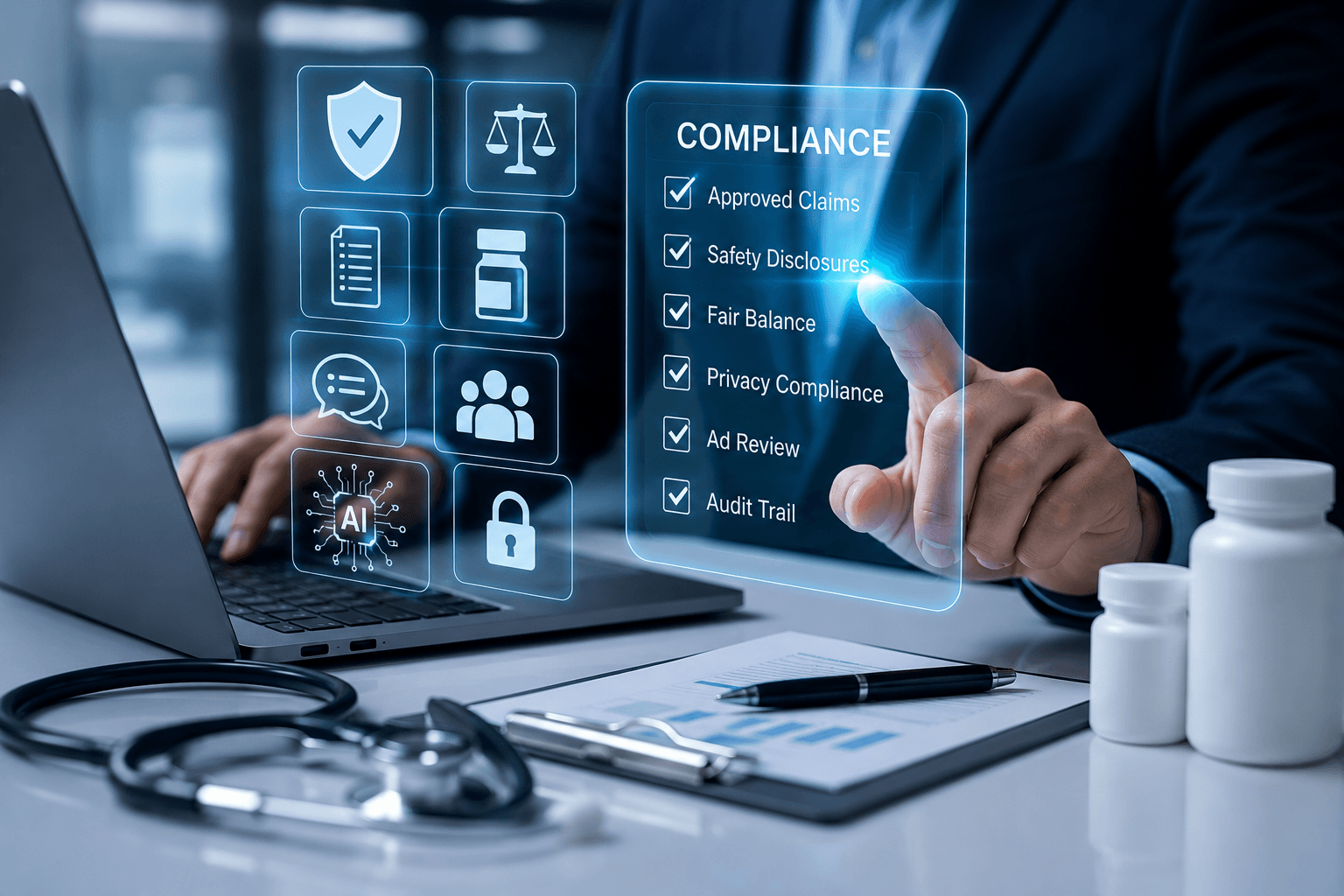
Third, it creates detailed audit trails. Every approval, edit, and flagged risk can be tracked automatically. This helps organizations respond faster during regulatory reviews or internal investigations.
Some companies are already integrating machine-learning models that detect problematic phrasing patterns. These tools can identify exaggerated claims, missing disclosures, or high-risk terminology before publication occurs.
Additionally, structured compliance rules help telehealth partners maintain alignment with pharmaceutical brand standards. This is especially important because telehealth providers increasingly act as both care delivery platforms and media distribution channels.
Brands investing in digital transformation are also strengthening their broader marketing infrastructure. Companies seeking advanced healthcare advertising strategies often partner with eHealthcare Solutions to improve compliant digital campaign execution across healthcare audiences.
How Telehealth Platforms Are Accelerating Real-Time Compliance
Telehealth has fundamentally changed how patients interact with healthcare brands. Patients now expect immediate access to information, digital consultations, prescription support, and personalized educational content.
As telehealth adoption grows, pharmaceutical companies must deliver approved messaging at the same speed patients expect digital healthcare experiences to function.
That pressure is reshaping how pharmaceutical brands approach telehealth marketing today.
Telehealth ecosystems produce massive amounts of dynamic content. Appointment reminders, treatment recommendations, onboarding messages, educational resources, and AI-generated responses all create compliance exposure.
Manual review processes cannot scale efficiently across these touchpoints.
As a result, many organizations are embedding compliance APIs directly into content management systems and telehealth workflows. These integrations allow systems to automatically:
- Detect unapproved claims
- Flag missing risk disclosures
- Compare messaging against approved claims databases
- Monitor AI-generated copy before publication
- Validate geographic or audience-specific restrictions
This shift also supports stronger collaboration between legal, medical, and marketing teams. Instead of operating in isolated review cycles, stakeholders contribute to shared compliance rule libraries that power automated enforcement.
Importantly, compliance-as-code does not eliminate human oversight. Rather, it allows compliance professionals to focus on higher-risk strategic decisions instead of repetitive manual checks.
Healthcare organizations are also recognizing that patient trust depends on transparency and accuracy. Patients increasingly research treatments online before speaking with providers. Therefore, inaccurate or misleading content can damage both regulatory standing and brand credibility.
Pharmaceutical marketers developing patient-centered campaigns should also ensure consumers have access to professional medical support through trusted resources like Healthcare.pro when seeking care guidance.
The Future of AI-Powered Compliance Oversight
The next phase of pharmaceutical compliance will likely combine automation, AI governance, and predictive risk analysis.
Today’s compliance systems primarily detect known violations. Future systems may predict risk before content creation even begins. AI models could recommend compliant alternatives while marketers draft campaigns in real time.
This evolution is especially relevant for organizations scaling omnichannel telehealth engagement. Successful pharma telehealth campaigns increasingly depend on balancing personalization with regulatory precision.
Predictive compliance tools may soon evaluate audience targeting, emotional tone, and contextual risk across multiple platforms simultaneously. Instead of asking whether content violates regulations after publication, systems will continuously optimize messaging before release.
At the same time, regulators are paying closer attention to AI-generated healthcare communications. Industry leaders must demonstrate transparency, accountability, and governance standards for automated promotional systems.
Companies that invest early in compliance automation will likely gain operational advantages. Faster approvals, lower legal exposure, and stronger digital agility can significantly improve competitive positioning in healthcare marketing.
However, success depends on collaboration. Compliance teams, marketers, software engineers, telehealth providers, and AI specialists must work together to build scalable governance frameworks.
The audit is not disappearing entirely. Yet the era of relying on delayed oversight alone is rapidly ending. Compliance is becoming embedded directly into the infrastructure of digital healthcare communication itself.
Conclusion
The pharmaceutical industry is entering a new era where speed, automation, and compliance must operate together. Traditional audits no longer match the pace of AI-driven content creation and telehealth engagement.
Modern telehealth marketing in pharma requires real-time safeguards capable of identifying risks before content reaches patients or providers. Compliance-as-code offers a scalable solution by embedding regulatory rules directly into publishing systems and digital workflows.
As telehealth ecosystems continue to expand, pharmaceutical companies that modernize compliance operations will be better positioned to maintain trust, reduce regulatory exposure, and support responsible healthcare communication at scale.
FAQ
What is compliance-as-code in pharmaceutical marketing?
Compliance-as-code refers to embedding regulatory rules directly into software systems and publishing workflows so content can be automatically reviewed before publication.
Why is compliance-as-code important for telehealth marketing?
Telehealth campaigns move quickly and generate large volumes of digital content. Automated compliance systems help pharmaceutical companies detect risks in real time instead of relying only on manual audits.
Can AI-generated pharma content create compliance risks?
Yes. AI-generated content may unintentionally include off-label claims, exaggerated benefits, or missing disclosures if proper safeguards are not in place.
Does compliance automation replace legal and medical review teams?
No. Compliance automation supports human reviewers by handling repetitive checks while allowing experts to focus on complex or high-risk decisions.
How are telehealth platforms changing pharma compliance requirements?
Telehealth platforms create more dynamic patient interactions and digital touchpoints. As a result, pharmaceutical companies need scalable compliance systems that operate continuously across multiple channels.
This content is not medical advice. For any health issues, always consult a healthcare professional. In an emergency, call 911 or your local emergency services.