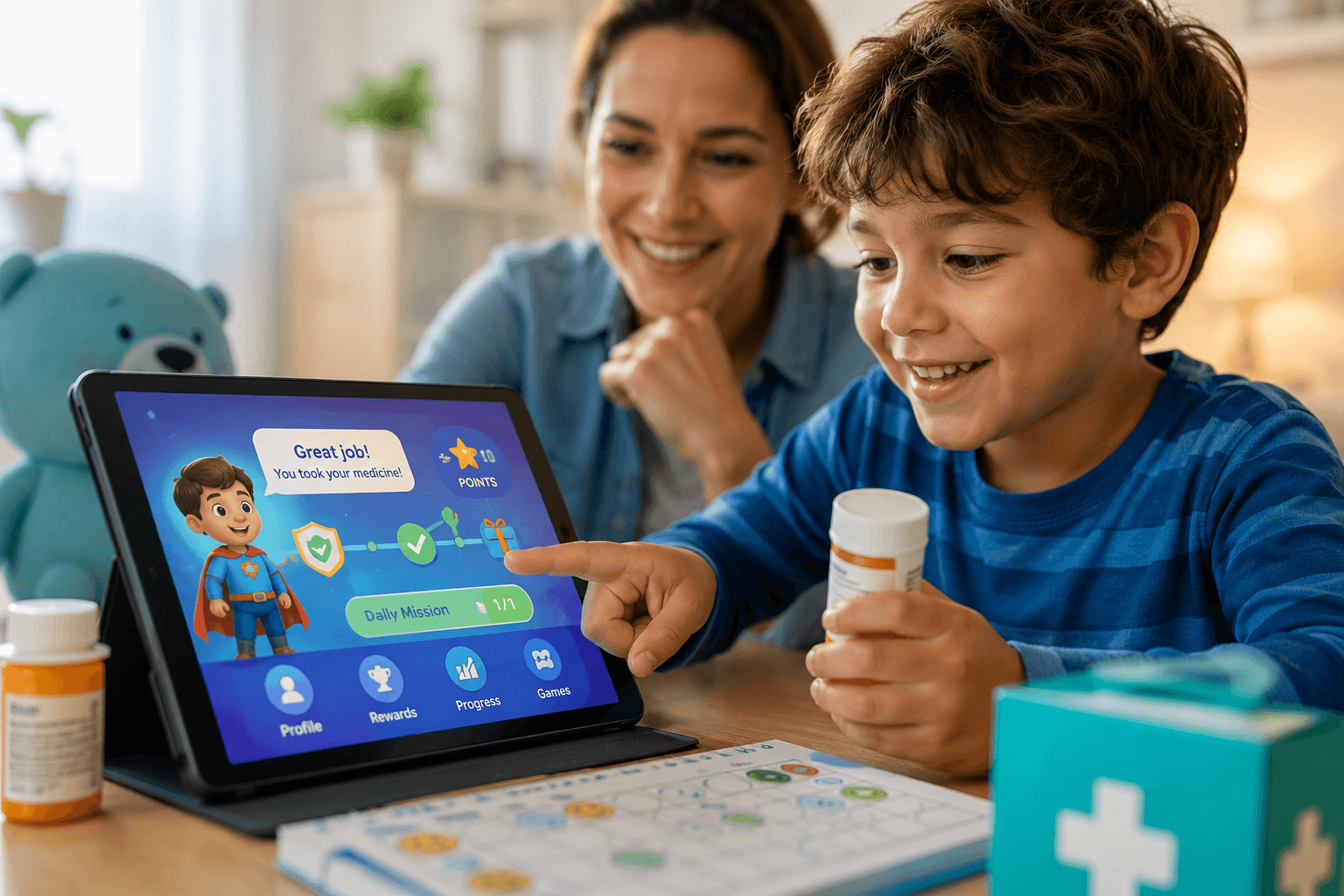
Marketing medications to children has always required a delicate balance. Parents want safe and effective therapies, while children often resist treatment routines that feel uncomfortable or disruptive. Because of this challenge, pharmaceutical marketers focused on pediatric care are shifting toward more engaging and interactive strategies. Today, pharmaceutical companies are embracing gamified experiences, mobile apps, and digital storytelling to encourage long-term adherence and improve patient outcomes.
Instead of relying solely on printed brochures or reminder calls, brands are now creating experiences that motivate children to participate in their own care. As digital health tools continue to grow, gamification is becoming one of the most powerful ways to improve consistency and strengthen trust between healthcare providers, caregivers, and young patients.
Table of Contents
- Why pediatric adherence remains difficult
- How gamification improves treatment participation
- Interactive storytelling and digital engagement
- The future of pediatric healthcare marketing
- FAQs
Why Pediatric Adherence Remains a Challenge
Medication adherence among pediatric patients has historically been difficult for several reasons. Children may fear injections, dislike medication taste, or simply forget routines. At the same time, parents often juggle school schedules, work responsibilities, and multiple healthcare instructions. Consequently, even highly effective therapies can fail when treatment plans are inconsistent.
According to healthcare adherence studies, pediatric nonadherence rates can range from 30% to 70%, depending on the condition and therapy complexity. This creates a serious challenge for pharmaceutical brands focused on long-term treatment success. However, modern pediatric healthcare marketing strategies now recognize that emotional engagement is just as important as clinical communication.
For example, brands that create child-friendly experiences often see stronger participation rates. Interactive tools can reduce fear, build familiarity, and transform treatment routines into manageable daily habits. In many cases, children become more willing participants when therapy feels rewarding rather than stressful.
Digital engagement also supports caregiver confidence. Parents appreciate tools that simplify treatment tracking while helping children stay motivated. Because of this, many pharmaceutical marketers are investing heavily in connected health platforms and behavioral engagement technologies.
Companies working in healthcare communications are also increasingly integrating digital patient education into broader pharmaceutical campaigns. Platforms such as Healthcare.pro highlight the growing importance of accessible healthcare communication and patient-centered engagement strategies.
How Gamification Improves Treatment Participation
Gamification applies game-like elements to non-game experiences. In pediatric healthcare, this approach can include rewards, progress tracking, animations, badges, or interactive characters that guide children through treatment routines. Although the concept sounds simple, the psychological impact can be significant.
Children naturally respond to encouragement, achievement, and storytelling. Therefore, pharmaceutical companies are using these behavioral triggers to create stronger adherence habits. Instead of viewing medication as a chore, young patients may see it as part of a mission, adventure, or challenge.
Many therapy apps now include daily streaks, personalized avatars, and achievement systems. These features encourage consistency while making routines feel more engaging. Additionally, some apps allow parents to monitor adherence progress in real time, which creates stronger accountability.
Gamified patient engagement strategies also improve educational retention among young patients. Children often understand treatment instructions more clearly when information is presented visually or interactively. As a result, brands can simplify complex health concepts while reducing anxiety around therapy.
For chronic conditions such as asthma, diabetes, or growth hormone deficiency, adherence tools can make a measurable difference. Studies have shown that interactive health apps often improve engagement rates compared to traditional reminder systems alone.
At the same time, marketers must remain ethically responsible. Pediatric campaigns require strict compliance with healthcare regulations and patient privacy standards. Successful campaigns prioritize education and support rather than manipulation or excessive commercialization.
Digital marketing agencies specializing in healthcare communication are helping pharmaceutical companies navigate this rapidly evolving landscape. Resources from eHealthcare Solutions demonstrate how healthcare brands are increasingly combining patient engagement with data-driven digital marketing strategies.
Interactive Storytelling and Digital Engagement
Storytelling has become a major component of pediatric healthcare campaigns because stories help children process unfamiliar experiences. Through relatable characters and narratives, young patients can better understand their treatment journeys and feel less isolated.
Some pharmaceutical brands now create animated experiences where children follow heroes managing similar health conditions. These stories normalize therapy routines and reduce emotional resistance. Furthermore, storytelling builds empathy between caregivers and children by encouraging open discussions about treatment challenges.
Interactive storytelling also extends into augmented reality and virtual experiences. Certain pediatric campaigns now use mobile-based AR features that allow children to interact with characters during treatment routines. These experiences increase engagement while turning difficult moments into positive interactions.
Importantly, digital engagement strategies are not only about entertainment. They also provide valuable support for caregivers. Many platforms include educational modules, symptom trackers, appointment reminders, and communication tools that connect families with healthcare providers.
As digital-native generations continue to grow, pharmaceutical marketers understand that engagement expectations are changing rapidly. Children today are accustomed to interactive technology, personalized experiences, and instant feedback. Consequently, traditional educational materials often struggle to maintain attention.
Brands that successfully combine education, trust, and entertainment are more likely to build lasting patient relationships. This shift reflects a broader transformation happening across healthcare marketing, where patient experience increasingly drives communication strategies.
The Future of Pediatric Healthcare Marketing
The future of pediatric pharmaceutical marketing will likely become even more personalized and technology-driven. Artificial intelligence, wearable devices, and predictive analytics are expected to enhance adherence programs significantly over the next several years.
For example, smart adherence platforms may eventually adapt engagement strategies based on individual patient behavior. A child who responds well to rewards may receive achievement-based encouragement, while another patient may benefit more from storytelling or educational interactions.
Voice assistants and connected devices may also become integrated into pediatric therapy support systems. Families could receive personalized reminders, symptom guidance, or treatment coaching through home-based digital health ecosystems.
However, trust will remain the foundation of all successful pediatric healthcare communication. Parents want transparency, safety, and credible medical information. Therefore, pharmaceutical companies must balance innovation with ethical responsibility and patient-centered care.
As healthcare continues moving toward digital engagement, gamification is no longer viewed as a novelty. Instead, it is becoming a practical adherence strategy that improves participation while supporting better health outcomes for pediatric patients.
Conclusion
Marketing pediatric therapies is evolving far beyond traditional educational brochures and caregiver reminders. Today’s pharmaceutical brands are embracing gamified tools, storytelling, and interactive digital experiences to strengthen treatment adherence among young patients.
By making therapy more engaging and less intimidating, companies can improve consistency, support caregivers, and encourage healthier long-term behaviors. As technology advances, gamification will likely become an even more important part of pediatric healthcare communication strategies.
FAQs
What does pediatric pharmaceutical marketing involve?
Pediatric pharmaceutical marketing includes campaigns and engagement strategies designed for children, caregivers, and pediatric healthcare providers.
Why is medication adherence difficult for children?
Children may resist medications because of fear, discomfort, forgetfulness, or lack of understanding about their treatment routines.
How does gamification improve adherence?
Gamification uses rewards, progress tracking, and interactive experiences to motivate children and encourage consistent treatment participation.
Are gamified healthcare apps effective?
Many studies suggest that interactive healthcare apps can improve engagement, educational retention, and treatment consistency among pediatric patients.
Why is storytelling important in pediatric healthcare?
Storytelling helps children emotionally connect with their treatment experience, reducing anxiety while improving understanding and participation.
This content is not medical advice. For any health issues, always consult a healthcare professional. In an emergency, call 911 or your local emergency services.