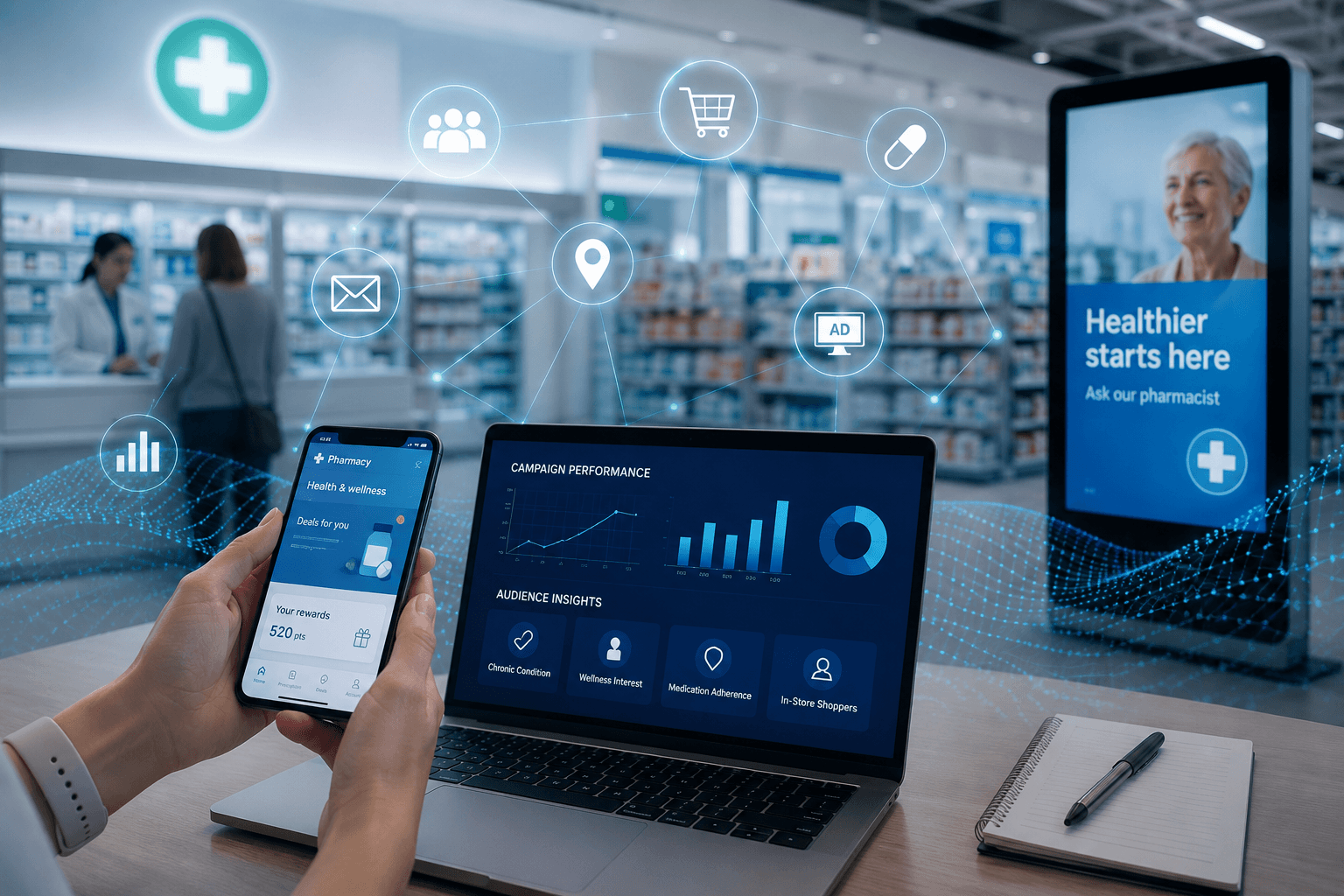
Retail pharmacies are no longer just places where patients pick up prescriptions. Today, chains like CVS, Walgreens, and Walmart are becoming powerful healthcare media platforms that influence how consumers discover treatments, engage with brands, and make purchasing decisions.
A strong pharmacy retail media strategy is quickly becoming essential for pharmaceutical companies that want to stay visible in an increasingly competitive healthcare landscape. Retailers now control valuable patient touchpoints, first-party data, and in-store digital channels that can shape healthcare decisions at the exact moment consumers are ready to act.
For years, pharma companies relied heavily on television, digital ads, and physician outreach. However, the balance of power is shifting. Retail pharmacies are emerging as the new media middlemen, creating closed-loop advertising systems that give marketers unprecedented targeting and measurement capabilities.
Table of Contents
- The rise of retail pharmacy media networks
- Why first-party healthcare data matters
- The power of closed-loop attribution
- How pharma brands should adapt
- The future of retail pharmacy advertising
Retail Pharmacies Are Becoming Media Powerhouses
Retail pharmacy chains have expanded far beyond dispensing medication. Many now operate full healthcare ecosystems that include primary care clinics, telehealth services, wellness programs, and digital health platforms. Because of this evolution, they have gained access to highly valuable consumer behavior data.
Companies like CVS Health and Walgreens are investing heavily in retail media networks that mirror strategies used by Amazon and Walmart. These networks allow brands to advertise directly to highly targeted healthcare audiences across websites, mobile apps, email campaigns, in-store screens, and connected TV platforms.
Unlike traditional advertising channels, retail pharmacies interact with patients during key healthcare moments. For example, a customer searching for allergy medication or filling a diabetes prescription creates a rich opportunity for highly relevant advertising. As a result, marketers can deliver personalized messaging when consumer intent is strongest.
This transformation is changing the role pharmacies play in healthcare advertising. Instead of serving only as retail partners, pharmacies are now becoming full-scale media owners. Consequently, pharma brands must develop a smarter retail media approach that aligns with these new healthcare realities.
Retail pharmacy advertising also gives brands access to consumers closer to the point of care than many traditional media platforms. That shift is redefining how healthcare marketers think about patient engagement and brand visibility.
Why First-Party Healthcare Data Is So Valuable
One of the biggest reasons retail pharmacies are gaining advertising power is their access to first-party data. As privacy regulations tighten and third-party cookies disappear, healthcare marketers are searching for reliable ways to understand audience behavior.
Retail pharmacies possess a massive amount of consented consumer information. This includes prescription histories, over-the-counter purchases, loyalty program activity, appointment scheduling, and wellness engagement data. When combined responsibly and compliantly, this information creates highly detailed audience segments.
For pharma marketers, this level of insight is incredibly valuable. Instead of relying on broad demographic targeting, brands can create campaigns tailored to specific patient needs and health interests. As a result, advertising becomes more relevant and potentially more effective.
Additionally, pharmacy retailers can connect online engagement with real-world purchasing behavior. This creates a level of visibility that many digital advertising platforms cannot offer.
Because of these capabilities, pharmacy media networks are becoming closely tied to data-driven healthcare marketing. Brands that fail to leverage these retail ecosystems may struggle to compete in an environment where precision targeting and measurable outcomes matter more than ever.
For marketers looking to strengthen omnichannel healthcare campaigns, platforms like Healthcare.pro can also support patient engagement and healthcare marketing strategies across digital channels.
Closed-Loop Attribution Is Changing Pharma Advertising
One of the most attractive features of retail pharmacy media networks is closed-loop attribution. In simple terms, this means advertisers can track the connection between an ad exposure and an actual purchase or healthcare action.
Traditional pharmaceutical advertising has often struggled with measurement. Television campaigns, display ads, and even physician outreach can be difficult to tie directly to patient outcomes. Retail pharmacy platforms are helping solve that problem.
Because pharmacies control both advertising inventory and transaction data, they can provide marketers with clearer performance insights. For instance, a brand may learn whether a digital campaign increased prescription fills, vaccine appointments, or wellness product sales within a specific timeframe.
This level of attribution is particularly appealing as pharma companies face increased pressure to justify marketing spend. Marketing leaders now want measurable business impact, not just impressions or clicks.
Furthermore, pharmacy-based audience targeting is becoming more sophisticated as retailers expand their digital ecosystems. Sponsored search placements, loyalty-based promotions, and personalized wellness messaging are now central components of modern healthcare retail advertising.
Healthcare companies exploring broader digital transformation strategies can also benefit from resources available through eHealthcare Solutions, especially when integrating healthcare advertising with modern audience targeting approaches.
How Pharma Marketers Must Adapt
The rise of retail pharmacy media networks requires a major shift in pharma marketing strategy. Brands can no longer treat pharmacies solely as distribution partners. Instead, they must view them as influential advertising and data partners.
First, marketers should prioritize collaboration with retail media teams early in campaign planning. This helps ensure messaging aligns with consumer behavior insights and available audience segments.
Second, pharma companies need stronger omnichannel integration. Patients move fluidly between digital research, physician consultations, retail interactions, and online healthcare platforms. Therefore, campaigns must create consistent experiences across every touchpoint.
Third, brands should focus on educational and patient-centered content rather than overly promotional messaging. Consumers increasingly expect relevant healthcare information that supports informed decision-making.
Additionally, compliance and privacy considerations remain critical. Healthcare advertising requires careful handling of sensitive data and strict adherence to regulatory guidelines. Marketers should work closely with legal and compliance teams to maintain trust and transparency.
Most importantly, pharma brands must recognize that retail pharmacy advertising is not a short-term trend. It represents a long-term structural shift in how healthcare advertising operates.
The Future of Retail Pharmacy Advertising
Retail pharmacies are positioned to become even more influential in healthcare marketing over the next several years. As these companies continue expanding into primary care, diagnostics, and digital health, their advertising ecosystems will likely grow more sophisticated.
Artificial intelligence, predictive analytics, and personalized patient journeys will play larger roles in campaign optimization. At the same time, retailers will continue building proprietary advertising technologies that give brands deeper performance insights.
This evolution may also reshape relationships between pharmaceutical companies, healthcare providers, and consumers. Retail pharmacies increasingly sit at the center of healthcare discovery and patient engagement. Consequently, they are becoming critical gatekeepers for healthcare attention.
For pharma marketers, adapting early offers a competitive advantage. Companies that invest in strong retail partnerships, data-driven campaigns, and measurable patient engagement strategies will be better positioned for the future of healthcare advertising.
Conclusion
Retail pharmacy chains are rapidly transforming into powerful healthcare media networks with growing influence over patient engagement and advertising performance. Their access to first-party data, closed-loop attribution, and point-of-care interactions gives them unique advantages in the evolving healthcare marketing landscape.
As a result, pharma companies must rethink traditional advertising approaches and embrace modern pharmacy media partnerships. Those that adapt quickly will gain stronger audience targeting, improved measurement capabilities, and more meaningful patient connections in the years ahead.
FAQ
How do retail pharmacy media networks work?
Retail pharmacy media networks allow brands to use pharmacy-owned advertising platforms and consumer insights to reach highly targeted healthcare audiences across digital and in-store channels.
Why are retail pharmacies important in healthcare advertising?
Retail pharmacies interact directly with patients during healthcare decisions, giving advertisers access to valuable first-party data and point-of-care engagement opportunities.
What is closed-loop attribution in pharmacy advertising?
Closed-loop attribution allows marketers to track whether advertising exposure leads to actions such as prescription fills, appointments, or healthcare purchases.
How are pharmacies competing with traditional advertising platforms?
Pharmacies now offer targeted digital advertising, loyalty-based audience segmentation, and measurable campaign analytics that compete with major retail media networks.
How can pharma companies improve their pharmacy retail media approach?
Pharma companies can improve by integrating omnichannel marketing, leveraging first-party data responsibly, and building partnerships with retail pharmacy media networks.
This content is not medical advice. For any health issues, always consult a healthcare professional. In an emergency, call 911 or your local emergency services.