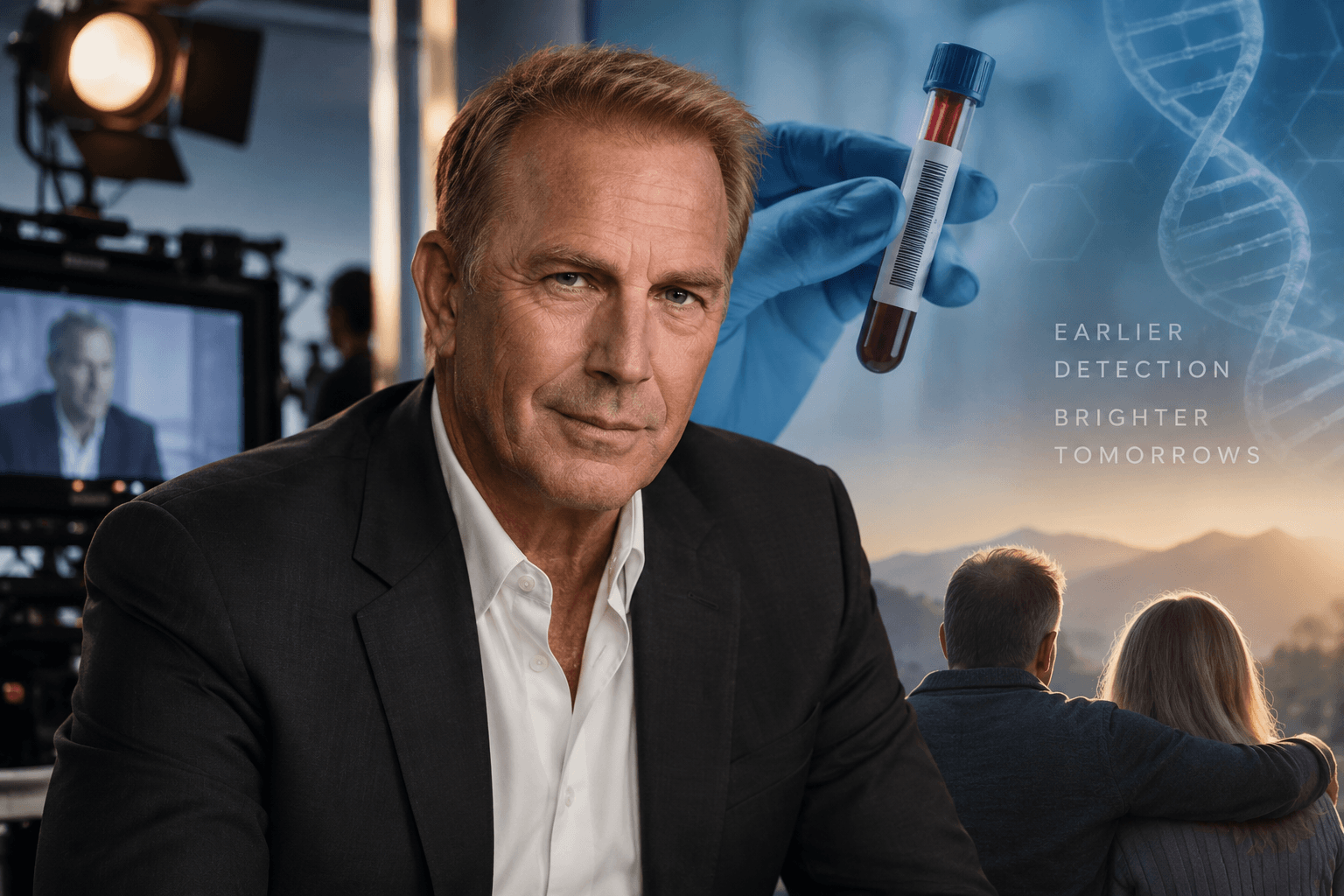
Kevin Costner is not an oncologist, yet he is now the public face of a national conversation about finding cancer earlier. Caris Life Sciences launched its “Math” campaign featuring the award-winning actor to promote awareness of Caris Detect, its multi-cancer early detection blood test. It is a high-profile example of how celebrity partnerships in pharma are moving beyond simple product recognition. Instead, the celebrity is being asked to make a complicated healthcare idea feel understandable, relevant, and worth acting on. For pharmaceutical and healthcare marketers, that raises a more interesting question than whether Costner attracts attention: What actually makes audiences believe a celebrity belongs in a healthcare conversation?
Table of Contents
- Why Kevin Costner fits the Caris Detect message
- What creates celebrity credibility in healthcare
- When celebrity recognition becomes a marketing liability
- What pharma marketers should learn from the campaign
- Conclusion
- FAQs
Why Kevin Costner Fits the Caris Detect Campaign
Caris Life Sciences launched Caris Detect commercially in July 2026. The company describes the test as a multi-cancer early detection blood test using whole genome and whole transcriptome sequencing alongside artificial intelligence to identify molecular signals associated with cancer.
That science is not especially easy to communicate in a 30- or 60-second advertisement. Therefore, the creative challenge is less about explaining sequencing technology and more about giving consumers a reason to care about early detection. Costner becomes the bridge between those two ideas.
Caris says his authenticity, credibility, and ability to connect across generations were among the reasons behind the partnership. Meanwhile, Costner frames his participation through the personal reality that cancer affects families and people he knows.
That distinction matters. Successful celebrity partnerships in pharma rarely depend on fame alone. The spokesperson must feel appropriate for the audience, disease category, message, and desired action. Costner brings decades of familiarity and a public persona that can communicate seriousness without making the campaign feel clinical.
More importantly, the creative does not require viewers to believe that Costner understands molecular oncology. His role is to make them pay attention to the value of knowing earlier. That is a much more credible assignment for a celebrity.
What Makes a Celebrity Credible in Healthcare?
Healthcare marketers often talk about celebrity “fit,” but fit involves several different factors. Research examining celebrity influence on health behavior points to trustworthiness and perceived expertise as important elements of source credibility. However, celebrity status can also create a halo effect, where positive impressions in one area are incorrectly transferred to medical credibility.
For marketers, that creates both opportunity and risk. A famous actor can command attention immediately. However, familiarity does not automatically give that person credibility on every healthcare topic.
Authenticity Matters More Than Medical Authority
A celebrity does not necessarily need medical expertise to contribute to a healthcare campaign. Instead, the campaign needs to establish why that person is participating.
Personal experience can provide that connection. So can advocacy, age, family experience, or a longstanding association with an issue. In contrast, an unexplained endorsement can quickly feel transactional.
Research on health endorsements also distinguishes credibility from authenticity. Authenticity reflects whether an endorser appears genuine and transparent, while credibility involves qualities such as expertise and trustworthiness.
That helps explain the structure of the Caris campaign. Costner is not positioned as the scientific authority behind Caris Detect. Instead, he introduces a simple proposition about early detection, while Caris carries the scientific burden.
The company’s consumer materials explain how the test works, who it is intended for, its reported performance, and important limitations. Caris also states that Detect complements rather than replaces routine cancer screening and that false-positive and false-negative results can occur.
In other words, the celebrity opens the door. The evidence must still walk through it.
When Celebrity Recognition Becomes a Healthcare Marketing Risk
Celebrity involvement becomes more problematic when the personality overwhelms the subject. This risk is especially significant in cancer, prescription drugs, diagnostic testing, and other high-stakes categories. Consumers may remember the celebrity while forgetting qualifications, limitations, or even the company behind the advertisement.
Additionally, fame can create perceived authority that has little relationship to medical expertise. That becomes dangerous when a celebrity moves from raising awareness to appearing to make clinical recommendations.
Research has also raised concerns about celebrities promoting non-evidence-based cancer interventions, particularly when personal testimonials or commercial interests substitute for reliable scientific evidence.
Consequently, celebrity partnerships in healthcare need clear boundaries. The celebrity should have a clearly defined role. That might mean building awareness, reducing stigma, encouraging conversations with healthcare professionals, or making an unfamiliar condition feel personally relevant.
However, the closer the message gets to individual medical decision-making, the more important qualified healthcare professionals and evidence become. For consumers considering screening or testing decisions, speaking with a healthcare professional remains essential. Resources such as Healthcare.pro can also help people connect with appropriate healthcare guidance.
What Pharma Marketers Can Learn From Kevin Costner
The Costner campaign offers a useful framework for evaluating future celebrity-driven pharma campaigns. First, start with the audience rather than the celebrity. A recognizable name has little value if that person does not resonate with the people the campaign needs to reach.
Second, determine the spokesperson’s authority before developing the creative. What can this celebrity credibly say? More importantly, what should the celebrity not say?
Third, match the emotional weight of the personality to the health topic. Cancer detection requires a very different tone from allergy treatment, skincare, weight management, or migraine prevention.
Finally, protect the product story. Celebrity recognition should create attention that flows toward the health message, evidence, brand, and next step.
This is particularly important as healthcare advertising becomes more fragmented across television, connected TV, search, social platforms, and programmatic media. Effective campaigns need credibility to survive across every channel, not simply during a polished television spot. Healthcare marketers building those strategies can explore additional industry perspectives and digital advertising solutions from eHealthcare Solutions.
Caris appears to understand that distinction. Its campaign gives Costner the simple human message while leaving the complex scientific claims to the company and its supporting materials.
That may ultimately be the strongest use of celebrity in healthcare: not borrowing someone’s fame to manufacture authority, but using familiarity to earn enough attention for the real information to be heard.
Conclusion
Celebrity partnerships in pharma work best when recognition supports credibility rather than replacing it. Kevin Costner gives Caris Detect something molecular science cannot provide by itself: instant familiarity and an accessible human voice. However, the campaign still depends on Caris to substantiate the product, communicate its limitations, and explain what consumers should do with the information.
For healthcare marketers, the lesson is straightforward. Do not ask whether a celebrity is famous enough. Ask whether the person has the right combination of relevance, authenticity, and credibility to deliver this particular message.
When the answer is yes, celebrity involvement can make complicated healthcare communication more approachable. When the answer is no, star power can become expensive noise.
FAQs
Why did Caris Life Sciences choose Kevin Costner?
Caris says Costner’s authenticity, credibility, and ability to connect across generations can help bring attention to early cancer detection. His role centers on communicating the importance of finding cancer earlier rather than explaining the underlying science.
What makes a celebrity partnership credible in pharma marketing?
Audience fit, trustworthiness, authenticity, relevance to the health topic, and a clearly defined role all matter. Evidence and appropriate medical expertise should support the health claims behind the campaign.
Can a celebrity spokesperson hurt a healthcare campaign?
Yes. A celebrity can distract from the product, create inappropriate perceptions of medical authority, or make an endorsement appear transactional. The risk increases when the celebrity’s public image does not naturally fit the healthcare topic.
Should celebrities give medical advice in healthcare advertising?
Celebrities can encourage awareness and conversations about health, but they should not substitute for qualified healthcare professionals or scientific evidence. Campaigns should clearly distinguish personal advocacy from medical expertise.
What should pharma marketers consider before hiring a celebrity?
Marketers should evaluate audience relevance, authenticity, reputation risk, message complexity, regulatory considerations, creative role, and whether the celebrity strengthens recall of the health message rather than merely generating attention.
This content is not medical advice. For any health issues, always consult a healthcare professional. In an emergency, call 911 or your local emergency services.