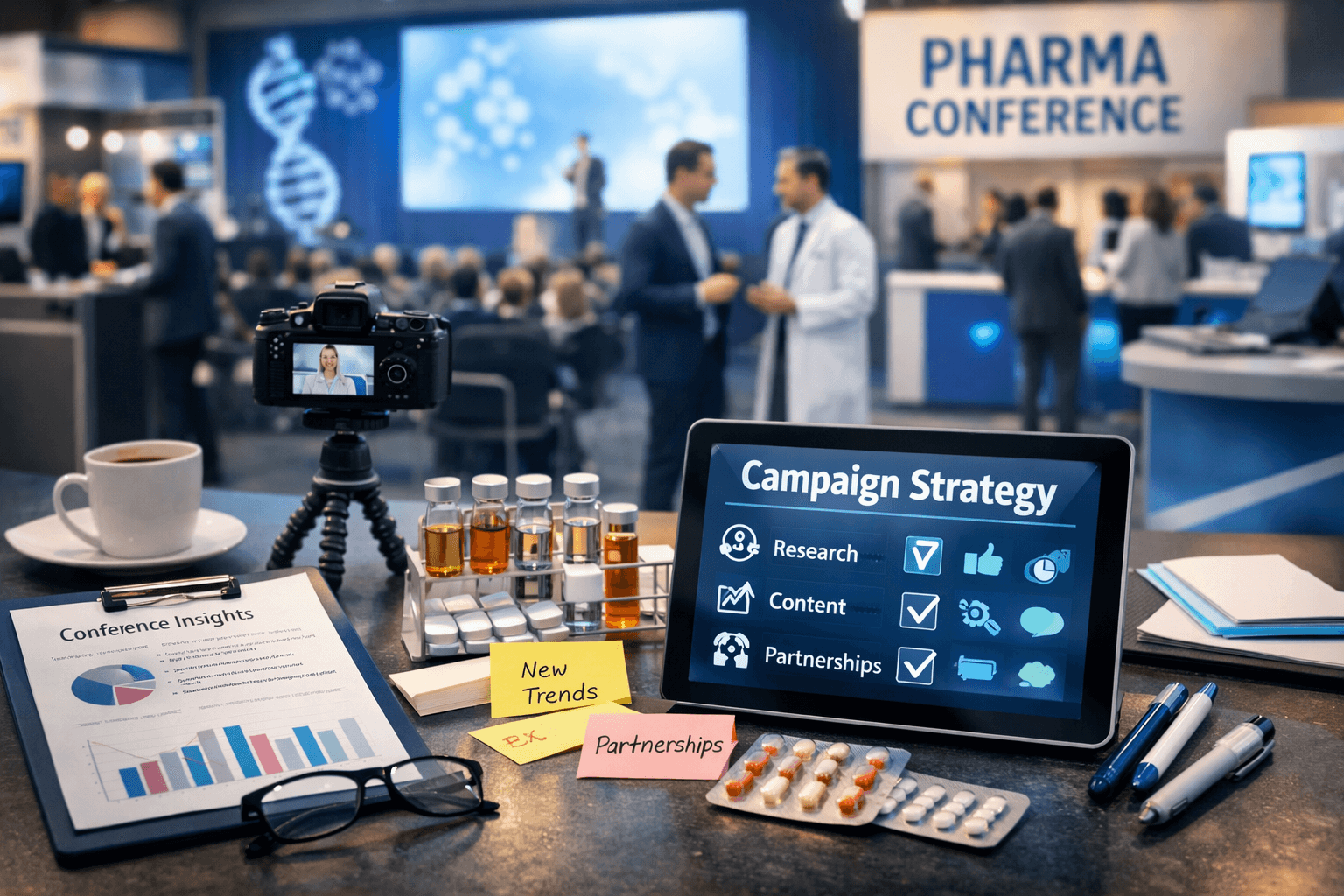
Pharma conferences brim with insights, new faces, and fresh ideas, yet most organizations struggle to turn that energy into sustained post-event momentum. A well-defined pharma conference marketing strategy transforms an event from a calendar checkbox into a structured research sprint that fuels briefs, content calendars, and partnership experiments. In this article, we’ll walk through a practical framework that helps life sciences marketers get more from every conference in 2026 and beyond.
Table of Contents
- Why Pharma Conferences Matter
- A Framework for Event-Driven Marketing
- Pre-Event Preparation
- Maximizing the Event
- Post-Event Activation
- Measurement & Optimization
- Conclusion
- Frequently Asked Questions
Why Pharma Conferences Matter
Conferences are more than stages and booths. They are concentrated environments where thought leaders, potential partners, clinicians, and industry peers converge. With hundreds or thousands of attendees in one place, you get a rare opportunity to collect insights, validate assumptions, and test messages directly in front of your target audience.
Yet without a cohesive pharma conference marketing strategy, much of this potential goes unrealized. Teams often return with business cards and event photos, but no clear plan for converting those interactions into measurable marketing outcomes.
A Framework for Event-Driven Marketing
An effective strategy breaks the conference lifecycle into three phases: pre-event preparation, during-event engagement, and post-event activation. Each phase has specific goals, deliverables, and checkpoints that ensure events contribute meaningfully to year-long campaigns.
Below, we unpack each phase with recommended actions and tools that align with modern pharma marketing priorities.
Pre-Event Preparation
Good preparation sets the foundation for impact. Before the conference, your team should answer critical questions: What insights are we seeking? Which audiences matter most? Are we testing messaging for an upcoming launch? These answers shape your pharma conference marketing strategy and guide your activation plan.
Start by defining clear objectives. For example, you might aim to validate emerging trends in oncology, build a list of thought leaders for roundtable content, or identify partnership prospects with digital health innovators. With goals in hand, create a pre-event content and engagement plan that includes social media buzz, email outreach, and appointment scheduling.
Develop a content playbook that outlines key messages aligned with your event focus and audience segments. This playbook will keep your team aligned and ensure consistency when engaging stakeholders at the event.
Maximizing the Event
At the event, execution matters. Your team should capture rich insights and interactions in real time, so information doesn’t get lost in notebooks and voicemail messages. Equip your team with a shared digital workspace—such as cloud-based forms or notes—to log quotes, trends, and conversation highlights instantly.
Organize quick daily syncs with your team to review what you learned, and course-correct for the next day. These micro-reviews help translate ad-hoc conversations into structured data that can inform content briefs and campaign hypotheses.
Don’t overlook opportunistic content creation. Record short interviews with experts, take high-value photos, and gather attendee perspectives that your audience back home will find valuable. Doing this in a systematic way amplifies the reach of your presence long after the exhibit halls close.
Post-Event Activation
The work after the conference is where an effective pharma conference marketing strategy truly pays off. Too often, teams file away business cards and exit surveys without synthesizing them into actionable outcomes. Instead, build a post-event activation plan with clear deliverables and timelines.
Start with debriefs: host a structured session where your team reviews key takeaways against your original objectives. What insights emerged? Which conversations merit follow-ups? These debriefs form the basis of post-event briefs that your content, digital, and partnership teams can act on.
Translate findings into your editorial calendar. For example, if you identified a trend or unmet need during the event, assign content pieces that address it. Video snippets, expert commentary, and data insights are all valuable assets that keep your audience engaged long after the conference.
Finally, segment your leads and interactions based on priority and intent. Personalize follow-up campaigns to nurture relationships that started onsite, ensuring that valuable connections don’t go cold.
Measurement & Optimization
Measurement makes your strategy repeatable and improves ROI over time. Define KPIs before the event so you can quantify success. These may include lead quality scores, content engagement rates, partnership conversions, or social buzz metrics tied to the event hashtag.
Immediately after the event, conduct a performance review against these KPIs. What worked well? Where did the strategy fall short? Capture lessons learned in a living document that informs future conference participation.
Over time, this data will reveal patterns that help you choose which conferences to attend, which messaging resonates best, and how to allocate budget more efficiently. Consistent measurement turns a single conference into a data point within a larger, optimized marketing engine.
Conclusion
Pharma conferences hold immense value for marketers, but only when approached through a disciplined pharma conference marketing strategy. By structuring your approach across pre-event preparation, active engagement, and post-event activation, you ensure that every conference becomes a source of insights, content, and measurable progress toward your broader goals. With clear objectives, real-time execution, and thoughtful follow-through, you can turn events into campaign fuel that drives sustained impact throughout 2026 and beyond.
Frequently Asked Questions
What is a pharma conference marketing strategy?
A pharma conference marketing strategy is a planned approach that guides how life sciences marketers prepare for, engage during, and activate after industry events to generate insights, content, and measurable outcomes.
How can I measure the success of my event marketing?
To measure success, set KPIs before the event, such as lead quality, content engagement rates, or partnership opportunities. After the event, compare results against these metrics and capture lessons learned for future improvements.
What should be included in pre-event preparation?
Pre-event preparation should include clear objectives, a content playbook, audience segmentation, outreach plans, and coordination across teams to ensure everyone knows their role and goals for the event.
How do I turn event interactions into campaigns?
Capture insights during the event, debrief with your team afterward, and convert findings into content briefs, follow-up sequences, editorial calendar items, or partnership initiatives to sustain momentum post-conference.
This content is not medical advice. For any health issues, always consult a healthcare professional. In an emergency, call 911 or your local emergency services.