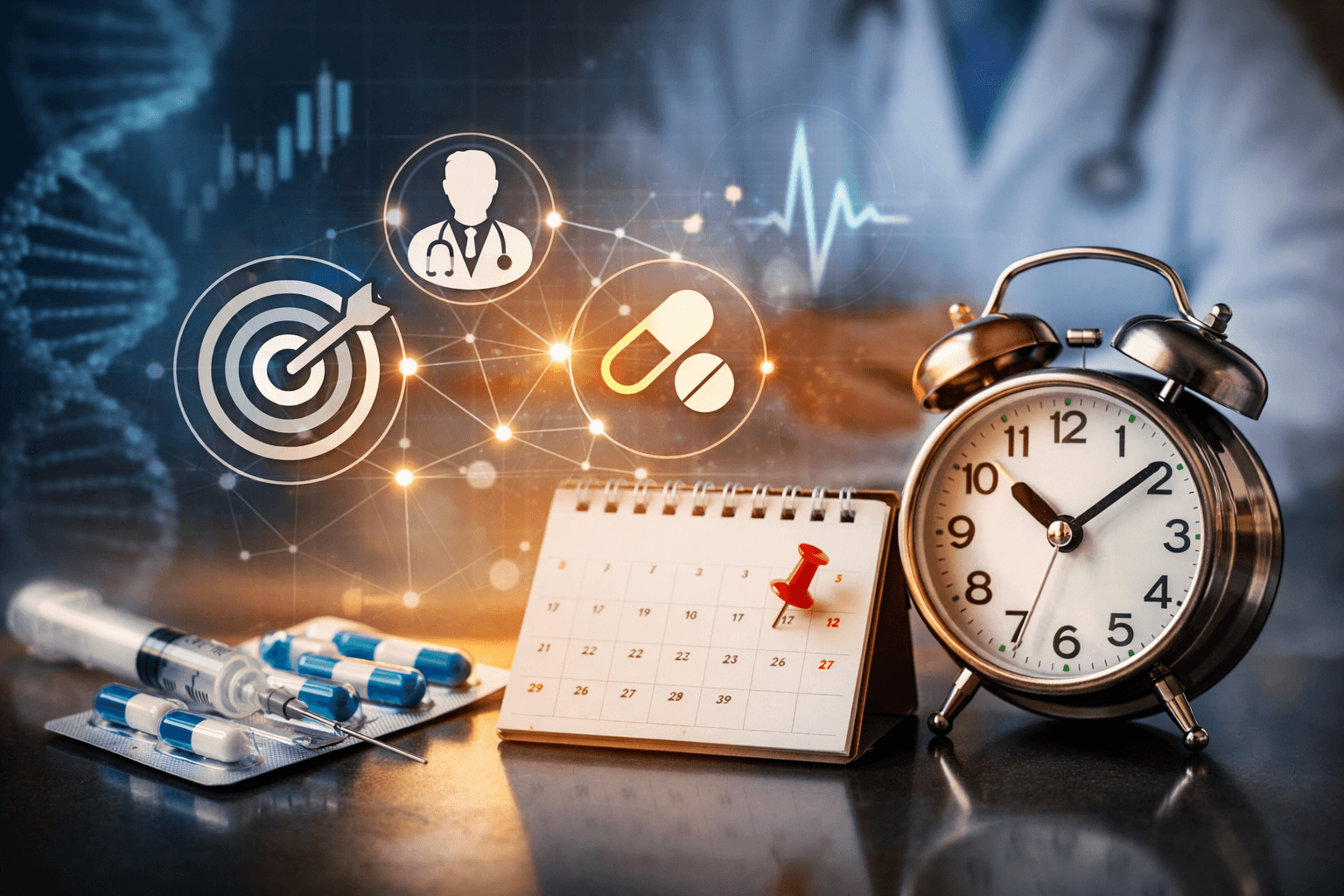
Pharma targeting strategies have become increasingly precise, yet many campaigns still underperform. Why does this happen? Imagine delivering the right message to the right doctor, but at the wrong moment. Even the most advanced segmentation cannot compensate for poor timing. Today, marketers are starting to realize that when you engage matters just as much as who you target. This shift is reshaping how pharmaceutical brands approach performance and patient outcomes.
Table of Contents
- The evolution of targeting in pharma marketing
- Why timing matters in healthcare engagement
- Aligning messaging with clinical context
- Building a smarter, time-aware strategy
- Conclusion
- FAQs
How Pharma Targeting Strategies Have Evolved
Over the past decade, pharma targeting in the industry has evolved from broad demographic segmentation to highly refined, data-driven personalization. Marketers now rely on real-world data, prescribing behavior, and digital signals to identify high-value healthcare professionals. As a result, campaigns have become more efficient and measurable.
However, while targeting has improved, engagement rates often plateau. This happens because even the most accurate audience selection cannot guarantee attention. For example, a physician may be highly relevant to your product but unavailable or distracted during outreach. Therefore, targeting alone does not ensure impact.
Moreover, healthcare decisions are rarely made in isolation. Physicians operate within busy schedules, clinical pressures, and patient demands. Because of this, timing becomes a critical variable. A well-timed message can resonate deeply, while a poorly timed one may be ignored entirely.
In addition, digital channels have increased competition for attention. Emails, webinars, and ads flood healthcare professionals daily. Consequently, standing out requires more than relevance. It requires precision in delivery timing as well.
To explore more strategies on improving engagement, visit pharma marketing insights.
Why Timing Matters in Healthcare Engagement
Timing plays a crucial role in determining whether a message is seen, understood, and acted upon. While a strong pharma targeting approach identifies the right audience, timing ensures the message lands when it matters most.
For instance, a physician is more likely to engage with content related to a condition they recently diagnosed. Similarly, patient readiness influences how information is received. If a patient is newly diagnosed, educational content may be more effective than promotional messaging.
Furthermore, clinical milestones create natural engagement opportunities. Treatment initiation, therapy switching, or disease progression are key moments when information becomes highly relevant. Therefore, aligning outreach with these moments can significantly improve outcomes.
Another important factor is channel timing. Emails sent during peak clinical hours may be ignored, while those delivered during quieter periods have a higher chance of being opened. Likewise, digital ads perform better when aligned with browsing behavior.
According to healthcare communication research from World Health Organization, timely information delivery improves both understanding and adherence. This highlights the importance of integrating timing into your strategy.
Aligning Messaging with Clinical Context
To fully optimize targeting in pharma marketing, marketers must consider clinical context alongside timing. This means understanding not just who the audience is, but what they are experiencing at a given moment.
For example, oncologists treating late-stage patients may prioritize different information compared to those managing early-stage cases. Therefore, messaging should adapt to these nuances. When timing and context align, communication becomes more meaningful.
Additionally, patient journeys are not linear. They involve multiple touchpoints, decisions, and emotional stages. Because of this, static campaigns often fail to connect. Instead, dynamic messaging that evolves with the patient journey proves more effective.
Even the most advanced targeting strategy in pharma can fall short if timing is ignored. Technology plays a key role in enabling a more responsive approach. Advanced analytics and AI tools can identify patterns in behavior and predict optimal engagement windows.
If you are exploring digital solutions for this, consider resources from healthcare digital marketing experts to refine your approach.
Moreover, collaboration between marketing and medical teams enhances contextual relevance. While marketers focus on engagement, medical teams ensure accuracy and clinical value. Together, they create more impactful communication.
Building a Smarter, Time-Aware Strategy
Integrating timing into your overall pharma targeting efforts requires a structured approach. First, identify key moments in the healthcare journey. These may include diagnosis, treatment initiation, or follow-up care. Then, map your messaging to these moments.
Next, leverage data to understand behavior patterns. For instance, analyze when healthcare professionals engage with content or prescribe treatments. This insight helps refine delivery timing.
In addition, adopt flexible campaign frameworks. Instead of fixed schedules, use trigger-based systems that respond to real-world events. This ensures your messaging remains relevant and timely.
Another important step is testing and optimization. Continuously evaluate performance metrics such as open rates, click-through rates, and conversions. Over time, these insights will reveal the most effective timing strategies.
Furthermore, ensure compliance and ethical considerations are maintained. Timing should enhance value, not create pressure. Responsible communication builds trust and long-term relationships.
If you need guidance on aligning strategy with patient care, platforms like professional healthcare support can provide valuable direction.
Ultimately, success lies in balancing precision targeting with intelligent timing. When both elements work together, marketing becomes more impactful and patient-centered.
Conclusion
Pharma targeting has reached a high level of sophistication, yet timing remains an underutilized lever. By focusing on when to engage, marketers can significantly enhance performance and relevance. Timing, combined with clinical context, transforms communication from informative to truly impactful. As the industry evolves, those who embrace time-aware strategies will gain a clear competitive advantage.
FAQs
What is a pharma targeting strategy?
A pharma targeting strategy involves identifying and engaging specific healthcare professionals or patient groups most likely to benefit from a product.
Why is timing important in pharma marketing?
Timing ensures that messages are delivered when they are most relevant, increasing engagement and effectiveness.
How can marketers improve timing in campaigns?
Marketers can use data analytics, behavioral insights, and trigger-based systems to optimize when messages are delivered.
What role does clinical context play in targeting?
Clinical context ensures that messaging aligns with the current needs and situations of healthcare providers or patients.
Can timing improve patient outcomes?
Yes, timely communication can enhance understanding, adherence, and overall treatment success.
This content is not medical advice. For any health issues, always consult a healthcare professional. In an emergency, call 911 or your local emergency services.