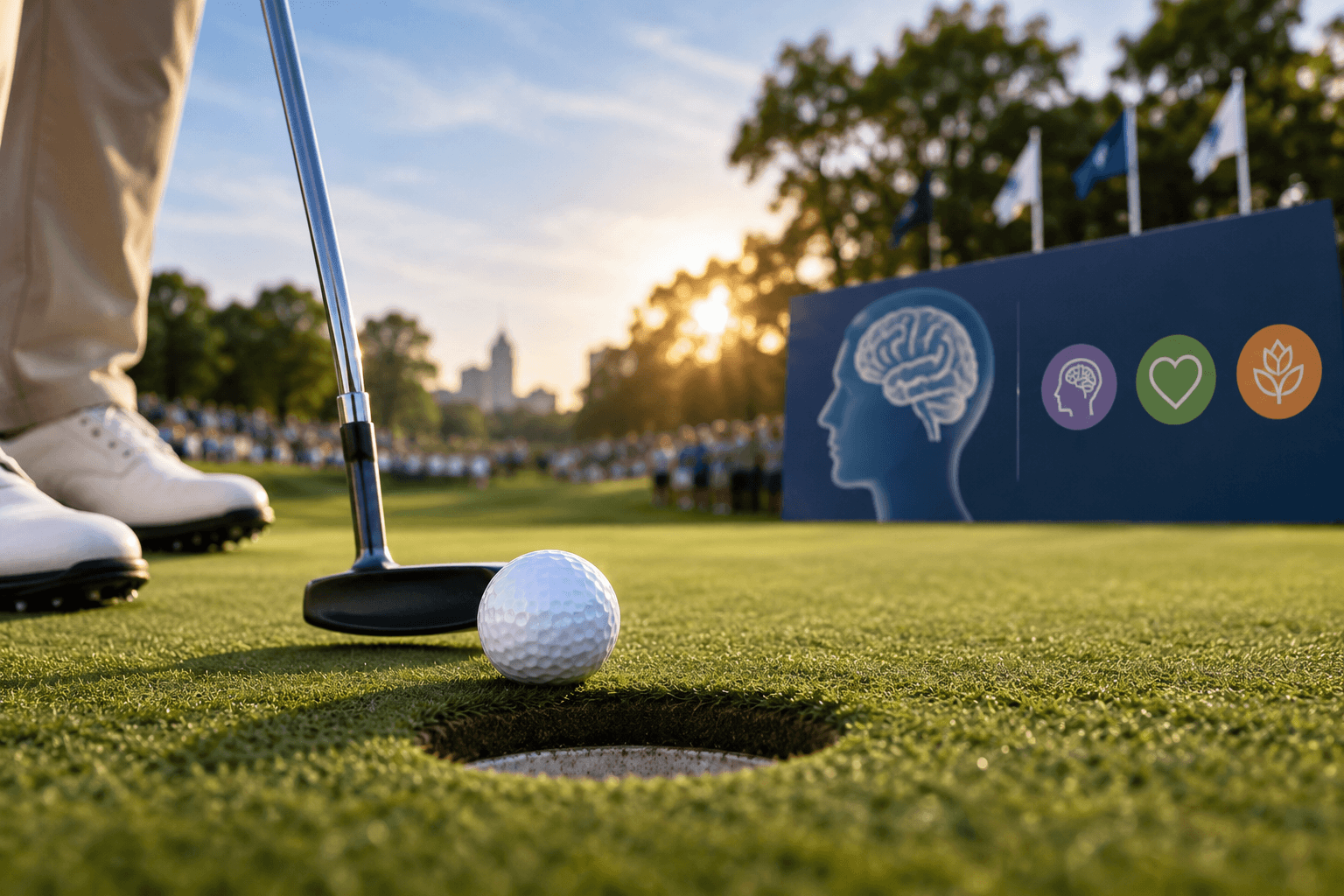
What if every great moment in a sporting event could trigger something meaningful beyond the scoreboard? AbbVie is testing that idea with Birdies for Brain Health, a new PGA TOUR partnership that connects golf performance with support for neurological and mental health communities. The program offers an interesting model for purpose-driven pharma sponsorships, with social impact built directly into the mechanics of the sport. Rather than simply placing AbbVie branding beside a tournament, the campaign gives audiences a reason to connect each birdie with a broader health mission.
Table of Contents
- How AbbVie connects birdies with brain health
- Why the sponsorship mechanic matters
- What pharma marketers can learn from the partnership
- Moving beyond logo-based sports marketing
- Conclusion
- FAQ
How AbbVie Connects Golf With Brain Health
AbbVie became the Official Pharmaceutical Sponsor of the PGA TOUR and the 2026 Presidents Cup as part of a multi-year partnership announced in September 2026. At the center of the relationship is Birdies for Brain Health, which supports people living with neurological and mental health conditions, as well as their care partners.
The campaign begins at the 2026 Presidents Cup at Medinah Country Club in Illinois. AbbVie says it will make a donation recognizing the more than one in three people globally affected by a neurological disorder. That support will be shared among six patient advocacy organizations working across migraine, mental health, and Parkinson’s disease.
However, the more interesting marketing element arrives in 2027. AbbVie plans to make a donation for every birdie scored during PGA TOUR Signature Events and the FedExCup Playoffs. Therefore, a familiar golf statistic becomes a recurring trigger for the campaign’s health-related action.
That connection matters because spectators do not have to leave the sporting experience to understand the idea. A birdie happens, and the campaign gains another opportunity to reinforce its purpose.
AbbVie is also partnering with golfer Gary Woodland, the 2019 U.S. Open champion and a U.S. captain’s assistant for the 2026 Presidents Cup. Woodland underwent surgery in 2023 to remove a benign brain lesion and has publicly discussed his recovery. His participation gives the initiative a personal connection to the broader brain health conversation.
Why Purpose-Driven Pharma Sponsorships Need More Than Visibility
Sports sponsorship has traditionally been very good at creating visibility. A corporate name can appear on signs, broadcasts, hospitality areas, digital content, and promotional materials. Yet visibility alone does not necessarily explain why a healthcare company belongs in that environment.
That is where pharma brands have an opportunity to make sponsorships more meaningful.
Birdies for Brain Health does not merely attach a healthcare message to golf. Instead, it uses an event inside golf to generate repeated moments of action. Every birdie can remind viewers that the partnership supports brain health organizations.
In other words, the sport becomes part of the message.
That distinction could be especially useful for pharmaceutical marketers. Healthcare brands operate in a category where trust, relevance, and credibility matter. Consequently, a sponsorship that demonstrates a clear connection to patient communities may carry more meaning than exposure alone.
Pharma Marketing Network has previously explored how high-impact pharmaceutical sponsorships can move beyond basic visibility by creating relevant experiences for audiences. AbbVie’s approach applies a similar principle to a large consumer sports platform.
Importantly, the campaign is not centered on promoting a specific prescription product. Instead, the focus remains on brain health, patient advocacy, care partners, and the organizations serving those communities.
From Logo Placement to Continuous Participation
The strongest idea behind AbbVie’s campaign may be repetition.
One donation announcement can create a news cycle. However, linking donations to birdies can create recurring moments throughout a tournament and, beginning in 2027, across multiple events.
That turns sponsorship from a static placement into an ongoing system.
AbbVie has already experimented with a similar sports-based formula. Its broader brand partnership portfolio includes a Major League Baseball initiative in which the company makes a donation to Stand Up To Cancer for every strikeout thrown by MLB pitchers in 2026.
Together, the baseball and golf programs suggest a recognizable strategy: identify an action fans already understand, connect that action with a health cause, and allow the sporting calendar to keep reinforcing the relationship.
For pharma marketers exploring more meaningful sports partnerships, this model raises a useful question. Instead of asking only, “Where can our brand appear?” teams might also ask, “What happens during this experience that our brand can meaningfully support?”
That shift can produce very different partnership ideas.
For example, a sponsorship can support research, patient organizations, education, or community resources whenever a defined sporting milestone occurs. Moreover, the concept is simple enough for audiences to understand quickly without turning the event into a healthcare lecture.
This emphasis on relevance also echoes Pharma Marketing Network’s guidance on choosing sponsorships for maximum impact, which stresses aligning sponsorship choices with goals, audiences, and credible organizations.
What Pharma Marketers Can Learn From AbbVie
AbbVie’s approach offers several lessons for healthcare brands looking to make sports sponsorships more meaningful.
First, the partnership mechanic should be easy to explain. “Birdies support brain health” is a concept audiences can grasp almost immediately.
Second, the cause should make sense for the organization. AbbVie’s campaign supports six established advocacy groups, including the American Migraine Foundation, National Headache Foundation, Mental Health America, National Alliance on Mental Illness, The Michael J. Fox Foundation for Parkinson’s Research, and Parkinson’s Foundation.
Third, purpose benefits from repetition. Because birdies happen naturally throughout golf tournaments, the campaign has many opportunities to reinforce its central idea without inventing a separate promotional event.
Finally, marketers should consider how these partnerships live beyond television coverage. Social content, patient stories, advocacy partnerships, earned media, and digital campaigns can extend the concept throughout the season. For pharmaceutical companies building these broader digital strategies, eHealthcare Solutions provides another example of how healthcare marketers can reach relevant audiences across specialized digital environments.
None of this means a cause-based sports partnership automatically creates trust. Audiences can still judge whether a program feels relevant, transparent, and sustained. Therefore, marketers need clear outcomes and credible partners behind the creative concept.
Conclusion
AbbVie’s PGA TOUR partnership shows how purpose-driven pharma sponsorships are moving beyond traditional brand visibility. Instead of treating golf as a backdrop for corporate exposure, Birdies for Brain Health makes something happening inside the sport part of the health initiative itself.
The model is straightforward: birdies create attention, attention reinforces the brain health message, and the sporting achievement ultimately connects with financial support for advocacy organizations.
For pharma marketers, that may be the larger lesson. The future of healthcare sponsorship does not necessarily depend on finding bigger logos or louder placements. Instead, stronger programs may come from finding meaningful actions that audiences can see, understand, and experience repeatedly.
When the sponsorship mechanism and the purpose reinforce each other, even a single birdie can become more than a number on a scorecard.
FAQ
What is AbbVie’s Birdies for Brain Health campaign?
Birdies for Brain Health is AbbVie’s PGA TOUR initiative supporting awareness and advocacy for neurological and mental health conditions. It launches at the 2026 Presidents Cup and expands in 2027 with donations tied to birdies at selected PGA TOUR events.
Which health areas does Birdies for Brain Health support?
The initiative supports advocacy organizations working in migraine, mental health, and Parkinson’s disease, with an emphasis on people living with these conditions and their care partners.
Why is AbbVie’s PGA TOUR sponsorship different from traditional sponsorships?
The campaign integrates its health purpose with an action that naturally occurs during golf. Beginning in 2027, birdies at PGA TOUR Signature Events and FedExCup Playoffs will trigger donations, creating repeated connections between the sport and the campaign.
What can pharma marketers learn from purpose-driven sports sponsorships?
Marketers can look for partnership mechanics that are simple, relevant to their health mission, connected with credible organizations, and repeatable throughout an event or season. This can give a sponsorship a role beyond corporate visibility.
What makes a purpose-driven pharma sponsorship effective?
An effective partnership connects a company’s health mission with an action audiences can easily understand. Credible advocacy partners, transparent goals, repeated engagement, and a clear connection between the sport and the cause can make the sponsorship more meaningful.
This content is not medical advice. For any health issues, always consult a healthcare professional. In an emergency, call 911 or your local emergency services.