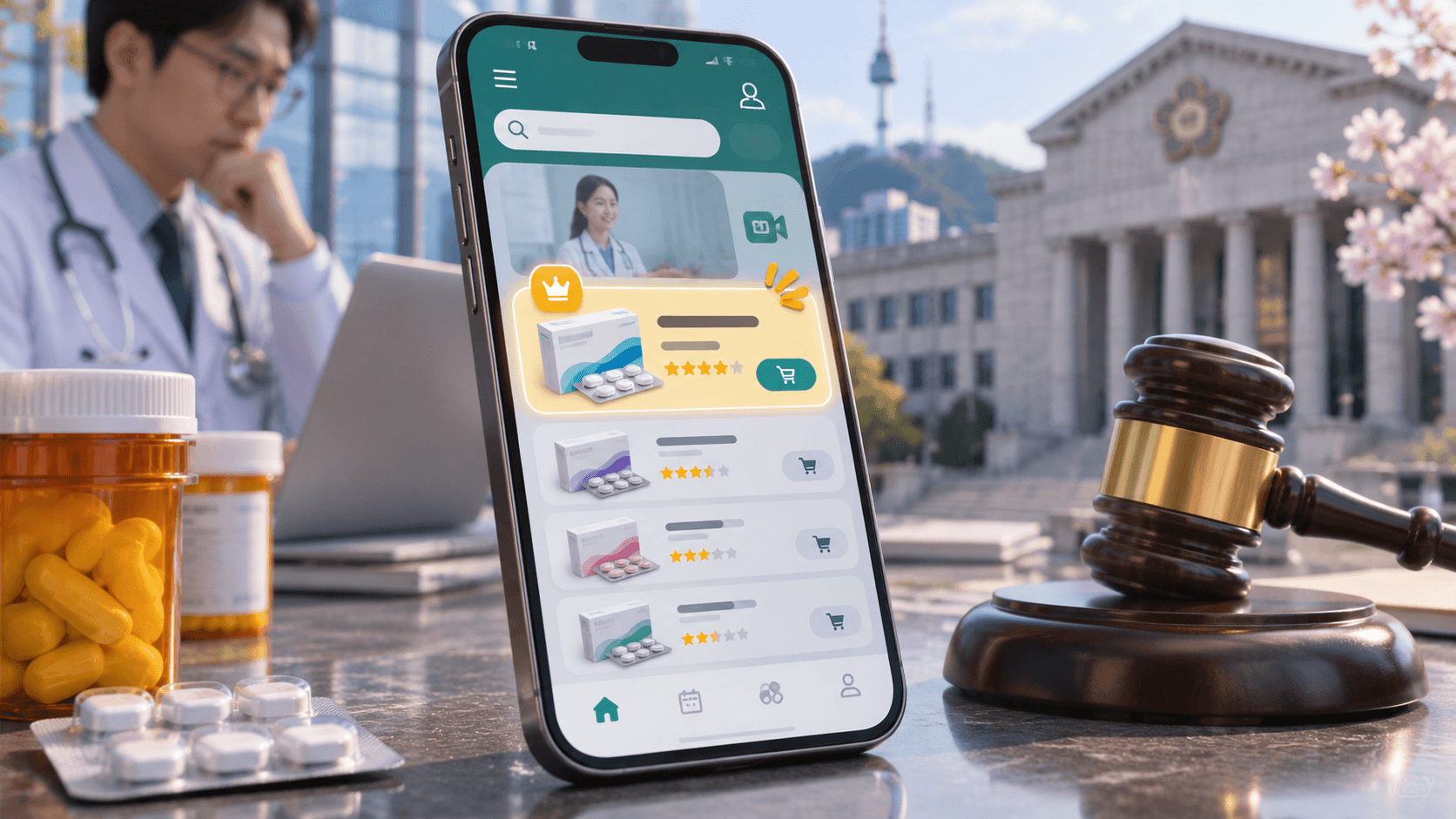
Can a health app advertise a drug without showing an ad? South Korea’s DoctorNow case shows why prescription app design deserves closer scrutiny. Its screens displayed selected medicines as “BEST Drugs,” showed patient reviews and prices, and let users request prescriptions. In October 2026, the country’s Supreme Court upheld a ruling that this amounted to unlawful prescription drug advertising. The lesson reaches well beyond one label.
Table of Contents
- How DoctorNow’s interface became an advertising issue
- Why rankings and reviews can promote drugs
- What the ruling means across markets
- How to design safer prescription journeys
- Conclusion
- FAQs
How DoctorNow’s Interface Became an Advertising Issue
In 2022, DoctorNow offered a “Get the Prescription You Want” feature. It listed selected prescription medicines as “BEST Drugs” for acne, hair loss, and allergies. Tapping a medicine revealed its effects, price, and detailed patient reviews. Users could then add that product to a cart and request a prescription, subject to a remote consultation.
Individually, those features might resemble ordinary information. Together, however, they formed a journey from drug discovery to selection to prescription request. As SBS News reported, lower courts noted that few drugs appeared in each category. Consequently, patients might mistake the featured products for the most effective treatments. The courts also considered how frequently these medicines were prescribed. The problem was the impression created by the full experience, not simply a promotional slogan.
Why Rankings and Reviews Can Promote Drugs
A ranking can carry a medical message even when its creators intend it as navigation. Labels like “best,” “top,” and “recommended” suggest authority to someone seeking treatment. Yet popularity, clicks, or placement do not establish clinical superiority. That’s why healthcare apps should clearly distinguish popular medications from treatments supported by clinical evidence.
Patient reviews can strengthen that impression. One person’s positive experience may be compelling, but it cannot prove a treatment is safe or effective for everyone. Moreover, testimonials beside prices and a prescription button can make medicine selection resemble ordinary online shopping. Pharma Marketing Network’s analysis of patient reviews and clinical evidence explains why those forms of information should remain distinct.
Conversion choices matter, too. For example, a prominent request button, preselected medicine, or shortcut past treatment alternatives can influence decisions before a clinician evaluates the patient. Even without a conventional ad, the screen sequence may carry promotional meaning. The question is what users are being encouraged to do.
What the DoctorNow Ruling Means for Digital Health Apps
South Korea’s Pharmaceutical Affairs Act generally bans public advertising of prescription-only drugs, with specified exceptions. On October 8, 2026, the Supreme Court upheld the lower court’s decision involving DoctorNow and its former CEO. It affirmed a ruling deferring sentencing on fines of 3 million won for each defendant. Crucially, the court found that advertising did not require a profit motive. Broad public dissemination of drug names and effects could qualify as advertising.
Changing the words did not fix the issue. Medipana reported that DoctorNow renamed “BEST Drugs” as “most viewed drugs” and modified the prescription feature’s name. Nevertheless, the appeals court still found advertising because the app continued displaying medicine details, prices, and reviews in a connected experience. A neutral-sounding label alone did not change the flow.
This ruling interprets South Korean law, not US law. In the United States, the FDA’s Bad Ad Program describes standards for prescription drug promotion made by or on behalf of manufacturers, packers, and distributors. Such promotion cannot be misleading and must appropriately balance benefits and risks. However, the exact obligations depend on the parties and communications involved. The lesson is to examine the whole interface.
How to Build Safer Prescription App Experiences
Start by reviewing the entire patient journey. Product, legal, medical, and regulatory teams should examine ranking rules, drug cards, reviews, defaults, and calls to action together. Next, document why products appear and whether users might mistake popularity for better medical outcomes. A well-designed prescription app should support independent clinical decisions rather than quietly steer patients toward certain medications.
For example, symptom-first navigation can explain that treatment depends on a clinician’s assessment. Neutral ordering, transparent selection criteria, and clear clinical checkpoints may also limit misleading impressions. However, no single adjustment guarantees compliance, especially where public prescription drug advertising is restricted.
Reviews need careful context and moderation. Likewise, analytics should identify whether placement leads users to request certain drugs disproportionately. Instead of optimizing only for taps or prescription requests, teams can measure whether people understand their options. Pharma Marketing Network’s coverage of prelaunch promotional review also shows the value of catching misleading messages early. Ultimately, developers and compliance teams should reassess how their apps present medications whenever rankings, labels, or prescription pathways change.
Conclusion
DoctorNow shows how a whole interface can function as promotion. Rankings, reviews, prices, and request buttons may seem ordinary, but together they can steer drug choice. That’s why the way an app presents and recommends medications deserves the same scrutiny as traditional drug advertising. Clear information and independent clinical judgment should come first.
FAQs
Did DoctorNow use a traditional drug advertisement?
Not necessarily. Courts examined how the app guided users toward prescription medicines.
Why did “BEST Drugs” cause concern?
The label could imply clinical superiority, even though a limited or popular selection did not prove better outcomes.
Did renaming the category solve the problem?
No. Courts still considered the underlying presentation and prescription pathway advertising.
Does this ruling apply directly to US apps?
No. It concerns South Korean law. US rules differ, although misleading drug promotion can also face scrutiny.
What should digital health marketers review?
Start with rankings, reviews, defaults, calls to action, and whether the experience preserves clinician judgment.
This content is not medical advice. For any health issues, always consult a healthcare professional. In an emergency, call 911 or your local emergency services.