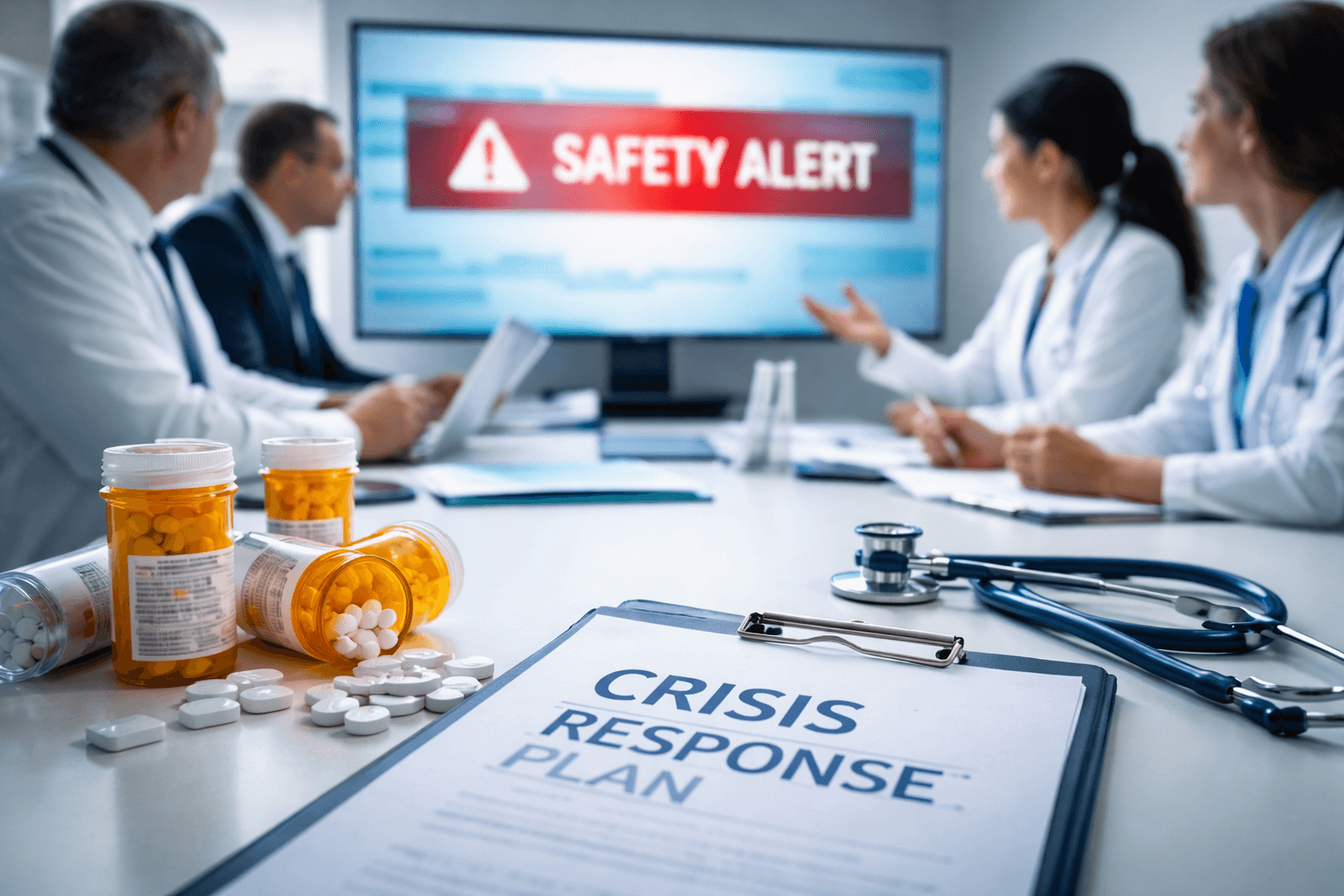
When a safety alert hits the market, trust can disappear overnight. One headline, one regulatory notice, or one social media surge can shake years of brand equity. That is why having a strong pharma crisis response strategy in place is not optional, it is essential. However, responding well is not just about damage control. It is about showing empathy, communicating clearly, and coordinating every touchpoint to rebuild confidence over time.
Safety alerts, product recalls, and updated labeling requirements are part of the pharmaceutical landscape. Yet how a company responds often determines whether it regains trust or loses market share. In this article, we explore how marketers can lead with transparency and build a crisis response framework that protects long-term brand value.
Table of Contents
- Why Safety Alerts Demand Immediate Action
- Core Elements of an Effective Crisis Response Strategy
- Omnichannel Communication and Stakeholder Alignment
- Rebuilding Trust and Measuring Long-Term Impact
Why Safety Alerts Demand Immediate Action
Safety alerts from regulators such as the U.S. Food and Drug Administration can spread rapidly through news outlets and social platforms. As a result, even a well-established therapy can face sudden scrutiny. Patients often feel confused or anxious when they see headlines about risks. Physicians, meanwhile, need clear guidance so they can answer questions confidently.
Therefore, speed and clarity matter from the very first statement. A delayed response can create uncertainty, while inconsistent messaging can erode credibility. A proactive pharmaceutical crisis response plan should begin long before any alert occurs. Brands should have pre-approved messaging frameworks, escalation pathways, and spokesperson training in place.
In addition, marketing teams must work closely with medical, legal, and regulatory departments to ensure every communication is accurate and compliant. Most importantly, tone matters. Companies that acknowledge concerns and express empathy are more likely to maintain goodwill. Instead of minimizing the issue, effective responses explain what is known, what is being investigated, and what steps are being taken to protect patients.
Core Elements of an Effective Crisis Response Strategy
An effective crisis response strategy in the pharmaceutical industry rests on four pillars: transparency, empathy, consistency, and coordination. Each pillar supports the others, creating a unified approach during high-pressure moments.
Transparency builds credibility. When companies share clear updates about safety findings, label changes, or voluntary recalls, they demonstrate accountability. For instance, linking to respected organizations such as the World Health Organization can reinforce that patient safety remains the top priority.
Empathy humanizes the brand. Patients are not just data points, they are individuals who may depend on a therapy for quality of life. Therefore, messaging should acknowledge concerns and offer guidance on next steps. When appropriate, brands can direct patients to speak with qualified professionals through trusted platforms like Healthcare.pro for personalized medical advice.
Consistency ensures that healthcare providers, sales teams, call centers, and digital channels all deliver the same message. Mixed signals can create confusion and increase reputational risk. Consequently, marketers must align field communications, website updates, email alerts, and social media posts around a single approved narrative. Coordination across departments is equally important. When medical affairs, regulatory leaders, and marketing teams collaborate effectively, the response feels controlled rather than reactive.
Omnichannel Communication and Stakeholder Alignment
Today’s pharmaceutical landscape is deeply connected. News travels fast, and conversations happen across search engines, professional networks, and patient forums. Because of this, any modern crisis response approach in pharma must be omnichannel by design.
First, update owned channels immediately. The brand website, product landing pages, and FAQ sections should reflect the latest information. Publishing detailed updates on platforms like Pharma Marketing Network can provide context beyond headlines and position the brand as transparent and proactive.
Next, support healthcare professionals with tailored resources. Physicians need clinical data summaries, risk mitigation steps, and patient counseling tools. Webinars, email briefings, and representative outreach can help clarify complex updates. At the same time, digital marketing teams should monitor search trends and adjust content to address emerging questions.
Search visibility plays a critical role in reputation recovery. When patients search for a drug name alongside words like recall or side effects, accurate information must appear prominently. Partnering with digital experts such as eHealthcare Solutions can strengthen compliant online messaging and improve discoverability during sensitive moments.
Social media requires careful oversight. While engagement may be limited due to compliance rules, brands can still share approved updates and direct users to official statements. Monitoring sentiment also helps teams respond quickly if misinformation begins to spread.
Rebuilding Trust and Measuring Long-Term Impact
Rebuilding trust takes time, but it is possible when pharmaceutical brands follow a disciplined crisis response strategy. Once the initial wave of communication stabilizes, the focus should shift from reaction to long-term recovery.
First, continue updating stakeholders even after the immediate alert fades from headlines. Ongoing transparency demonstrates that the company remains engaged and accountable. If additional studies or label changes occur, communicate them clearly and proactively.
Second, reinforce the product’s value when appropriate. Highlight clinical benefits, patient support programs, and real-world outcomes while staying compliant. Over time, balanced messaging helps reposition the brand within its therapeutic category.
Third, measure impact carefully. Track prescription trends, brand sentiment, website traffic, and engagement metrics across channels. In addition, gather feedback from sales teams and healthcare providers to understand how perceptions evolve. These insights allow marketers to refine messaging and strengthen their broader pharma crisis response strategy for the future.
Finally, conduct post-crisis reviews. Identify what worked, what created friction, and where internal alignment can improve. By strengthening crisis communication frameworks now, organizations can respond more confidently when the next challenge arises.
Conclusion
A safety alert can feel like a sudden storm, but it does not have to define a brand’s future. With the right crisis response strategy in place, pharmaceutical companies can respond with empathy, clarity, and coordination. Transparent communication, consistent messaging, and strong omnichannel support help preserve trust even during uncertainty. Although recovery takes time, disciplined action and thoughtful engagement protect long-term brand equity.
FAQ
What is a pharma crisis response strategy?
A pharma crisis response strategy is a structured plan that guides how a pharmaceutical company communicates and acts during safety alerts, recalls, or regulatory investigations. It prioritizes transparency, compliance, and stakeholder trust.
How quickly should a company respond to a safety alert?
Companies should respond as soon as verified information is available. Early communication reduces misinformation and reassures healthcare professionals and patients.
Why is empathy important in pharmaceutical crisis communication?
Empathy shows that the company understands patient concerns and prioritizes safety. As a result, audiences are more likely to maintain trust during challenging periods.
How does digital marketing support crisis recovery?
Digital marketing ensures accurate information appears in search results and across online channels. Coordinated SEO and compliant messaging help strengthen credibility and visibility.
Should patients stop taking medication after a safety alert?
Patients should never stop a medication without consulting a healthcare professional. They should speak directly with their doctor to discuss risks and benefits.
This content is not medical advice. For any health issues, always consult a healthcare professional. In an emergency, call 911 or your local emergency services.