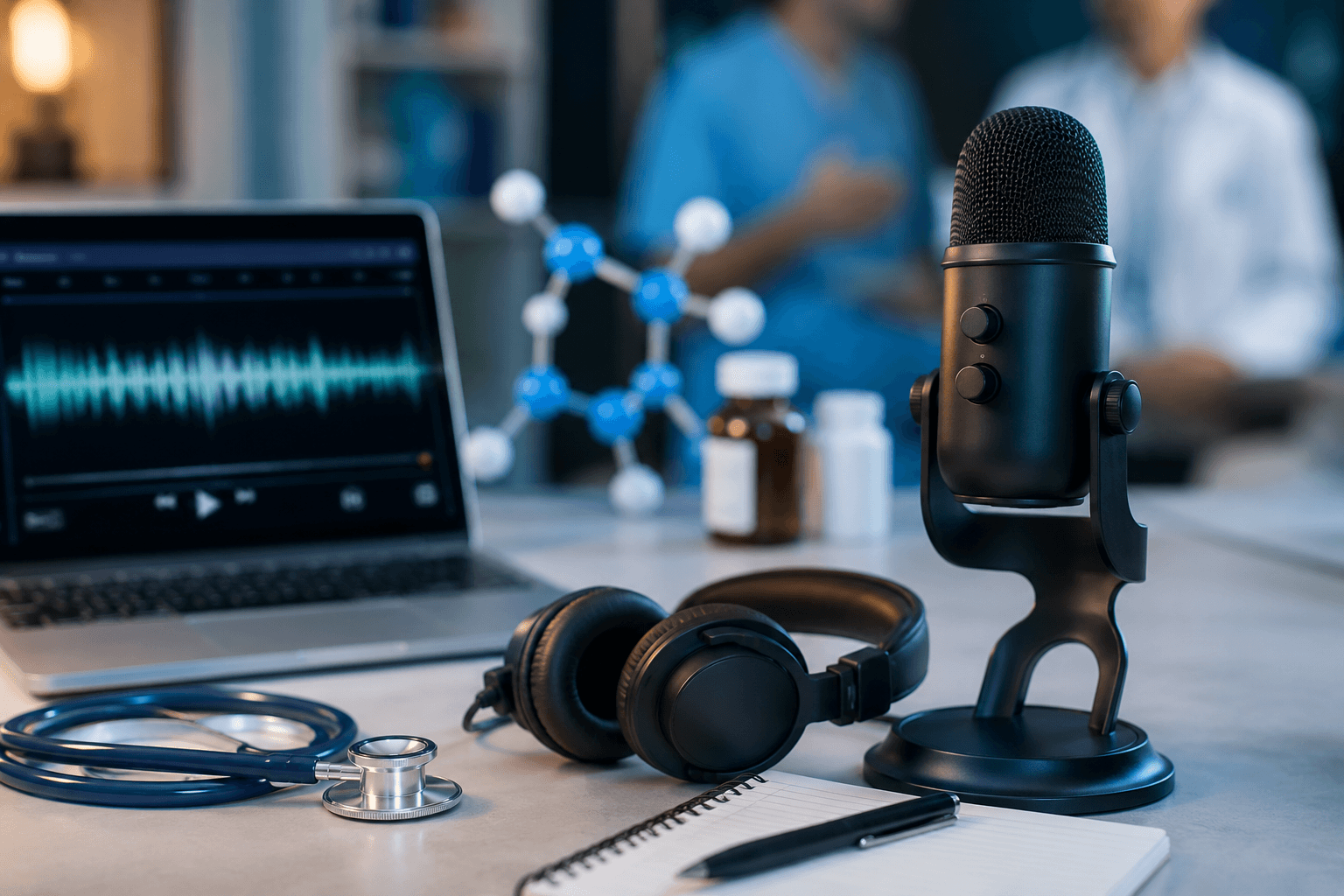
Healthcare professionals are overwhelmed with digital noise. Every day, physicians and specialists receive countless promotional emails, webinar invites, and branded content offers competing for attention. Yet while many traditional channels struggle to maintain engagement, podcasts are quietly building stronger and longer-lasting relationships with healthcare audiences.
This shift is reshaping how pharmaceutical brands think about communication. Pharma podcast marketing has become a practical way to connect with healthcare professionals through trusted, educational, and convenient content. Unlike banner ads or crowded inboxes, podcasts allow listeners to engage on their own schedule while focusing deeply on meaningful conversations.
Audio content is also changing how trust is built in healthcare marketing. As clinicians increasingly seek flexible and authentic educational experiences, pharma companies are investing in sponsored medical podcasts, expert interviews, and asynchronous learning formats that fit modern professional routines.
Table of Contents
- Why healthcare professionals are embracing podcasts
- The rise of pharmaceutical podcast strategies
- How audio builds trust and retention
- What successful pharma audio campaigns look like
- Conclusion
- FAQs
Why Healthcare Professionals Are Embracing Podcasts
Healthcare professionals work in environments filled with interruptions. Between patient care, administrative tasks, and continuing education requirements, finding uninterrupted time for learning has become difficult. Podcasts solve this problem because they fit naturally into busy schedules.
Physicians can listen while commuting, exercising, or reviewing notes between appointments. As a result, audio content delivers education without requiring screen time. This flexibility has become especially important as digital fatigue continues to rise across healthcare industries.
In addition, podcasts create a more personal experience than most digital channels. Hearing a respected clinician discuss treatment trends or patient outcomes feels conversational rather than promotional. That sense of authenticity often increases engagement and information retention.
Many pharmaceutical brands now recognize that audio offers something traditional healthcare advertising struggles to replicate: sustained attention. While emails may be deleted within seconds, podcast episodes can hold listener focus for 20 to 40 minutes. That extended engagement creates more opportunities to communicate complex clinical ideas effectively.
Furthermore, podcasts support multitasking without sacrificing comprehension. Clinicians who struggle to attend live webinars can still access valuable insights asynchronously. Consequently, healthcare podcast strategy aligns closely with evolving HCP content habits.
Brands that understand these behavioral changes are gaining a competitive advantage. Instead of interrupting HCPs with aggressive promotions, they are participating in meaningful conversations that support professional development and clinical curiosity.
The Rise of Pharmaceutical Podcast Strategies
Pharmaceutical marketers are increasingly investing in podcasts because the channel combines education, storytelling, and relationship-building in one format. Unlike short-form social media posts, podcasts allow brands to explore nuanced medical topics in depth.
Today’s pharmaceutical podcast strategies often include sponsored clinical discussions, KOL interviews, therapeutic-area education, and disease-awareness series. These programs help brands establish credibility while providing useful information to healthcare audiences.
Importantly, successful healthcare podcasts rarely sound like advertisements. Instead, they focus on evidence-based conversations led by credible voices. When physicians hear peers discussing emerging therapies or treatment challenges, the experience feels informative rather than promotional.
This evolution reflects broader changes in healthcare marketing. Traditional display advertising continues to lose effectiveness as HCPs become more selective about where they spend attention. At the same time, podcast audiences often show stronger loyalty and deeper engagement.
Pharma marketers are also using podcasts to extend omnichannel engagement. For example, audio episodes may complement webinars, conference content, or digital campaigns. This integrated approach strengthens message consistency across multiple touchpoints.
Companies investing in healthcare audio marketing are also seeing strong benefits from audience segmentation. Specialty-specific podcasts allow brands to target highly relevant clinician groups with tailored educational content. That precision improves both engagement quality and campaign efficiency.
Moreover, podcast analytics have become increasingly useful. Brands can measure downloads, listener retention, completion rates, and topic performance more accurately than before. These insights help marketers refine future content strategies and optimize HCP engagement efforts.
Organizations looking to strengthen healthcare communication strategies can also explore modern digital engagement solutions through eHealthcare Solutions, which supports healthcare-focused marketing initiatives and audience development.
How Audio Builds Trust, Retention, and Deeper Engagement
Trust remains one of the most valuable currencies in healthcare communication. Clinicians are naturally skeptical of overt promotion, especially when information lacks transparency or scientific depth. Podcasts help reduce this barrier because they emphasize conversation rather than interruption.
Voice creates emotional connection in ways written content often cannot. Tone, pacing, and discussion flow contribute to authenticity, making listeners feel closer to speakers and subject matter. This connection is especially important in healthcare, where credibility influences engagement decisions.
Long-form audio also supports better information retention. When complex topics are explained through discussion and storytelling, listeners can follow the logic more easily. Therefore, podcasts often help clinicians absorb detailed ideas without the pressure of a live event.
Another major advantage of branded healthcare podcasts is audience intentionality. People choose podcasts actively. Unlike accidental ad impressions, podcast listening involves deliberate participation. Consequently, engagement quality tends to be much higher.
Healthcare professionals also value expert-led discussions because they provide context beyond headlines or abbreviated summaries. Listening to specialists discuss clinical evidence offers depth that many digital formats fail to provide.
In addition, podcasts encourage repeat engagement. Subscribers return regularly for new episodes, which helps brands maintain ongoing relationships rather than one-time interactions. This consistency strengthens familiarity and long-term trust.
Many healthcare organizations are now exploring audio as part of broader medical education initiatives. Platforms such as Healthcare.pro can help healthcare professionals and organizations access additional resources related to patient care and professional support.
As more HCPs prioritize convenient educational formats, audio engagement is likely to become even more influential. The combination of flexibility, authenticity, and sustained attention positions podcasts as a uniquely powerful communication channel.
What Successful Pharma Audio Campaigns Look Like
The most successful healthcare podcasts tend to focus on audience value first. Rather than promoting products directly, they address clinical challenges, emerging research, patient experiences, and evolving treatment landscapes.
Successful pharma podcast marketing campaigns often include respected hosts with strong medical credibility. These hosts guide discussions naturally while maintaining scientific integrity. Because trust is critical, transparency around sponsorships also remains essential.
Consistency matters as well. Brands that publish regular episodes tend to build stronger audience loyalty over time. Episodic programming encourages repeat listening and creates anticipation among subscribers.
Top-performing podcasts also prioritize production quality. Clear audio, structured storytelling, and concise editing improve the listener experience significantly. Even highly valuable medical insights can lose impact if production standards are poor.
Additionally, leading pharma brands increasingly repurpose podcast content into blogs, social clips, conference discussions, and physician newsletters. This multiplatform strategy maximizes content value while reinforcing core messaging across channels.
Another emerging trend involves collaborative content partnerships. Pharmaceutical companies are partnering with medical associations, publishers, and healthcare media brands to increase audience trust and reach.
Importantly, successful campaigns maintain educational integrity above all else. Healthcare professionals can quickly recognize overly promotional content. Brands that focus on scientific value and meaningful dialogue are more likely to build lasting engagement.
As healthcare communication continues evolving, podcast-driven pharma engagement is becoming less of an experimental tactic and more of a strategic necessity.
Conclusion
The rise of healthcare podcasts reflects a major shift in professional communication habits. As physicians spend less time with traditional media and more time seeking flexible educational experiences, audio has become a trusted and effective engagement channel.
Pharma podcast marketing gives brands an opportunity to build stronger relationships through authenticity, expertise, and long-form conversation. Unlike crowded digital channels that compete aggressively for clicks, podcasts create space for meaningful learning and sustained attention.
Audio is not replacing every healthcare marketing channel. However, it is increasingly becoming one of the most effective ways to engage healthcare professionals who value convenience, depth, and trust.
Brands that invest thoughtfully in healthcare podcast strategy today may ultimately build stronger credibility and longer-lasting HCP relationships.
FAQs
What is pharma podcast marketing?
Pharma podcast marketing involves using podcasts to educate, engage, and communicate with healthcare professionals through audio-based content such as expert interviews, clinical discussions, and medical education.
Why are podcasts effective for healthcare professionals?
Podcasts are convenient because healthcare professionals can listen while multitasking. They also provide deeper educational experiences compared to short-form digital content.
How do pharmaceutical companies use podcasts?
Pharmaceutical companies sponsor educational series, collaborate with medical experts, and create therapeutic-area discussions that support HCP learning and engagement.
Are healthcare podcasts replacing traditional medical media?
Not entirely. However, podcasts are becoming increasingly important because they offer flexible, on-demand access to trusted medical information.
What makes a successful pharma podcast?
Strong medical credibility, valuable educational content, consistent publishing, and high production quality are all essential for successful pharma audio campaigns.
This content is not medical advice. For any health issues, always consult a healthcare professional. In an emergency, call 911 or your local emergency services.