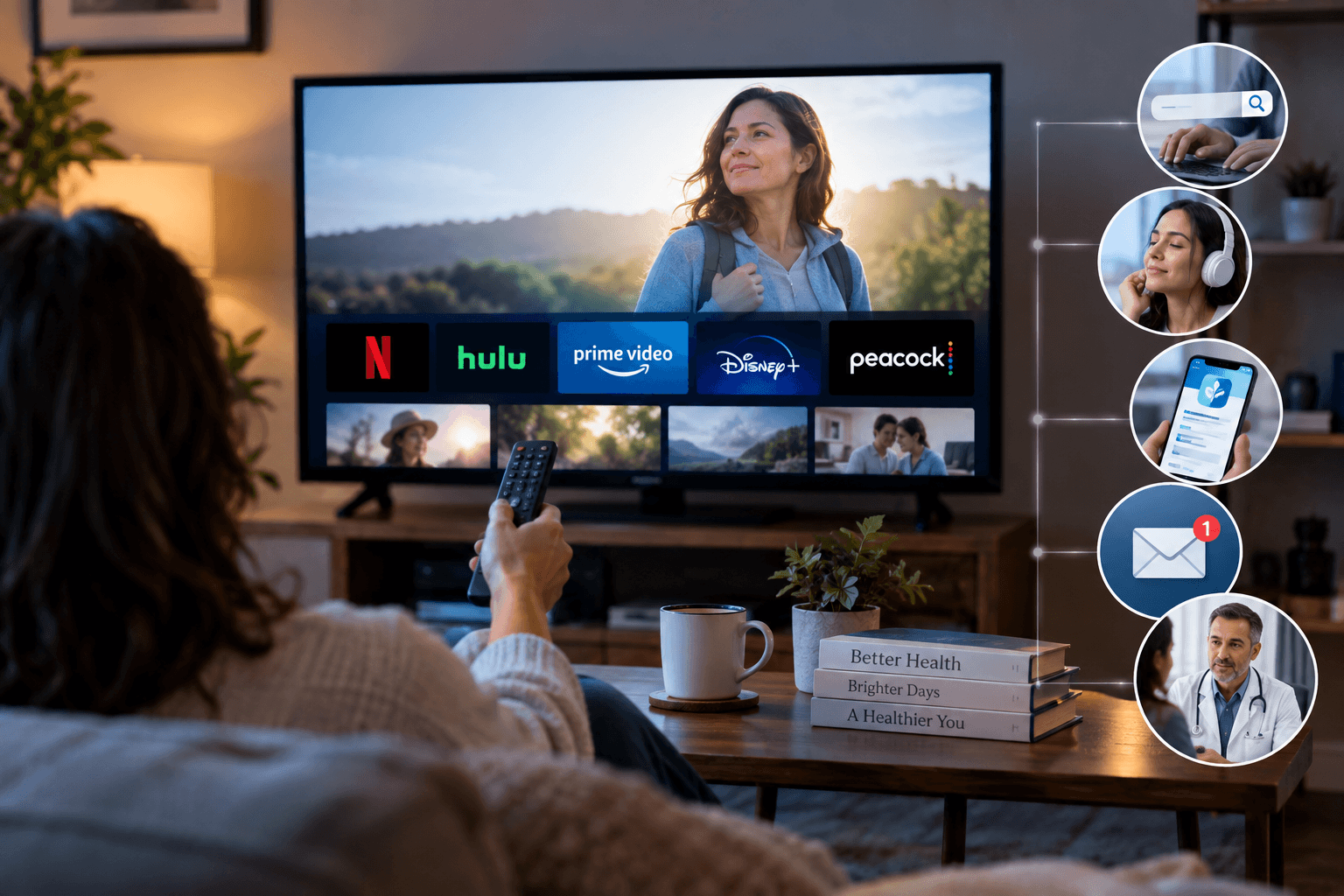
What happens when a pharmaceutical brand stops treating streaming as an add-on to television and starts building its media plan around it? Ardelyx’s Ibsrela campaign offers a useful answer. Its approach provides a clear example of a connected TV pharma strategy, with streaming video working alongside search, audio, digital advertising, CRM, patient education, and HCP outreach. The campaign also offers pharma marketers a timely look at how fragmented viewing habits can reshape an integrated media plan.
Table of Contents
- Why Ibsrela’s connected TV campaign matters
- How streaming fits into an integrated pharma media plan
- Why CTV changes pharma targeting and measurement
- What pharma marketers can learn from Ardelyx
- Conclusion
- FAQs
Why Ibsrela’s Connected TV Campaign Matters
Ardelyx launched a connected TV campaign for Ibsrela (tenapanor), its treatment for adults with irritable bowel syndrome with constipation, or IBS-C. According to Fierce Pharma, the 60-second “Because Ibsrela Can” commercial is expected to reach roughly 10 million to 17 million viewers across streaming platforms including Netflix, Hulu, Prime Video, and Peacock.
That reach matters. However, the more interesting part for marketers is how Ardelyx is using CTV.
Rather than simply recreating a traditional linear TV media plan on streaming platforms, the campaign connects video with other consumer and professional touchpoints. Patient education, digital banners, audio advertising, paid search, CRM communications, and a People magazine cover wrap for healthcare providers are also part of the campaign.
Therefore, the television spot is not being asked to do everything. It creates awareness and recognition, while other channels can answer questions, reinforce the message, and reach audiences closer to action.
That approach reflects a broader shift already visible in pharma media strategy. Brand-building and performance media increasingly need to work together rather than compete for separate budgets.
How Streaming Fits Into an Integrated Pharma Media Plan
A strong pharma CTV strategy starts with understanding what streaming television does particularly well. Connected TV can combine the emotional impact of television with digital audience selection and measurement.
For Ibsrela, the creative presents a patient living with IBS-C while communicating efficacy and safety information. Yet the campaign does not end when the commercial finishes.
A viewer who becomes interested may later search for IBS-C symptoms or Ibsrela. Paid search can capture that intent. Meanwhile, digital display can reinforce awareness, and CRM can continue communication with people who have already entered an appropriate brand or educational experience.
Audio provides another layer of reach when screens are not involved. Patient education can then offer deeper information than a 60-second commercial can reasonably provide.
HCP media completes an important part of the loop. Patient activation has limited value if healthcare professionals are unfamiliar with the brand or unprepared for treatment conversations. Ardelyx has previously emphasized both patient activation and HCP engagement as commercial priorities. In its second-quarter 2026 update, the company reported $86.2 million in Ibsrela revenue, up 33% year over year.
Consequently, integrated media is not simply about appearing in many places. Each channel needs a defined job, and those channels should support one another as patients and healthcare professionals move through different stages of the information journey.
Why CTV Changes Pharma Targeting and Measurement
Linear television has traditionally offered pharmaceutical brands enormous reach. However, it can also mean paying to reach many viewers who have little relevance to a particular condition or treatment.
Connected TV changes that equation.
Ardelyx CEO Mike Raab has described the company’s DTC effort as digital rather than linear TV and pointed to CTV’s ability to target audiences using factors such as demographics, socioeconomic characteristics, and geography.
That capability can make connected TV particularly attractive to pharma brands serving clearly defined patient populations. Instead of beginning with the largest possible audience, planners can focus on audiences more likely to find the message relevant.
Still, targeting alone does not make a campaign effective. Pharma marketers must consider privacy, appropriate audience selection, brand safety, frequency, and regulatory requirements. Streaming does not remove the compliance obligations associated with prescription drug promotion.
Measurement also needs a broader view. A viewer may see a CTV commercial, hear an audio placement days later, conduct a branded search, visit a patient website, and eventually speak with a healthcare provider. Giving all the credit to the final click would miss much of what created that action.
As Pharma Marketing Network has explored in its coverage of pharma TV advertising and CTV, streaming can become part of a larger information journey rather than functioning as an isolated television impression.
What Pharma Marketers Can Learn From Ardelyx
The biggest lesson from Ibsrela may be that streaming-first does not mean streaming-only.
Instead, CTV can become the high-impact awareness layer around which other channels are coordinated. Search captures intent. Digital advertising maintains visibility. Audio expands frequency into different moments of the day. CRM supports continued engagement. Patient education supplies depth, while professional media prepares HCPs for conversations that consumer advertising may generate.
For brands building their media plans around CTV, this creates a more useful planning question. Rather than asking how much linear TV budget should move to streaming, teams can ask what the entire patient and HCP journey should look like once streaming becomes a central awareness channel.
That distinction is important because viewing behavior is increasingly fragmented. Audiences do not experience a campaign according to a marketer’s media plan. Instead, they move between streaming services, search engines, websites, audio platforms, social feeds, and healthcare environments.
Therefore, integration has to happen behind the scenes. Creative themes, audience planning, frequency management, measurement, and compliant messaging should connect those encounters into a recognizable experience.
Healthcare-focused digital advertising partners such as eHealthcare Solutions can also support campaigns that need to connect relevant patient and HCP audiences across specialized digital environments.
Conclusion
Ardelyx’s Ibsrela campaign shows what happens when connected TV becomes more than another box on a media plan. CTV provides scale and storytelling, while search, audio, CRM, patient education, digital advertising, and HCP media create the surrounding journey.
For other pharmaceutical brands, the takeaway is not simply to spend more on streaming. A successful streaming-first pharma media strategy requires brands to think carefully about what happens before and after each video impression.
As audiences continue to fragment, the strongest campaigns may be those that stop treating television, digital, search, CRM, and professional media as separate strategies. Streaming can instead become the connective tissue that helps those channels work together.
FAQs
What is a connected TV pharma strategy?
It’s an approach that uses connected TV and streaming advertising as part of a broader pharmaceutical media plan, often alongside paid search, digital media, CRM, patient education, and HCP outreach.
Why are pharma brands interested in connected TV?
CTV offers premium video experiences while providing more audience selection and measurement options than traditional linear television. It also fits naturally into integrated and omnichannel pharma campaigns.
Is connected TV replacing linear TV for pharma brands?
Not necessarily. Linear television can still provide valuable mass reach. However, CTV gives brands another way to reach increasingly fragmented audiences and may take a larger strategic role in certain campaigns.
How does paid search support a CTV campaign?
A streaming commercial can generate awareness or curiosity. Paid search can then capture people who actively look for the drug, condition, treatment information, or related resources after seeing the campaign.
What is the main lesson from Ardelyx’s Ibsrela campaign?
The key lesson is that CTV works best as part of an integrated system. Streaming can create awareness, while search, digital media, CRM, education, audio, and HCP communications help turn that awareness into a more complete patient and provider journey.
This content is not medical advice. For any health issues, always consult a healthcare professional. In an emergency, call 911 or your local emergency services.