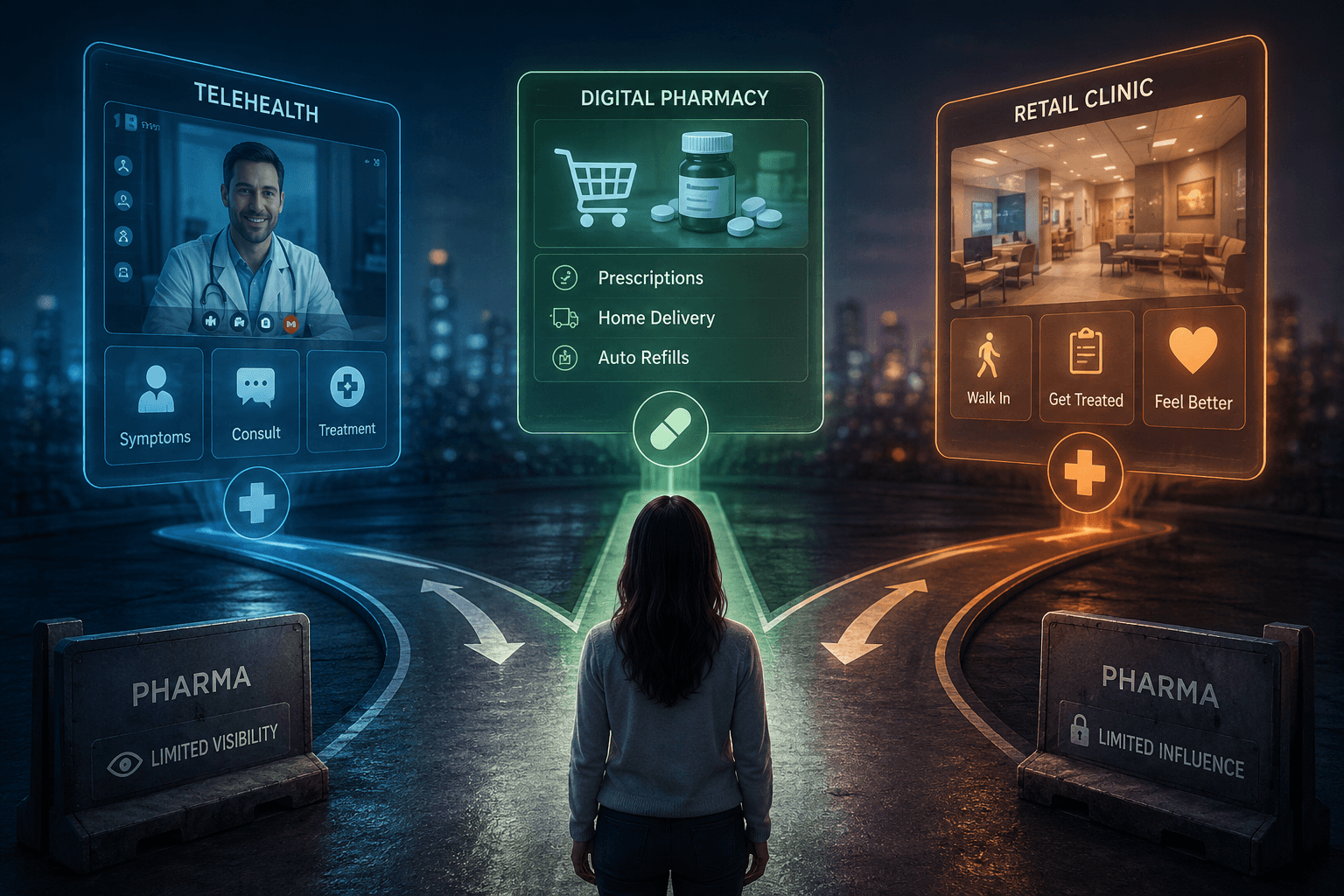
The healthcare journey no longer starts in the doctor’s office. Today, many patients begin with a search engine, a telehealth app, a retail clinic, or a digital pharmacy platform. As a result, a strong platform strategy for pharma brands is becoming essential because digital intermediaries increasingly control patient engagement long before a manufacturer enters the conversation.
For years, pharma marketers focused heavily on physicians, healthcare systems, and traditional advertising channels. However, digital health ecosystems have changed the rules. Telehealth providers recommend therapies within closed platforms. Retail clinics streamline treatment selection. Online pharmacies influence medication fulfillment and loyalty. Because of this transformation, pharmaceutical brands risk losing visibility if they fail to adapt to platform-driven healthcare experiences.
The companies that succeed will not simply market products. Instead, they will position themselves strategically inside the platforms shaping modern healthcare decisions.
Table of Contents
- How healthcare platforms changed the patient journey
- Why platform ecosystems reduce pharma visibility
- Building a successful digital pharma strategy
- The future of platform-based healthcare marketing
- FAQs
How Healthcare Platforms Changed the Patient Journey
Patients now expect healthcare to work like other digital experiences. They want speed, convenience, personalization, and transparency. Consequently, telehealth services, retail clinics, and digital pharmacies have become trusted gateways for care delivery.
Platforms such as Amazon Pharmacy, CVS Health, Teladoc, and specialized condition-focused apps increasingly guide treatment discovery. In many cases, patients choose providers and therapies based on platform recommendations rather than direct pharmaceutical brand awareness. Therefore, the traditional patient acquisition funnel continues to weaken.
This shift creates a difficult challenge for pharma marketers. Previously, brands could rely on physician detailing, television advertising, and branded search campaigns to influence treatment conversations. Today, however, the platform itself often controls what patients see first.
For example, a telehealth platform may recommend a preferred treatment pathway based on partnerships, formulary design, or algorithmic prioritization. Meanwhile, retail clinics often simplify care choices into limited treatment options. As these ecosystems mature, pharmaceutical companies must rethink how they maintain influence throughout the patient journey.
A modern pharmaceutical platform approach recognizes that the patient relationship increasingly belongs to the platform owner rather than the manufacturer.
At the same time, healthcare consumers continue to embrace digital-first care. According to industry trends from McKinsey and Deloitte, telehealth adoption remains significantly higher than pre-pandemic levels, especially for chronic condition management and behavioral health services. Because digital engagement habits are unlikely to reverse, platform ecosystems will continue shaping healthcare access for years to come.
Why Platform Ecosystems Reduce Pharma Visibility
Closed healthcare ecosystems present unique marketing limitations. Unlike open digital advertising environments, platforms often restrict how pharmaceutical brands interact with patients.
First, many platforms control search visibility internally. A patient searching for treatment options inside a telehealth app may only see preferred or algorithmically prioritized recommendations. As a result, pharmaceutical brands lose direct visibility even if patients actively seek information.
Second, platform-driven care compresses decision-making timelines. Traditional healthcare journeys involved multiple touchpoints, including physician consultations, educational materials, and pharmacy discussions. In contrast, digital platforms often streamline care into a single interaction. Consequently, brands have fewer opportunities to educate or influence patient choices.
Another major issue involves data ownership. Platforms typically control behavioral insights, patient engagement metrics, and prescribing trends. Without access to this information, pharma marketers struggle to optimize campaigns or personalize experiences effectively.
Additionally, retail healthcare platforms prioritize convenience and conversion. Their goal is often to simplify treatment selection rather than expand patient education. Therefore, therapeutic differentiation becomes harder for pharmaceutical companies trying to explain clinical nuances.
This environment increases the importance of digital discoverability. Pharmaceutical companies need stronger omnichannel visibility strategies that integrate search optimization, educational content, patient support resources, and platform partnerships.
Brands that ignore platform ecosystems risk becoming invisible during critical moments of patient decision-making.
Building a Successful Digital Pharma Strategy
A successful digital pharma strategy requires marketers to think beyond traditional campaigns. Instead of focusing only on brand awareness, companies must optimize how treatments appear, perform, and integrate within digital healthcare ecosystems.
One important step involves improving content discoverability. Educational resources should answer real patient questions while aligning with how telehealth users search for symptoms, treatments, and care options. High-quality disease education content also strengthens visibility across search engines and healthcare platforms alike.
Pharmaceutical companies should also prioritize strategic partnerships. Collaborating with telehealth providers, retail healthcare systems, and digital pharmacy networks can improve treatment accessibility and visibility. Although platform relationships may require new commercial models, they often create stronger long-term positioning.
Another key factor is patient experience optimization. Brands must deliver seamless support throughout the treatment journey, including affordability resources, onboarding programs, refill reminders, and adherence tools. These services increase value inside convenience-focused ecosystems.
Data integration is equally important. Pharma marketers need better insight into digital engagement trends, patient behaviors, and platform performance metrics. While direct access may be limited, advanced analytics partnerships and privacy-compliant measurement solutions can improve strategic decision-making.
Additionally, marketers should strengthen omnichannel communication strategies. Patients frequently move between search engines, provider portals, pharmacy apps, and social platforms before starting treatment. Consistent messaging across these environments improves trust and brand recall.
Companies seeking advanced digital engagement guidance can explore resources from Healthcare.pro to better understand evolving healthcare marketing strategies. Likewise, organizations investing in digital healthcare advertising can benefit from expertise offered by eHealthcare Solutions.
Importantly, succeeding inside healthcare platforms is not simply about advertising placement. It involves understanding how healthcare platforms shape patient behavior, treatment accessibility, and trust formation.
The Future of Platform-Based Healthcare Marketing
Healthcare platforms will continue expanding their influence over patient care journeys. Artificial intelligence, predictive care models, and integrated digital health systems will further centralize decision-making within platform ecosystems.
As this evolution continues, pharmaceutical companies must adapt quickly. Future marketing success will depend less on isolated promotional campaigns and more on ecosystem participation.
Brands that embrace collaboration, digital visibility, and patient-centered engagement will remain competitive. On the other hand, organizations relying solely on traditional marketing models may struggle to maintain relevance in increasingly platform-controlled environments.
The next generation of healthcare marketing requires flexibility, data intelligence, and platform fluency. Companies that understand these dynamics today will be better positioned to influence tomorrow’s patient journey.
Conclusion
The healthcare landscape has fundamentally changed. Telehealth providers, retail clinics, and digital pharmacies now shape treatment discovery and patient engagement before pharmaceutical brands enter the conversation. Because of this shift, developing a strong strategy for healthcare platforms is no longer optional for pharmaceutical brands.
Pharmaceutical marketers must rethink visibility, partnerships, patient engagement, and digital discoverability inside closed healthcare ecosystems. Although platforms increasingly control the patient relationship, brands that adapt strategically can still maintain influence and trust.
The future of pharma marketing belongs to companies that understand how platforms shape modern healthcare decisions.
FAQs
What is a pharma platform strategy?
A pharma platform strategy focuses on maintaining pharmaceutical brand visibility and engagement within digital healthcare ecosystems such as telehealth apps, retail clinics, and online pharmacies.
Why are healthcare platforms important for pharma marketing?
Healthcare platforms increasingly influence treatment discovery, patient engagement, and prescribing decisions. Therefore, pharma companies must optimize their presence within these ecosystems.
How do telehealth platforms affect pharmaceutical brands?
Telehealth platforms often guide treatment recommendations internally, which can reduce direct brand visibility and limit traditional marketing influence.
What challenges do digital pharmacies create for pharma companies?
Digital pharmacies control patient interactions, search visibility, and medication fulfillment processes. As a result, pharmaceutical brands may lose access to valuable patient engagement opportunities.
How can pharma companies improve platform visibility?
Brands can improve visibility through educational content, strategic partnerships, omnichannel marketing, patient support programs, and optimized digital discoverability strategies.
This content is not medical advice. For any health issues, always consult a healthcare professional. In an emergency, call 911 or your local emergency services.