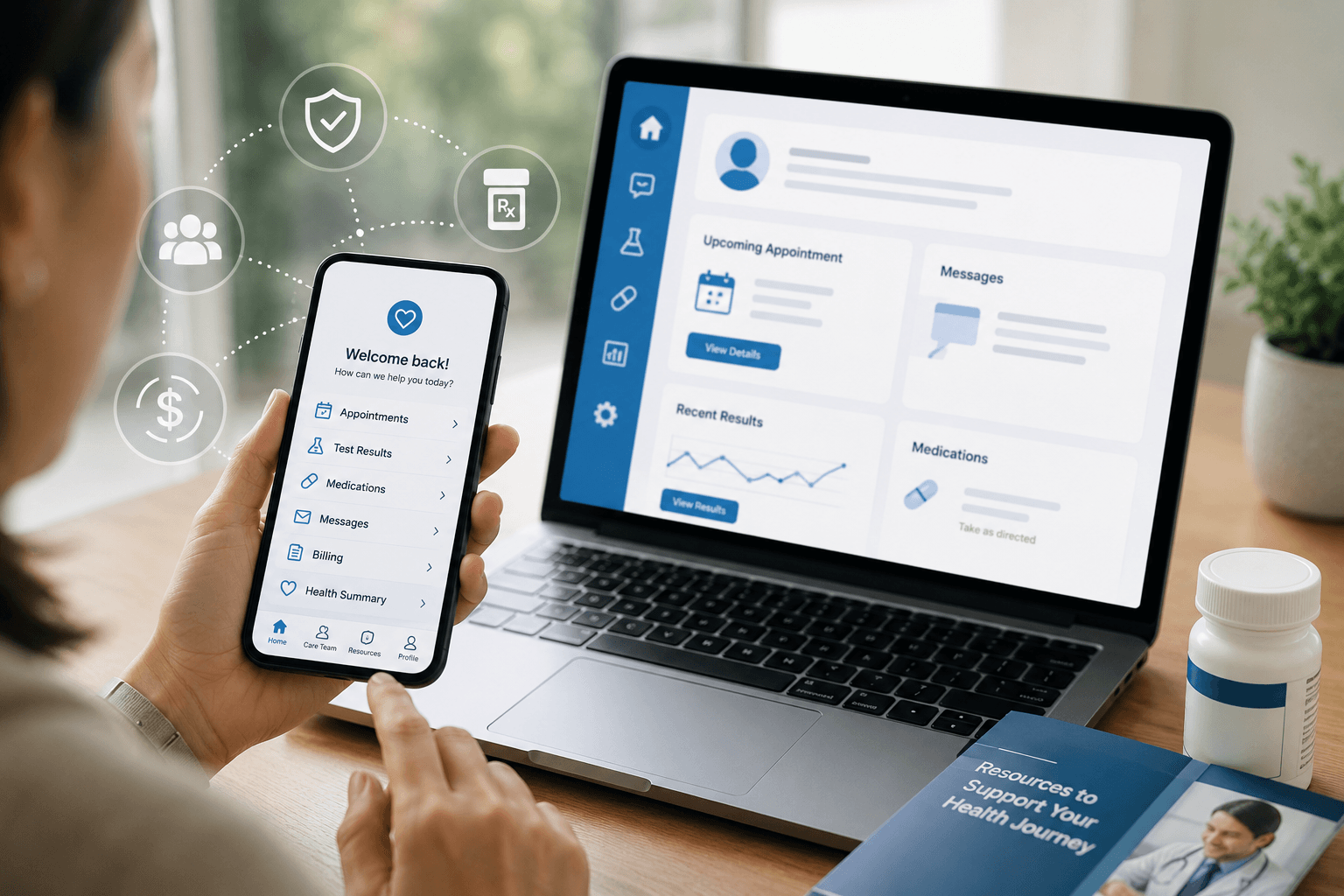
Healthcare’s digital transformation has fundamentally changed how patients interact with providers. Instead of relying solely on office visits or phone calls, millions of people now use patient portals to schedule appointments, review lab results, manage prescriptions, complete forms, and communicate securely with their care teams. As these platforms become the digital front door to healthcare, they are also creating one of the most promising new opportunities for pharmaceutical marketers. Rather than competing for attention through traditional advertising channels, pharmaceutical companies can provide meaningful education and patient support in the very environment where healthcare decisions are actively taking place.
Table of Contents
- Why patient portals are reshaping healthcare
- How patient portals create new opportunities for pharma
- Building compliant and patient-centered engagement
- The future of pharmaceutical engagement through patient portals
- Conclusion
- Frequently Asked Questions
Patient Portals Have Become the New Front Door to Healthcare
Patient portals have evolved from simple appointment scheduling tools into comprehensive digital health platforms. Today, patients use them to review laboratory results, request prescription refills, access visit summaries, pay medical bills, complete intake forms, and securely message physicians. As healthcare organizations continue investing in digital engagement, patient portals are becoming central to the patient experience.
Leading electronic health record (EHR) vendors now include robust patient portals as part of their healthcare ecosystems. Platforms such as Epic MyChart, Oracle Health’s patient portal, and MEDITECH’s patient engagement solutions all support secure communication between patients and providers. Regardless of the technology vendor, the trend is clear: patients increasingly expect convenient digital access to their healthcare information.
Unlike social media or search engines, patient portals exist within trusted clinical environments. Patients log in because they have an immediate healthcare need, making the experience highly relevant and focused. Consequently, educational content delivered within these platforms is often viewed as more credible than traditional advertising.
This shift creates an entirely new opportunity for pharmaceutical companies. Instead of interrupting patients during unrelated online activities, brands can contribute helpful resources that support better understanding of diseases, treatments, and medication management.
According to the Office of the National Coordinator for Health Information Technology, patient portal adoption continues to grow as interoperability and digital health initiatives expand across healthcare systems. As this trend continues, patient portals will play an even greater role in patient engagement and care coordination.
How Patient Portals Help Pharma Reach Patients at the Right Moment
The greatest advantage of marketing through patient portals is contextual engagement. Patients access these platforms because they are actively managing their health, making educational content more timely and valuable than traditional promotional messaging.
Imagine a patient who has just received a new diagnosis. After reviewing test results through their healthcare provider’s patient portal, they may naturally seek trustworthy information about the condition, available treatments, lifestyle changes, or questions to discuss during their next appointment. Patient portals create opportunities to provide disease education that complements, rather than competes with, clinical care.
Similarly, patients beginning specialty therapies often need assistance navigating insurance coverage, copay programs, medication administration, and adherence challenges. Provider-approved educational resources, financial assistance information, treatment guides, and medication reminders can all be integrated into the patient experience without disrupting clinical workflows.
This approach represents a significant shift in pharmaceutical marketing. Instead of relying primarily on brand awareness campaigns, companies can build trust by improving health literacy, supporting medication adherence, and helping patients navigate their treatment journey.
Healthcare organizations are also expanding portal capabilities by incorporating telehealth, remote patient monitoring, digital therapeutics, and personalized care plans. As these services become more integrated, patient portals will serve as central hubs for long-term patient engagement.
Companies exploring broader omnichannel healthcare engagement strategies can also learn more about digital healthcare communications at eHealthcare Solutions.
Compliance Must Remain the Foundation
Although the opportunity is compelling, any pharmaceutical patient portal strategy must always prioritize patient privacy, regulatory compliance, and clinical integrity.
Healthcare organizations carefully govern how information is delivered through patient portals. Any collaboration between pharmaceutical companies and health systems should involve legal, compliance, medical affairs, and privacy teams from the earliest planning stages.
HIPAA regulations remain essential, and patient information should never be used for commercial targeting without appropriate authorization. Consequently, successful initiatives typically emphasize non-promotional education rather than direct advertising.
The most effective content often includes disease awareness resources, treatment preparation materials, medication adherence programs, financial assistance information, and educational tools that help patients better understand their care plans. These resources provide meaningful value while supporting healthcare providers rather than competing with them.
Timing also matters. Educational content is most useful when aligned with important milestones such as diagnosis, treatment initiation, medication changes, or follow-up appointments. When thoughtfully implemented, patient portals can enhance the patient experience without overwhelming users with unnecessary communications.
Healthcare marketers interested in best practices for digital health engagement can also explore resources from the Healthcare Information and Management Systems Society (HIMSS) and the Office of the National Coordinator for Health Information Technology.
Ultimately, the most successful strategies focus on improving patient outcomes. Organizations that help patients better understand their conditions and therapies are more likely to earn the trust of providers, healthcare systems, and patients alike.
The Future of Pharmaceutical Engagement Through Patient Portals
Patient portals are rapidly becoming one of healthcare’s most valuable digital engagement channels. As artificial intelligence, predictive analytics, and interoperability continue to mature, these platforms will deliver increasingly personalized healthcare experiences.
Future patient portals may proactively recommend educational resources based on diagnoses, medications, upcoming appointments, or care plans while maintaining strict privacy protections. Patients could receive tailored adherence reminders, financial assistance information, educational videos, or wellness resources precisely when they need them most.
For pharmaceutical companies, this evolution represents more than another marketing channel. It signals a transition toward patient-centered engagement that prioritizes education, support, and long-term health outcomes.
Rather than replacing existing digital strategies, patient portals will strengthen omnichannel engagement by connecting websites, email campaigns, provider education, CRM platforms, and patient support programs into a seamless experience. Organizations that embrace this collaborative approach will be well positioned as healthcare continues its digital transformation.
For additional insights into pharmaceutical marketing innovation and digital engagement strategies, visit Pharma-Mkting.com.
Conclusion
Patient portals have become an essential part of modern healthcare, serving as the primary digital connection between patients and providers. As adoption continues to grow, they offer pharmaceutical companies a unique opportunity to deliver meaningful education, adherence support, and financial assistance within trusted clinical environments.
The future of patient engagement through patient portals will belong to organizations that prioritize patient needs over promotional messaging. By working collaboratively with healthcare providers and maintaining rigorous compliance standards, pharmaceutical companies can build stronger patient relationships while contributing to better health outcomes.
Frequently Asked Questions
What is pharmaceutical marketing through patient portals?
Pharmaceutical marketing through patient portals refers to the use of provider-owned patient portals to deliver compliant disease education, adherence resources, financial assistance information, and patient support materials.
Why are patient portals valuable for pharmaceutical companies?
They allow companies to engage patients during meaningful healthcare interactions, making educational content more relevant and improving the overall patient experience.
Can pharmaceutical companies advertise directly inside patient portals?
Healthcare organizations generally maintain strict controls over portal content. Most successful initiatives focus on patient education and support rather than traditional promotional advertising.
Are patient portals limited to one software platform?
No. Many healthcare organizations use patient portals offered by various electronic health record vendors. Examples include platforms from Epic, Oracle Health, MEDITECH, and other healthcare technology providers.
How will patient portals influence the future of healthcare marketing?
As digital healthcare adoption continues to expand, patient portals are expected to become an increasingly important component of omnichannel engagement strategies that connect patients with trusted educational resources throughout their care journey.
This content is not medical advice. For any health issues, always consult a healthcare professional. In an emergency, call 911 or your local emergency services.