For specialty pharmaceuticals, the patient journey doesn’t begin at the physician’s office. Instead, one of the most influential brand moments happens when the therapy arrives at the patient’s home. That first interaction with the package often determines how confident patients feel about starting treatment, whether they understand proper administration, and how engaged they remain over time.
As a result, connected packaging has evolved from an operational necessity into a strategic marketing and patient engagement platform for pharmaceutical brands. By combining physical packaging with digital technologies such as QR codes, NFC tags, personalized onboarding experiences, and adherence tools, a modern pharma connected packaging strategy transforms every shipment into an interactive communication channel.
Rather than serving as a simple container, packaging is becoming a powerful extension of the brand experience.
Table of Contents
- Why every pharma connected packaging strategy begins with the brand experience
- Connected packaging technologies driving engagement
- Building better patient experiences through digital onboarding
- Measuring the business value of connected packaging in pharma
- Conclusion
- Frequently Asked Questions
Why Every Pharma Connected Packaging Strategy Begins with the Brand Experience
The growth of specialty biologics, injectable therapies, and personalized medicines has fundamentally changed patient expectations. Unlike traditional oral medications purchased at retail pharmacies, many specialty therapies are delivered directly to patients through specialty pharmacies or home delivery services.
Consequently, the package itself often becomes the patient’s first physical interaction with the manufacturer.
Instead of relying solely on brochures or printed instructions, companies now have an opportunity to deliver rich digital experiences immediately after opening the shipment. A thoughtful connected packaging strategy enables manufacturers to continue educating and supporting patients well beyond the prescription.
Furthermore, today’s patients are accustomed to scanning QR codes for product information, instructional videos, warranty registration, and customer support. Healthcare is naturally following this trend.
For pharmaceutical marketers, this creates an entirely new media channel that reaches patients at precisely the moment they need guidance. The packaging itself becomes an always-on engagement platform that bridges the physical and digital patient experience.
Connected Packaging Technologies Are Redefining Patient Engagement
Several digital technologies are making connected packaging practical and scalable.
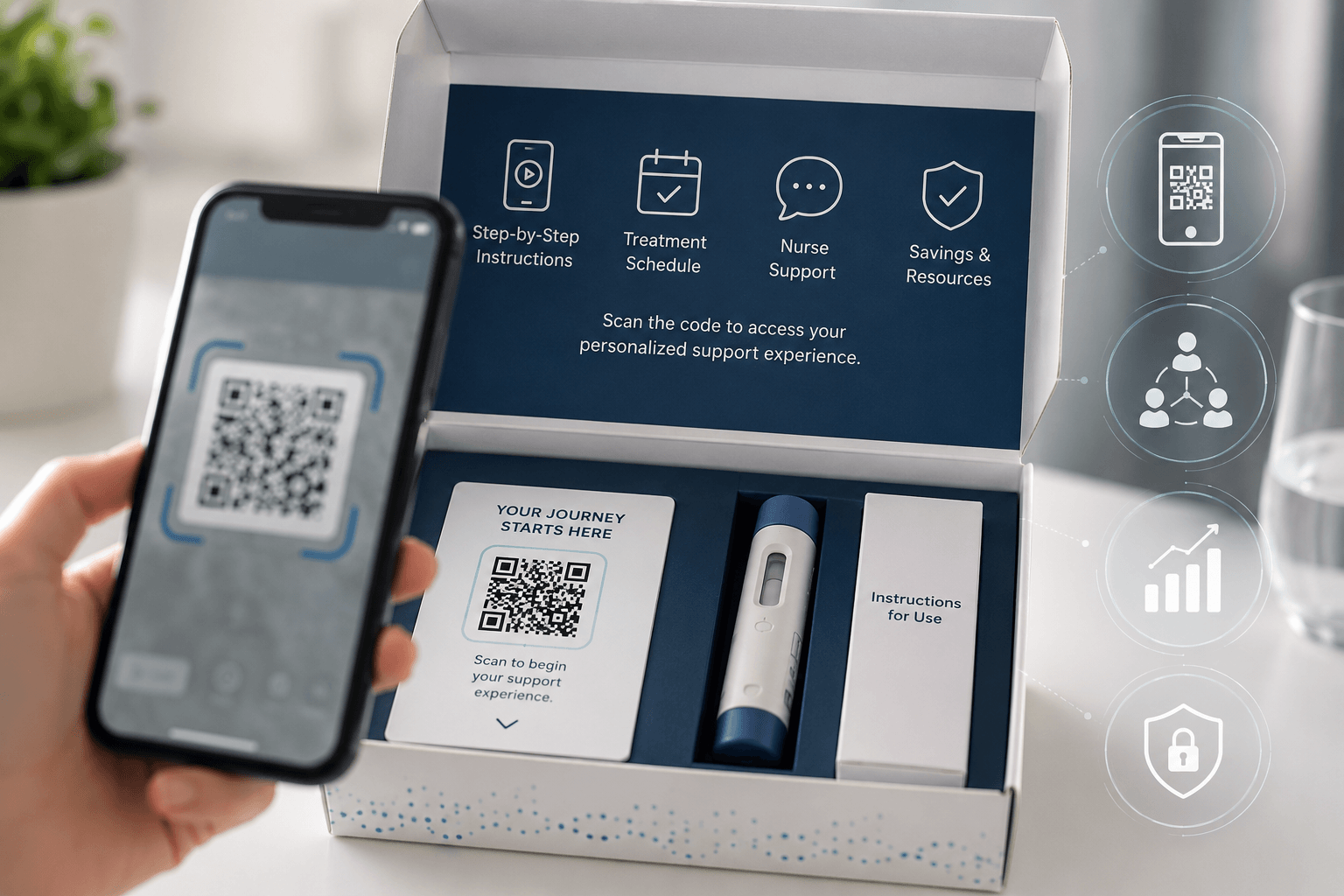
Dynamic QR codes remain one of the most widely adopted solutions. Unlike static printed materials, they allow pharmaceutical companies to update content without redesigning packaging. Patients can instantly access personalized onboarding materials, injection demonstrations, dosing reminders, reimbursement resources, or multilingual educational content.
Near Field Communication (NFC) technology offers an even more seamless experience. By simply tapping a smartphone against the package, patients can launch secure digital experiences without manually scanning a code.
These technologies support a wide range of patient services, including:
- Interactive injection training
- Disease education resources
- Nurse ambassador scheduling
- Hub enrollment
- Refill reminders
- Side effect management
- Financial assistance information
- Secure product authentication to combat counterfeit medicines
According to the U.S. Food and Drug Administration (FDA), improving patient understanding and medication adherence remains a critical objective for specialty therapies. Digital engagement delivered through connected packaging directly supports these goals while reducing reliance on printed materials.
Additionally, manufacturers can integrate these digital experiences with customer relationship management platforms, patient support hubs, and omnichannel marketing systems to create a more connected patient ecosystem.
Digital Onboarding Builds Confidence and Improves Adherence
Many specialty medications require self-injection, refrigeration, dose preparation, or complex administration procedures. Even highly motivated patients may feel anxious when beginning therapy.
That is where connected packaging delivers significant value.
Rather than overwhelming patients with lengthy printed inserts, manufacturers can guide them through personalized digital onboarding experiences immediately after opening the package.
For example, patients may watch step-by-step injection demonstrations, review storage requirements, receive preparation checklists, or schedule virtual nurse support.
This approach builds confidence during those critical first days of therapy.
Moreover, packaging can become the gateway to ongoing adherence programs. Automated reminders, educational updates, refill notifications, and symptom tracking help patients stay engaged throughout treatment.
Many manufacturers also integrate connected packaging with patient support hubs, allowing users to quickly access reimbursement assistance, insurance navigation, financial support, or live customer care.
As discussed in our article on digital patient engagement strategies, successful pharmaceutical marketing increasingly depends on delivering meaningful support throughout the treatment journey rather than focusing solely on awareness campaigns.
For organizations looking to strengthen omnichannel engagement, connected packaging also complements broader pharmaceutical digital marketing initiatives offered by eHealthcare Solutions.
When patients require additional medical guidance, directing them toward trusted healthcare professionals remains essential. Resources such as Healthcare.pro can help patients connect with appropriate care providers when questions arise.
Measuring the Business Value of Connected Packaging in Pharma
While improving patient experience is the primary objective, connected packaging also generates measurable commercial value.
Unlike traditional printed materials, digital packaging experiences produce valuable engagement data. Manufacturers can evaluate scan rates, onboarding completion, educational video views, refill reminder participation, and patient engagement across different therapy stages.
These insights help marketing teams optimize educational content while identifying where patients experience friction during treatment initiation.
Additionally, connected packaging creates opportunities for:
- Better adherence outcomes
- Higher patient satisfaction
- Improved persistence on therapy
- Greater brand loyalty
- Reduced support center volume
- Stronger real-world engagement analytics
Importantly, these insights can inform future marketing campaigns, patient support investments, and omnichannel engagement strategies.
As specialty therapies continue to grow, packaging will become an increasingly important communication asset rather than a simple shipping container.
Manufacturers that invest early in a comprehensive connected packaging strategy will likely gain meaningful advantages in both patient experience and long-term brand performance.
Conclusion
Packaging has evolved far beyond product protection. For specialty pharmaceuticals, it now serves as one of the most important communication channels available to marketers.
A successful connected packaging strategy transforms every delivery into an opportunity to educate, reassure, and engage patients throughout their treatment journey. By combining QR experiences, NFC technology, digital onboarding, adherence tools, and patient support integration, pharmaceutical companies can create stronger relationships that extend well beyond the point of prescription.
As healthcare continues shifting toward personalized, home-based care, the box itself is becoming one of the industry’s most valuable media assets.
Frequently Asked Questions
What is a pharma connected packaging strategy?
A connected packaging strategy in the pharmaceutical industry uses technologies such as QR codes, NFC tags, and personalized digital experiences to transform medication packaging into an interactive patient engagement platform.
How does connected packaging improve medication adherence?
It provides patients with timely educational resources, reminders, instructional videos, and ongoing support that encourage proper medication use and long-term therapy persistence.
Why are QR codes becoming common in pharmaceutical packaging?
QR codes provide immediate access to updated digital information without requiring manufacturers to redesign or reprint packaging, making patient education more flexible and personalized.
Can connected packaging integrate with patient support programs?
Yes. Many manufacturers connect digital packaging experiences with nurse support services, reimbursement programs, specialty pharmacies, and patient hubs to create a seamless patient journey.
Is connected packaging only useful for specialty medications?
While it benefits many therapeutic areas, connected packaging delivers the greatest value for specialty biologics, injectable therapies, rare disease treatments, and medications requiring complex administration.
Disclaimer: This content is not medical advice. For any health issues, always consult a healthcare professional. In an emergency, call 911 or your local emergency services.