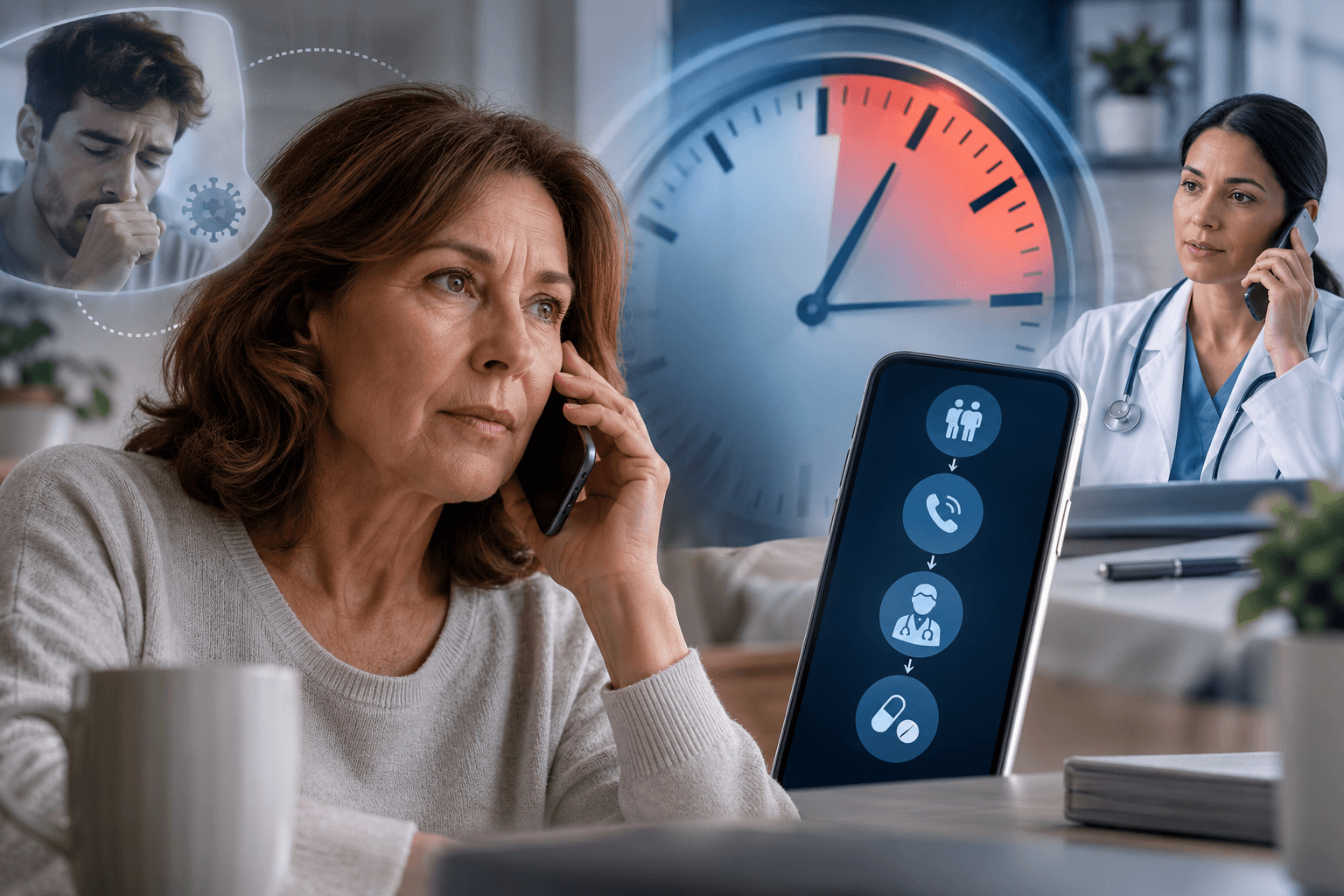
Shionogi does not have the luxury of a long patient journey with Xocova. The FDA-approved post-exposure prophylaxis is intended to be started as soon as possible and within 72 hours after contact with someone who has COVID-19. That narrow window creates an unusual challenge for time-sensitive patient marketing, where reaching the right person is only part of the equation. The message also has to arrive while there is still time to act.
The company’s expanding “Got the Call, Make the Call” campaign captures that challenge in a simple behavioral cue. After known or suspected exposure, the message encourages consumers to contact a healthcare professional promptly. The campaign began with TV and has expanded into an omnichannel effort developed with The Bloc.
For pharma marketers, the larger lesson goes beyond COVID-19. What happens when a brand cannot gradually move patients from awareness to consideration to action over weeks or months? The answer may require rethinking the patient journey itself.
Table of Contents
- Why Xocova Changes the Patient Marketing Clock
- Designing Media Around the Moment of Exposure
- Why the Call to Action Has to Work Harder
- Building an Omnichannel System for Speed
- Conclusion
- FAQs
Why Xocova Changes the Patient Marketing Clock
Many pharmaceutical campaigns operate across extended consideration periods. Patients encounter educational content, search for information, discuss symptoms, visit a healthcare professional, and eventually consider treatment. That journey may involve repeated exposure to brand and disease-awareness messaging.
Xocova creates a very different marketing problem.
The FDA approved Xocova, or ensitrelvir, in June 2026 for post-exposure prophylaxis of COVID-19 in adults and adolescents age 12 and older following contact with someone who has COVID-19. According to the FDA-approved labeling, treatment should begin as soon as possible and within 72 hours following contact.
Moreover, the consumer message is tied directly to that moment. Xocova’s website opens by asking whether someone has received the call that they were exposed to COVID-19 and follows with an instruction to make the call about Xocova.
That makes the exposure event a trigger for communication rather than simply another stage in a traditional marketing funnel.
For patient campaigns built around a narrow action window, reach alone is not enough. Marketers also need to consider whether a message appears when the patient can still do something with it.
That distinction matters. A highly memorable message delivered after the relevant action window has passed may still have awareness value. However, it cannot perform the same immediate role as a message delivered at the moment of need.
Designing Media Around the Moment of Exposure
The usual media question is often, “Where can we find the patient?” For a campaign like Xocova’s, another question becomes equally important: “When can we reach the patient?”
Shionogi’s campaign provides an interesting model because the creative platform turns a common event, receiving news of an exposure, into a recognizable action signal.
The national campaign started with television and was amplified through streaming, video, and audio. More recently, Shionogi and The Bloc expanded the effort into an omnichannel campaign aimed at prompting consumers to contact an HCP following known or suspected exposure.
Consequently, media sequencing becomes critical.
Broad-reach media can establish memory before exposure occurs. Search and contextual media can then capture active information-seeking after someone learns about an exposure. Brand-owned resources can answer immediate questions, while HCP communications can help prepare clinicians for patient inquiries.
This resembles a relay race more than a conventional funnel. One channel does not need to complete the entire journey. Instead, each touchpoint needs to hand the patient efficiently to the next step.
That idea also fits a broader move toward contextual pharma marketing. Effective omnichannel engagement increasingly depends on understanding a patient’s situation rather than simply distributing the same content across multiple platforms. Contextual patient marketing focuses on delivering useful information according to the patient’s real-world circumstances.
For time-sensitive campaigns, context also includes the clock.
Why the Call to Action Has to Work Harder
A compressed patient journey leaves little room for vague calls to action.
“Learn more” may be appropriate when a patient has weeks to explore a condition. However, a narrow action window calls for greater clarity about the next step.
Shionogi’s campaign reduces that next step to something familiar: make a call.
The creative itself reinforces the idea. In the campaign’s TV spot, a son tells his mother that he has COVID-19 and may have exposed his parents. She then contacts her doctor and asks about Xocova.
The simplicity is strategically important. Patients do not need to memorize a complicated pathway before understanding what the campaign wants them to do.
At the same time, urgency must remain balanced with accurate education. Xocova has specific prescribing information, eligibility requirements, warnings, contraindications, and drug interaction considerations. The FDA label includes important instructions and safety information that patients and healthcare professionals need to understand.
Therefore, speed cannot mean stripping away necessary information. Instead, marketers need an information architecture that prioritizes the immediate action while making deeper education easy to reach.
That may mean short creative leads to focused landing pages, which then connect patients to prescribing information and conversations with healthcare professionals.
In other words, marketing around a narrow patient action window means reducing friction without reducing substance.
Building an Omnichannel System for Speed
Compressed patient journeys also put pressure on omnichannel coordination.
Imagine a consumer sees a television commercial, searches for Xocova, visits the brand website, contacts an HCP, and then checks pharmacy or savings information. Those interactions could happen within hours rather than weeks.
If each channel operates independently, the patient may encounter duplicated messages, conflicting priorities, or unnecessary steps.
However, a coordinated system can assign each channel a specific job.
Broad media can build recognition. Search can capture intent. Social and digital video can reinforce the behavioral cue. Brand websites can explain eligibility and next steps. Meanwhile, HCP communications can help clinicians respond when patients arrive already aware of the product.
That requires marketers to think beyond channel presence. Patient engagement can become more relevant when content responds to behavior and changing needs rather than following rigid, preset journeys.
For categories with narrow action windows, that adaptability becomes especially valuable. Teams may need to consider exposure signals, seasonal disease activity, search behavior, geography, and media response while remaining within regulatory and privacy requirements.
Measurement should evolve as well. Impressions and clicks remain useful, but they tell only part of the story. Marketers may also need to examine how efficiently people move from exposure-related information to brand education and HCP engagement.
Ultimately, the key metric is not simply whether someone encountered the message. It is whether the communication helped make the next appropriate action easier during the relevant window.
Conclusion
Shionogi’s Xocova campaign offers a useful case study in what happens when the patient journey becomes dramatically compressed.
The product’s post-exposure indication means awareness, education, consideration, and HCP engagement can converge within a short period. As a result, media sequencing, message clarity, patient education, and omnichannel coordination take on different roles.
For pharma marketers, the broader takeaway is significant. Patient journeys are not always long funnels, and campaigns should not automatically be designed as though they are.
Sometimes the most important variable is not simply who receives the message or where they see it. It is whether the message arrives while there is still time to act.
FAQs
What is time-sensitive patient marketing?
Time-sensitive patient marketing is an approach designed around a limited period in which patients may need relevant information or take an appropriate next step. It places greater emphasis on timing, contextual relevance, clear calls to action, and coordinated channels.
Why is Xocova an example of a compressed patient journey?
FDA labeling says Xocova should be started as soon as possible and within 72 hours after contact with an individual who has COVID-19. That creates a much shorter journey than marketers encounter in many pharmaceutical categories.
What does “Got the Call, Make the Call” mean?
The campaign connects learning about a possible COVID-19 exposure with a simple next action: contacting a healthcare professional to ask whether Xocova may be appropriate.
How does time sensitivity change pharma media planning?
It increases the importance of sequencing and context. Broad media may establish awareness before a triggering event, while search, digital, brand-owned, and HCP channels can support consumers once they actively seek information.
What can other pharma brands learn from this approach?
Brands with narrow diagnosis, prevention, treatment, or intervention windows can examine whether their patient journeys reflect real-world timing. Clearer calls to action and tighter coordination between patient and HCP channels may help reduce friction when action windows are short.
This content is not medical advice. For any health issues, always consult a healthcare professional. In an emergency, call 911 or your local emergency services.