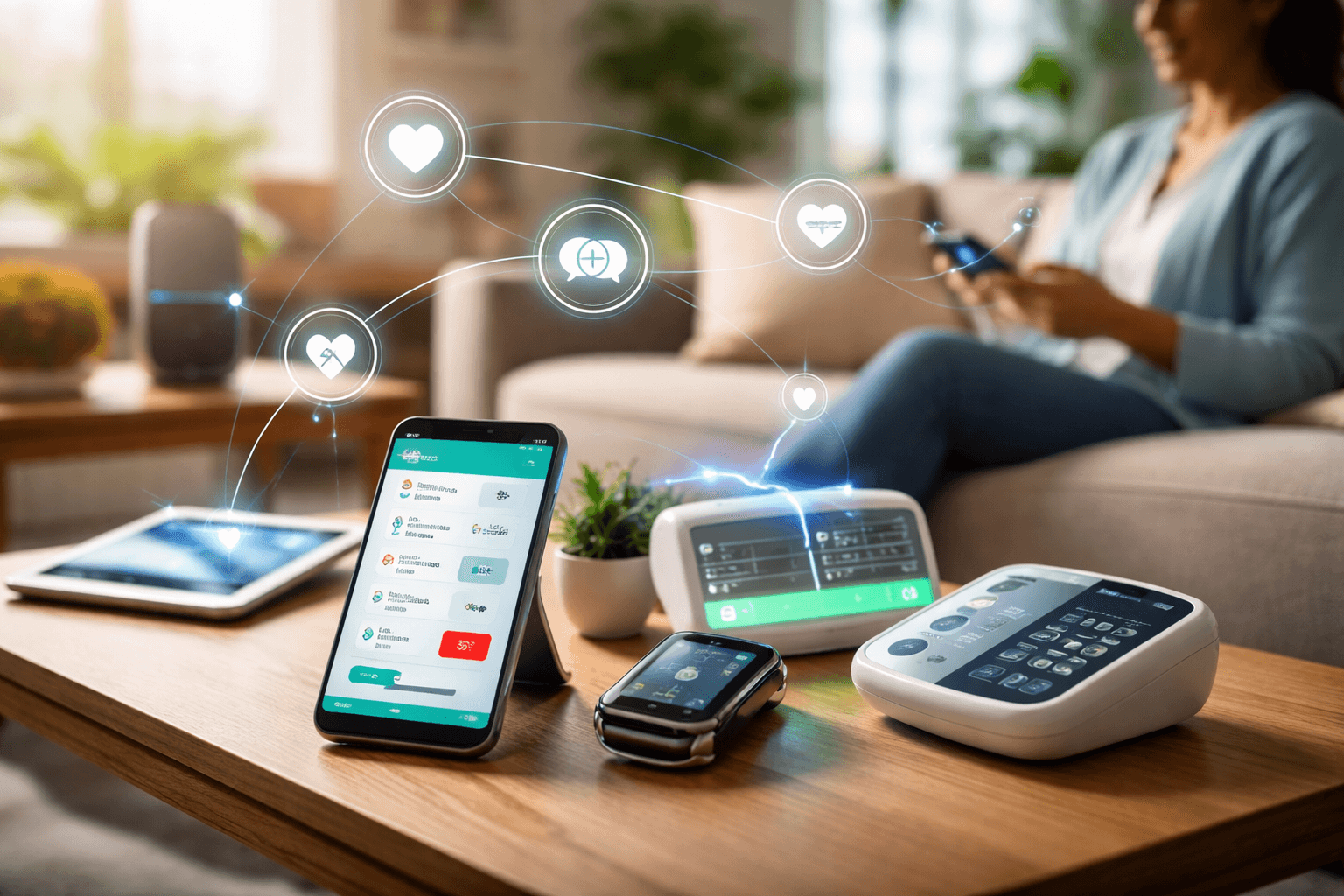
Point-of-care marketing has always thrived on proximity. Traditionally, it met patients in waiting rooms, exam rooms, and pharmacy counters at moments of heightened attention. However, as healthcare rapidly shifts toward at-home diagnostics and connected monitoring, those moments are no longer limited to clinical spaces. What we now call next-generation point-of-care marketing follows patients beyond the clinic and into their daily lives. This shift raises an important question: how can pharma brands remain helpful and relevant without crossing emotional or data boundaries?
Table of Contents
- The Evolution of Point-of-Care Marketing
- Extending POC Principles Into the Home
- Balancing Personalization With Trust
- Measuring Impact Beyond the Clinic
The Evolution of Point-of-Care Marketing
For decades, point-of-care strategies focused on physical touchpoints where clinical decisions happened. Educational posters, digital screens, and branded materials supported conversations between healthcare professionals and patients. As a result, these moments became powerful drivers of awareness and treatment initiation. However, care delivery models are changing faster than ever. Telehealth visits, remote patient monitoring, and at-home testing have reshaped how and where decisions occur.
This next generation of point-of-care marketing builds on the same core principle: delivering the right message at the right moment. Yet, the definition of “point of care” has expanded. Today, that point might be a mobile app notification reminding a patient to take medication. It could also be a dashboard interpreting blood glucose trends at home. Therefore, pharma marketers must rethink channels while preserving clinical relevance.
Extending POC Principles Into the Home
At-home diagnostics and connected devices offer new opportunities to support patients outside traditional settings. For example, smart inhalers, wearable cardiac monitors, and continuous glucose monitors create ongoing engagement. When used thoughtfully, these tools allow brands to reinforce education and adherence in real-world contexts. In the home, next-generation point-of-care marketing should feel supportive rather than promotional.
Educational content that explains results or prepares patients for upcoming provider discussions can add genuine value. In contrast, overly aggressive messaging risks disengagement. Brands that align with patient goals tend to build stronger relationships over time.
Digital platforms also play a critical role. Companion apps, patient portals, and telehealth platforms create natural extensions of point-of-care experiences. Within these environments, pharma brands can offer resources that encourage informed decision-making. When discussing responsible patient support and engagement, many marketers turn to trusted partners such as Healthcare.pro.
Balancing Personalization With Trust
Personalization sits at the heart of modern point-of-care marketing strategies. Data from connected devices enables tailored education based on real behaviors. However, increased personalization comes with heightened responsibility. Patients are more aware of how their data is used, and trust can erode quickly if boundaries feel unclear.
Transparency is essential. Clear explanations of how data supports patient care help establish credibility. Additionally, brands should prioritize consent-driven engagement. When patients opt in, messaging feels collaborative rather than intrusive. In contrast, unclear data practices can undermine even the most well-designed campaigns.
Emotional context also matters. Home-based care often intersects with vulnerable moments. Therefore, messaging should acknowledge emotional states while avoiding fear-based tactics. Educational clarity, reassurance, and empathy consistently outperform hard-sell approaches. Over time, this balance strengthens brand perception and long-term adherence.
Measuring Impact Beyond the Clinic
Traditional point-of-care success metrics focused on prescription lift and immediate action. While those metrics remain relevant, newer point-of-care marketing strategies require broader measurement. Engagement duration, content completion, and adherence trends provide deeper insight into patient outcomes. As a result, analytics must evolve alongside channels.
Digital touchpoints allow for more nuanced feedback loops. For instance, app engagement data can reveal which educational modules resonate most. Similarly, adherence data can highlight where additional support may be needed. However, data should always be analyzed within ethical frameworks to maintain patient trust.
Pharma brands also benefit from integrating digital marketing expertise when scaling these efforts. When discussing omnichannel strategy or advertising infrastructure, teams often reference platforms like ehealthcaresolutions.com to align marketing technology with compliance and performance goals.
Conclusion
Next-generation point-of-care marketing reflects a broader shift in how healthcare is delivered today. As care moves from clinics into homes, the opportunity to educate and support patients expands significantly. However, success depends on respecting both data and emotional boundaries. Brands that deliver timely, empathetic, and transparent engagement can extend the value of point-of-care principles well beyond waiting rooms. In doing so, they create meaningful connections that support adherence, trust, and long-term health outcomes.
Frequently Asked Questions
What is next-generation point-of-care marketing?
Next-generation point-of-care marketing extends traditional POC strategies into digital and at-home environments, using connected tools and apps to support patients outside clinical settings.
How does at-home care impact point-of-care strategies?
At-home care shifts decision-making into daily life, requiring marketers to deliver educational and supportive content through digital touchpoints rather than physical locations.
Why is trust important in home-based POC marketing?
Home-based engagement involves sensitive data and emotional moments, so transparency and consent are essential to maintain patient trust and long-term engagement.
Can point-of-care marketing improve adherence?
Yes, when done responsibly, timely education and reminders delivered at meaningful moments can reinforce adherence and understanding.
How should pharma brands measure success in next-generation POC marketing?
Brands should look beyond prescription lift and include engagement metrics, adherence trends, and educational outcomes while respecting privacy standards.
This content is not medical advice. For any health issues, always consult a healthcare professional. In an emergency, call 911 or your local emergency services.