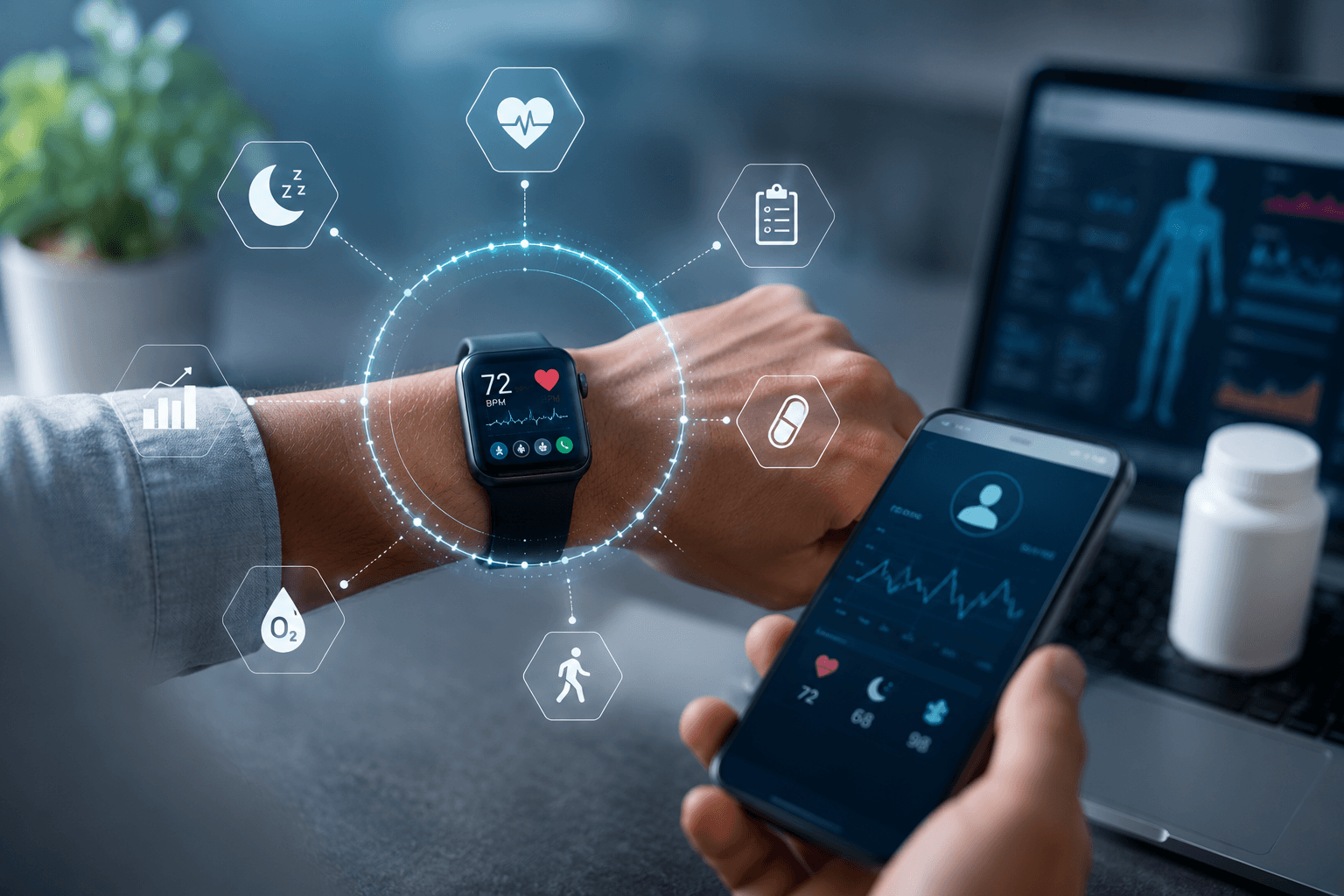
As wearable health technology becomes part of everyday life, pharmaceutical companies have an opportunity to rethink patient engagement. A wearable-integrated marketing strategy allows brands to move beyond scheduled communications by responding to real-world health signals generated from smartwatches, fitness trackers, connected medical devices, health rings, and continuous monitoring systems. Rather than relying on static patient journeys, organizations can deliver relevant educational content, adherence support, and disease management resources at the moment patients need them most. However, this evolution also introduces important questions about privacy, consent, and regulatory responsibility.
Table of Contents
- The Rise of Wearable Health Data
- Turning Biometric Signals into Patient Engagement
- Privacy, Consent, and Regulatory Expectations
- Building a Sustainable Strategy Around Wearable Data
- Conclusion
- FAQs
The Rise of Wearable Health Data in Patient Care
Wearable devices have evolved from simple fitness trackers into sophisticated health monitoring platforms. Today, millions of patients routinely collect information about heart rate, physical activity, sleep quality, glucose levels, oxygen saturation, and medication adherence. As a result, healthcare providers increasingly use this information to support clinical decision-making.
For pharmaceutical marketers, these devices represent something equally valuable: contextual insight into patient behavior. Unlike traditional marketing data, wearable information reflects real-time changes in health status instead of historical interactions. Consequently, brands can identify meaningful opportunities to provide timely educational resources without relying solely on physician visits or prescription refill dates.
For example, a patient living with multiple sclerosis who suddenly experiences reduced daily activity may benefit from educational content discussing fatigue management. Similarly, declining sleep quality among patients with chronic pain may trigger resources explaining symptom management strategies or encouraging conversations with healthcare providers.
A marketing strategy built around wearable data does not replace existing omnichannel engagement. Instead, it strengthens patient support by making communications more relevant, timely, and personalized.
Turning Biometric Signals into Meaningful Patient Engagement
The greatest value of wearable technology lies in its ability to identify behavioral changes before patients actively seek assistance. Instead of sending generic monthly emails, pharmaceutical companies can develop trigger-based engagement models that respond to specific biometric events.
Consider a patient using a connected inhaler whose usage patterns suggest worsening asthma control. Rather than promoting a product, the patient support program could automatically deliver educational materials about environmental triggers, inhaler technique, and the importance of consulting their healthcare provider. Likewise, a diabetes patient wearing a continuous glucose monitor may receive educational content after recurring periods of unstable glucose readings.
Another example involves medication adherence. Smart pill dispensers and connected monitoring devices can identify missed doses without requiring patients to report them manually. As a result, automated reminders, educational videos, or nurse support services can intervene before non-adherence becomes a serious clinical concern.
These interactions demonstrate how wearable-powered patient engagement can replace static campaigns with timely, event-driven support. More importantly, this approach aligns with growing expectations for personalized healthcare experiences.
Organizations implementing these programs should integrate wearable insights into existing CRM platforms while maintaining clear separation between promotional messaging and patient education. Doing so helps ensure engagement remains patient-centered rather than purely commercial.
Privacy, Consent, and Regulatory Expectations
Although biometric-triggered engagement offers tremendous promise, it also creates significant ethical and regulatory responsibilities. Health data is among the most sensitive categories of personal information. Therefore, any strategy that uses wearable health data must begin with explicit patient consent.
Patients should clearly understand what information is collected, how it will be used, who may access it, and how long it will be retained. Transparency builds trust while reducing compliance risk.
Furthermore, pharmaceutical companies must comply with applicable privacy regulations, including HIPAA in the United States, GDPR within the European Union, and emerging health data regulations across many international markets. Regulatory agencies increasingly expect organizations to demonstrate responsible data governance rather than merely obtaining legal consent.
Equally important, brands should avoid creating the perception that biometric monitoring exists primarily for commercial promotion. Instead, communications should focus on improving disease management, supporting medication adherence, and enhancing patient education.
The U.S. Food and Drug Administration continues to publish guidance regarding digital health technologies, while organizations such as the Digital Medicine Society provide valuable frameworks for responsible digital health implementation. Similarly, pharmaceutical teams should remain familiar with evolving guidance from the FDA Digital Health Center of Excellence.
Whenever wearable data suggests a patient may require clinical attention, communications should encourage consultation with a healthcare professional rather than attempting to replace medical advice. Patients seeking medical guidance can also connect with qualified healthcare providers through Healthcare.pro.
Building a Sustainable Strategy Around Wearable Data
Successful implementation requires far more than collecting device data. Pharmaceutical organizations must develop cross-functional governance involving marketing, medical affairs, legal, regulatory, privacy, and information technology teams.
First, companies should identify meaningful biometric triggers supported by clinical evidence rather than marketing assumptions. Every engagement point should have a clear patient benefit.
Second, artificial intelligence can help distinguish clinically meaningful trends from normal variation. Machine learning models may identify patterns indicating declining adherence, worsening symptoms, or increased disease burden while minimizing unnecessary notifications.
Third, organizations should continuously evaluate patient satisfaction, engagement quality, and health outcomes instead of measuring campaign success solely through open rates or click-through rates. Long-term trust ultimately delivers greater value than short-term engagement metrics.
Finally, interoperability will become increasingly important as wearable ecosystems continue expanding. Future patient engagement platforms will likely combine data from smartwatches, home diagnostic devices, remote patient monitoring systems, and electronic health records into unified support programs.
Pharmaceutical companies that invest today in ethical data governance and patient-first engagement models will be better positioned as connected healthcare becomes increasingly mainstream.
Conclusion
Wearable technology is transforming healthcare from reactive treatment to continuous monitoring. At the same time, it is reshaping how pharmaceutical companies engage with patients. A thoughtful wearable data strategy enables brands to deliver educational resources, adherence support, and disease management interventions precisely when patients need them most.
Nevertheless, success depends on much more than technology. Transparent consent, responsible data stewardship, regulatory compliance, and genuine patient value must remain the foundation of every biometric-triggered engagement program. Organizations that balance innovation with trust will be well positioned to lead the next generation of patient-centered pharmaceutical marketing.
FAQs
What is a wearable-integrated marketing strategy?
A wearable-integrated marketing strategy uses data from connected health devices to deliver timely, personalized patient education, adherence support, and engagement based on real-world biometric signals.
Which wearable devices generate useful healthcare data?
Common devices include smartwatches, fitness trackers, continuous glucose monitors, connected inhalers, smart medication dispensers, health rings, and remote patient monitoring systems.
Can pharmaceutical companies use wearable data for marketing?
Yes, but only with informed patient consent and compliance with privacy regulations such as HIPAA, GDPR, and other applicable healthcare data laws.
What are biometric triggers?
Biometric triggers are predefined health events, such as declining activity, poor sleep, missed medication doses, or abnormal monitoring patterns, that initiate personalized patient communications.
Why is privacy important in wearable-based engagement?
Biometric information is highly sensitive. Protecting patient privacy, maintaining transparency, and securing explicit consent are essential for regulatory compliance and maintaining patient trust.
Disclaimer: This content is not medical advice. For any health issues, always consult a healthcare professional. In an emergency, call 911 or your local emergency services.